














































Why Nigeria’s copyright law is incompatible with digital technology

27 Mar 2019 - 09:03


The Nigerian music industry is largely dependent on copyright laws to protect its creativity.
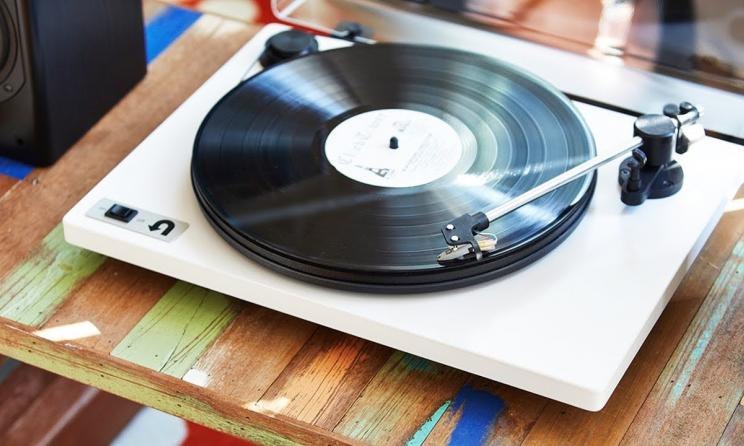
Copyright holders generate income from the exploitation of rights derived from the copyright laws, that is provided music consumers comply with the laws. But technology continues to change many aspects of the music business, particularly with regards to how recorded music is distributed.
As it stands, digital distribution has become the primary distribution channel, accounting for over 54% of the global recorded music revenue and 68% of Nigeria's recorded music revenues. The number of digital service providers continues to grow, each providing consumers with new models of acquiring music for less. These new models have multiplied the sources of income for copyright holders and reduced the cost of making music available to consumers.
Unfortunately, the primacy of digital distribution is not reflected in Nigeria's current copyright law, which was passed 15 years ago (The Nigerian Copyright Act Cap 28 Laws of the Federation of Nigeria, 2004). The law did not foresee the potential of technology as it was drafted to primarily govern physical copying and distribution, which at the time, was the most utilised format of distribution of recorded music. As a result, the country finds itself trying to fit new models into a pre-existing law.
While some of the models are easy to fit, others are not. For instance, permanent downloads may fall within the scope of reproduction and distribution because when a song is downloaded, a copy of the file is stored on the consumer’s server which, arguably, is the same as physical copying and distribution, except that the process is digitally carried out. Non-interactive streaming may fall within the scope of public performance as it is very much like listening to a radio station. The question that remains unanswered is under which of the controlled rights does on-demand streaming fit? Unlike non-interactive, the consumer is in control and chooses which song to hear, when, and for how long.
The nature of the new technology has made it easy for anyone to copy and distribute music without compensating the copyright holders and many of the ad-supported streaming service providers are known for this practice. The relief afforded to copyright holders by the law is enforceable only through the initiation of legal action, which is slow in Nigeria: it could take months to obtain an injunction and years for a judgment.
In other words, a service provider without a license could exploit music for months and there is no immediate cause of action available to the copyright holder. Thus, many copyright holders have accepted such unfair practice as part of the promotional activities. Major service providers operating in Nigeria (notably Apple Music and YouTube) have incorporated the Digital Millenium Copyright Act (DMCA) takedown notice procedure into their terms of use, although it is an American law and applies only to parties to the contract.
While the new models of music distribution have expanded the market reach, it has also reduced the economic value of copyrighted works. The rate payable for use of copyrighted works is negotiated between the copyright holder and distributor. In practice, the party with clout (distributors usually) determines the rate. This approach may work for physical distribution because it is a niche market that is controlled by a number of marketers (for example, Alaba International Market) but it does not work for digital distribution due to the nature of technology as already mentioned and also the ineffective implementation of digital rights management (DRM) in Nigeria.
The copyright laws in some developed economies have introduced monetary values for musical works and sound recordings. In the UK, the current rate for physical distribution and permanent digital download payable for each musical work embodied on a sound recording is 8.5% of the published dealer price (PPD) or 8% gross revenue from downloads. In the US, it is 9.1 cents or 1.75 cents per minute of playing time. The current rate for streaming is 11.4% of the service provider’s revenue. This approach guarantees return for exploitation of copyright works and creates a way to predict the return on investment.
Sometime in June 2018, the Executive Council approved the Draft Copyright Bill 2017 and it is currently at the National Assembly for approval. Although the first draft of the bill has been further amended and touches on digital delivery, it fails to deal with the issues raised here. One has to wait for the publication of the final version to determine its usefulness to Nigeria's music industry.
For now, musicians and copyright holders will continue to suffer as a result of the digital gap in Nigeria's copyright laws.
References
- Global Music Report 2018: Annual State of the Industry, IFPI, p.13.
- Entertainment and Media Outlook: 2018 – 2022, An African Perspective, PWC, 9th Annual Edition, September 2018 Report, p. 26. In 2017, the recorded music revenue in Nigeria was US$35 million, with digital distribution contributing US$24 million.
- Code of Federal Regulations: Part 385 – Rates And Terms For Use Of Nondramatic Musical Works In The Making And Distribution Of Physical And Digital Phonorecords.


Most popular

Top Naija songs of 2026
31 Mar 2026

Top amapiano songs of 2026
16 Feb 2026

Top Afrobeats songs of 2026
19 Mar 2026
AFRIMA 2026: All the winners
12 Jan 2026

Open call: CANEX Creative Pitch for African creative enterprises
29 Sep 2026

Goethe-Institut Kenya brings Ghanaian and Kenyan artists together for MobiArts concert
05 Oct 2026
Disclaimer: Music In Africa provides a platform for musicians and contributors to embed music and videos solely for promotional purposes. If any track or video embedded on this platform violates any copyrights please inform us immediately and we will take it down. Please read our Terms of Use for more.

Subscribe to our monthly Newsletter
Follow us on social media


Please log in to post a comment.