




























































Winky D is being targeted by police in Zimbabwe – why the music star’s voice is so important
11 Apr 2023 - 15:19


By Doreen Rumbidzai Tivenga
Winky D, a 40-year-old Zimdancehall artist, is hugely popular in Zimbabwe. He’s also increasingly in the news for the messages in his songs, some of which address social injustice and corruption under a regime that stifles freedom of expression. There have been threats to ban his music and claims that his life is in danger.
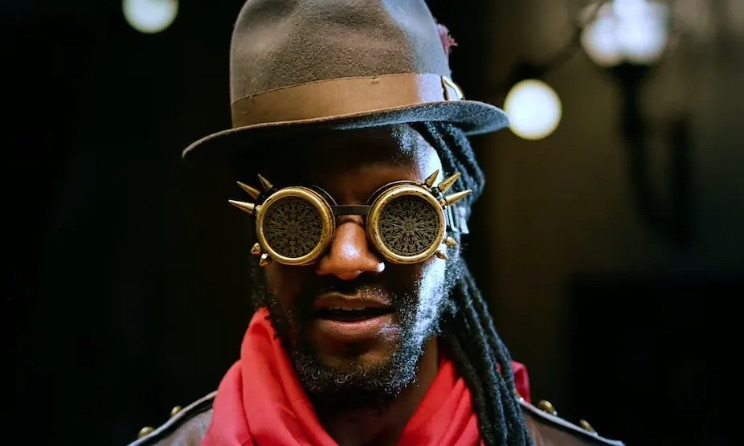
On 4 March 2023, during a concert in the city of Chitungwiza, police removed Winky D from stage. He had just sung his latest hit, ‘Ibotso’, from his 12th album, Eureka Eureka. Videos shared online capture him being manhandled as he walks from the stage.
The lyrics he was singing include the line:
Ini ndiri muimbi chete handina pfumo handina bakatwa. (I am just a singer, I do not have a spear or a sword).
Musicians in Zimbabwe have to be cautious when it comes to lyrics that express anti-establishment views. Yet even so, in ‘Ibotso’ the artist addresses the decay and economic inequality of a country where a political elite thrives by suppressing the working class.
The singer became a multiple award-winning star by creating popular music that resonates with the youth and the poor who have been the most affected by the economic meltdown in the country. He has won further fans and sympathisers among opposition party politicians and their supporters, and human rights activists.
Winky D is known for not responding to his detractors, keeping away from social media and trying to maintain his privacy. Instead, his music does the talking and, as I have argued in my research into urban music culture in Zimbabwe, Winky D has become the voice of the voiceless in contemporary Zimbabwe. He is targeted by the regime because, in his music, he positions himself within the people’s struggles and identifies with them.
The music
Winky D was born Wallace Chirumiko in 1983. Beginning his music career around 2004, he’s one of the pioneers of Zimdancehall. This wildly popular Zimbabwean music was inspired by rhythm-heavy Jamaican dancehall, an offshoot of reggae.
Dancehall has its roots in low-income urban communities, as does Winky D. He hails from Kambuzuma in Harare, where, he reveals, he lived a “typical ghetto life” and calls himself “the poor people’s devotee”.
However, there are traces of resistance and hope in the songs, also reflected in the names he gives himself: DiBigman, Gafa (from Gaffer, meaning boss) and Ninja President. (His fans are called Gafas and Ninjas.) I argue that his music resonates with urban and ghetto youth cultural activism.
The politics
The post-independence Zimbabwean government – ever since the regime of Robert Mugabe – has a history of clamping down on the freedom of artistic expression.Winky D’s music became entangled in the rivalry between president Emmerson Mnangagwa’s ruling ZANU-PF party and Nelson Chamisa’s opposition Citizens Coalition for Change (CCC) with the release of his 2018 songs ‘Parliament’ and ‘Kasong Kejecha’.
Both were seen to be aligned with the political expression of the CCC, particularly ‘Kasong Kejecha’. It was linked with Chamisa’s famed use of the street lingo phrase “kudira jecha” (to pour sand – a metaphor for disruption) around the disputed 2018 election results.
There are reports from 2018 that Winky D had to abandon a show after being attacked by a group of people aligned to Mnangagwa because of ‘Kasong Kejecha’. There were also allegations that his 2018 album Njema was banned from state radio. The government denied this.
The release of Eureka Eureka in 2023 saw a further politicisation of Winky D’s music, especially the songs ‘Ibotso’ and ‘Dzimba Dzemabwe’. Both mourn the social and economic decline of the country, state violence, and the exploitation of the poor and the youth by the elite.
The songs were hailed by the CCC for representing the Zimbabwean reality. ZANU-PF’s leadership condemned them for misrepresenting and tarnishing the image of the country, even alleging the album was funded by political foes, the US government. One ZANU-PF affiliated group called for the banning of Winky D’s music for promoting divisions and hate speech.
Soon enough, Holy Ten, the young Zimbabwean hip hop artist featured on ‘Ibotso’, expressed regret for the track. In a desperate attempt to sound politically correct, he went on to attack Winky D, calling him a snake who didn’t make it clear the album was a political project.
Politics became characteristic of Winky D’s music way before ‘Parliament’ and ‘Kasong Kejecha’. A song like ‘Reverse Dhiri’ (Reverse Deal), for example, was released in 2009. In the song, Winky D addresses the collapsing Zimbabwean economy.
He has always alluded to political figures and the political elite, sometimes directly but most often through puns on their names and through metaphors. These are often employed with a tinge of sarcasm or ambiguity, coming off as subtle political critique.
Freedom of expression
Winky D has always refuted that he sings politics, arguing that his music is mere social commentary. This is a clear attempt to avoid persecution. But there is a very fine line between political and social commentary, and the social conditions of the poor that Winky D acknowledges as central to his music are a product of politics.
His persecution in Zimbabwe today exposes the ludicrousness of state leaders’ celebration of liberation struggle songs, such as the music of Zimbabwean firebrand Thomas Mapfumo. Today Mapfumo is in exile after being similarly persecuted for condemning the state’s post-independence ills.
Zimbabwe’s artists play a central role, not just in entertaining people through their music, but also in articulating their daily struggles, survival strategies and aspirations. In this, Winky D comes from a long line of Zimbabwean musicians that includes the likes of Mapfumo, Leonard Zhakata and Hosiah Chipanga, visual artist Owen Maseko and writer Tsitsi Dangarembga.
In a country like Zimbabwe, where freedom of expression is curtailed and people are often afraid of expressing political dissent, artists such as Winky D have used music as an alternative space for political expression to challenge the status quo.
He has assumed the significant role of speaking on behalf of ordinary Zimbabweans whose voices have been stifled. And as they look up to him and support his music, Winky D’s fans demonstrate their own desire for free expression.
Doreen Rumbidzai Tivenga is a lecturer at the University of the Free State. The article first appeared on The Conversation.


Most popular

Top Naija songs of 2026
31 Mar 2026

Top Afrobeats songs of 2026
19 Mar 2026
Ghana: Mr Eazi and MOLIY’s ‘Comfort’ earns Urban Music Awards nomination
21 Oct 2026

Top amapiano songs of 2026
16 Feb 2026
Open call: CANEX Music Business Lab and Songwriting Camp
15 Oct 2026
Nigeria: CANEX WKND unveils 2026 programme
21 Oct 2026
Disclaimer: Music In Africa provides a platform for musicians and contributors to embed music and videos solely for promotional purposes. If any track or video embedded on this platform violates any copyrights please inform us immediately and we will take it down. Please read our Terms of Use for more.

Subscribe to our monthly Newsletter
Follow us on social media


Please log in to post a comment.