



































NEFCISA
NEFCISA

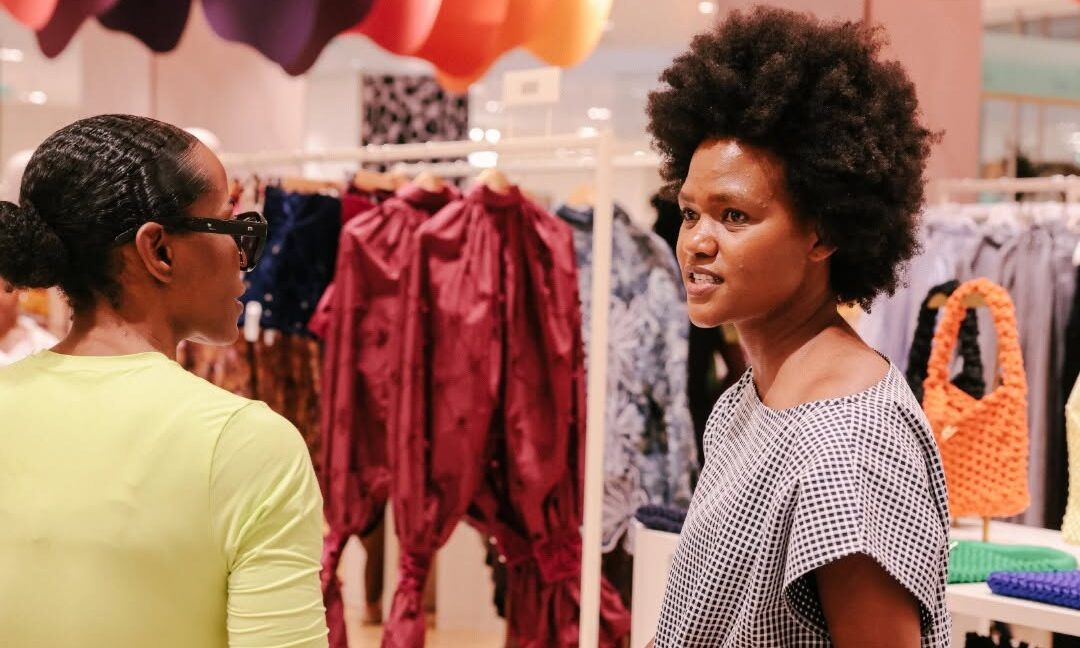
The Music In Africa Foundation (MIAF) is proud of its partnership with the Industrial Development Corporation (IDC) as a Strategic Implementing Partner (SIP) for its Social Employment Fund (SEF). Through this collaboration, MIAF is running a national programme that is creating jobs, addressing skills gaps, and strengthening South Africa's creative industries — in line with the SEF's overarching goal to generate work for the common good and build community value through employment, social contribution, and inclusive economic participation. Operating under the banner NEFCISA (National Employment Facility for Creative Industries in South Africa), the initiative is recruiting and training participants, matching them with host organisations, and has already placed 1 500 workers across the country — surpassing its original target of 1 000. NEFCISA is delivered through a network of 20 host organisations spanning five provinces, who are actively hosting participants and contributing to work for the common good across South Africa's creative and cultural industries. Key Objectives: Support employment and entrepreneurship in the creative industries. Offer skills development and training programmes. Foster partnerships between public and private creative sectors. Promote South African creativity at both provincial and national levels Foster community development through social contribution.

ACCES
ACCES

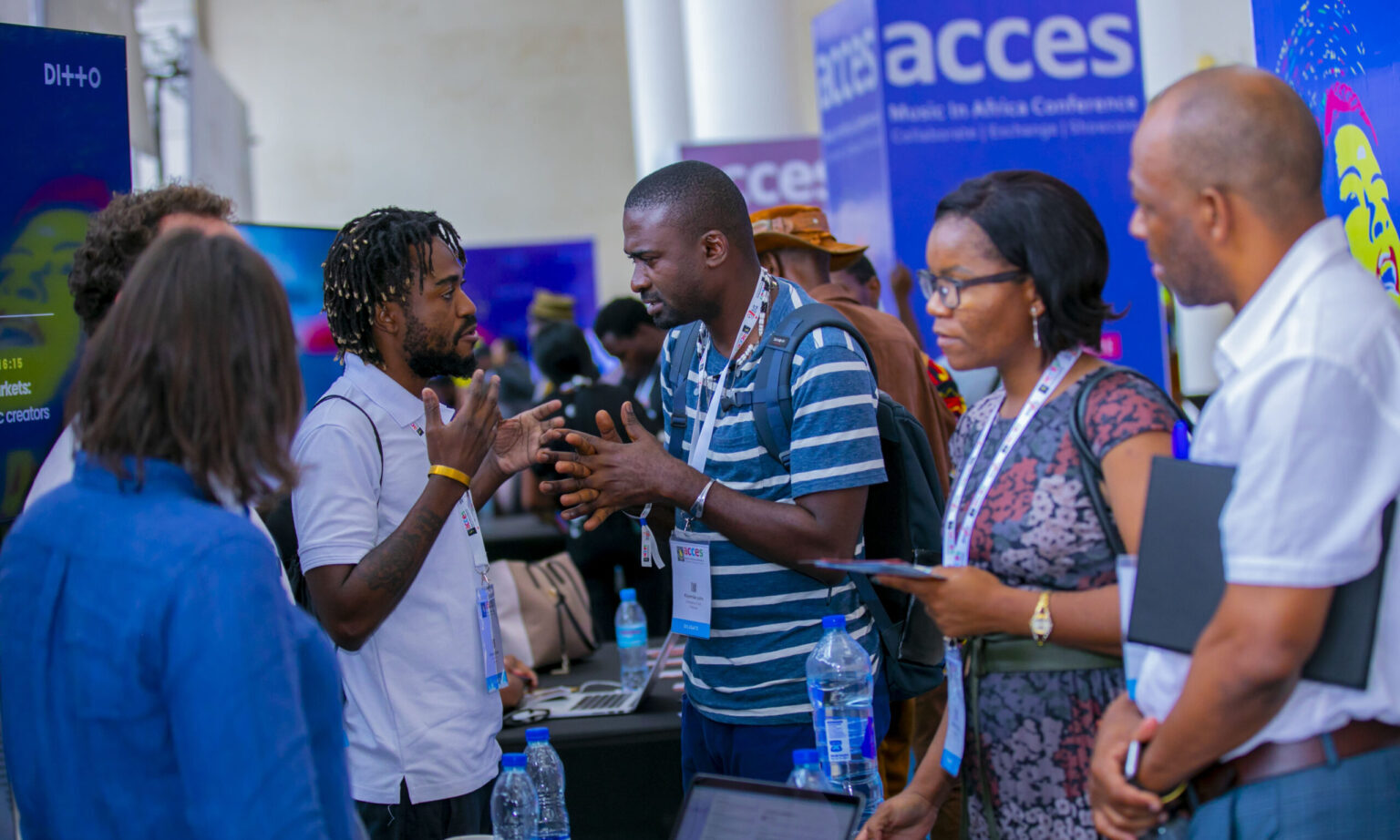
ACCES Conference and Showcase Festival is Africa's leading music industry gathering, bringing together the people shaping the future of the continent's music business. Artists, entrepreneurs, executives, investors, policymakers and cultural leaders from across Africa and around the world come to ACCES to build partnerships, exchange ideas, discover talent and create new business opportunities. Since its launch in 2017, ACCES has become the continent's premier platform for professional exchange and music market development. Combining a high-level conference with a curated showcase festival, networking, exhibitions and industry programmes, ACCES offers a unique space where creativity meets business and where African music connects with the global industry.

Gender@Work
Gender@Work

Music In Africa Gender @ Work is a three-year training programme aimed at upskilling and increasing the participation of female professionals in the African music sector. Launched by the Music In Africa Foundation (MIAF) in April 2019, the programme is connected to the MIAF’s ACCES music conference – a pan-African event held in a different African country every year. This connection enables the programme to reach new participants in a different African country every year. The programme marks the beginning of a more concerted effort by the Foundation to support the participation and inclusion of women in all facets of its programmes and the music sector in Africa as a whole. Over the three years, the programme will aim to address gender imbalances in the sector through training, lobbying, facilitating knowledge exchange and dialogues that foster the interest of women. The broader objectives of the programme are to: Provide industry training for women on critical music industry skills, focusing on: Stage management Electronic music production and recording Music business management Technical knowledge Provide an opportunity for both professional and aspiring women to benefit from the Music In Africa network and its broad range of activities in 2019, 2020 and 2021. Provide a solution-based platform in the form of a round table at ACCES with a view to identify challenges, discuss opportunities and lobby for the interests of female practitioners. Offer participants the opportunity to benefit from programmes offered by MIAF’s partners. Increase access to educational materials. Integrate participants in the broader ACCES programme to maximise experience and exposure to the industry. Record and present training materials on the www.musicinafrica.net, including but not limited to tutorials, templates and other best-practice materials. Communicate women-based themes that support the initiatives and messages of the programme. MAIN TRAINING ACTIVITIES Training in first country (Ghana): In the first year, participants will be trained on all aspects of stage management by a team of experienced stage managers from 10 to 17 November 2019. The programme will offer robust classroom training as well as practical, hands-on training in which participants will also be given the opportunity to manage various aspects of the ACCES performance programme. Training in second country: The second training iteration will take place at ACCES 2020 when the programme will diversify its course to include music production lessons and training on other music business topics. A round-table platform will also be introduced to coincide with the ACCES programme. Training in third country: The third training iteration will take place at ACCES 2021 in a different country, offering an advanced course. HOW DO YOU GET INVOLVED?  As a participant, facilitator or trainer: The programme enrolls up to 12 trainees every year. All opportunities are advertised publicly on this website, and will be added to this page. Please keep checking this page for new calls (below under UPDATES & CURRENT OPPORTUNITIES). As a partner Please contact Claire Metais at [email protected]. APPLY The call for applications for 2020 will be announced soon. The Music In Africa Gender @ Work programme is made possible with the support of the Prince Claus Fund, Siemens Stiftung and Goethe-Institut.

Sound Connects Fund
Sound Connects Fund

For cultural and creative practitioners and organisations operating in southern Africa, access to funding remains a major challenge. The COVID-19 pandemic has also had a massive impact on government policy, spending and the economy in general, and has seen spending on culture being moved further down the list of priorities. Further, the cultural and creative industries repeatedly cite four main areas where investment is needed for growth, which are increased visibility, mobility including access to new markets, finance and support structures.

Instrument Building And Repair Project

Experience the Vibrations African Instruments Exhibition online in 3D

banner image

Patoranking/Sarkodie — No Kissing Baby

Home/Non classé/Patoranking/Sarkodie — No Kissing Baby

It is not enough that Patoranking is having the time of his life, he is also having the best of two worlds. Nigeria; Ghana. Jamaican patois; Nigerian pidgin. 90s’ Nigerian music; today’s sound. Let’s say he is having the best combination of several worlds. It’s a great formula for a pop artist: hard work + greed.

From his breakout single ‘Alubarika’ (2013) to the recent ‘Another Level’, his star hasn’t dimmed. How has he done it? First, consistency. In today’s climate of an avalanche of songs per week, he has released new music almost constantly. His management seems to understand that the songs have to be there to be played, and the name hovering near the lips of a pop enthusiast. Nowadays, lengthy contemplation is the enemy. The popular phobia of oversaturation now long over, risk is overbalanced against the vacationing pop star.

“Put it out and do so now” is the pop zeitgeist. Disregard it and witness your own slide into irrelevance.

Second, variation. Patoranking is well served by an upbringing with as much pop-Nigeriana as it had Ghanaian influences. He has made a curious remark about the music scenes in both countries, declaring Ghana’s scene richer than Nigeria’s. It is the kind of statement that can be made only by an artist sure of the statement and of his own craft. However dubious his judgement, his music has maintained a uniform listenability. Even the songs that failed to become hits gathered enough attention to be modestly rewarded with airplay.

[video:https://www.youtube.com/watch?v=jP8ljilGpBg autoplay:0]

If his statement about the Ghanaian and Nigerian music scenes was divisive, on the new song ‘No Kissing Baby,’ he finds a way to bring both west African countries together. He has been to Ghana before, back when his reggae-dancehall colleague Stonebwoy had him on the remix to ‘Pull Up’. There, however, the dominant sound was Jamaican.

This time, with the excellent Sarkodie, the sound is very clearly African. There’s that pidgin hook: “If you no gimme I no go take o” [If you don’t give me, I won’t take it] There is Sarkodie’s twice-as-fast Twi-flow, the Ghanaian rapper including a Nigerian slang in his verse. There’s the GospelOnTheBeatz densely-percussive, Afro-popped dance-ready production.

What has been levelled as criticism—Patoranking’s penchant for pidgin over patois while claiming reggae—is actually a skill, one that has pop utility: the ability to insert a novel content into an old form. Or vice versa. What this means practically is that the artist is walking the path to the hearts of two groups of fans. If he hasn’t already, he will in time make fans of both Jamaicans and Nigerians. Purists will be pissed, but that can be chucked off as collateral damage.

As for the lyrics, it is hard to think of any song in recent mainstream pop that has made a delightful tune from a lady’s rebuffing of a man’s amorous overtures. Wizkid declaring “I want your body sleeping in my bed”, Banky W’s pledge to make a woman “hit high notes”, Lil Kesh’s mocking “Is it because I love you” are the models for a slew of songs with a male and female protagonist. Patoranking bucks the trend with his never-mind acceptance of his lady’s wishes. This rather agreeable approach to wooing rubs off on Sarkodie whose working genre is not known for tenderness. The rapper actually asks, “Can I touch you?”

Surprise, surprise? Maybe not. Over the course of their careers, both Patoranking and Sarkodie have telegraphed a somewhat conservative core; with this song, there’s an echo of a disavowal of extra-marital sex. “No kissing, baby,” the lady says. “Alright,” Patoranking appears to say in the music video, “let’s take a walk.”

[video:https://www.youtube.com/watch?v=8T-GeoXlEBg autoplay:0]

So man and woman are seen in friendly but not quite intimate terms in the video. (It is a semi-love song; but that “if you don’t give me, I won’t take it” line is quite a definitive anti-rape statement. Who would have thought that this era of profane lyrics might provide a catchy slogan for rape activism?) Directed by former American athlete, the UK-raised Dapo Fagbenle (aka Daps), the video is a pleasant, colourful throwback to hip hop videos of the 90s, its bright and sunny façade emphasising the song’s lightheartedness.

One last note. ‘No Kissing Baby’ is being sold as the first track from Patoranking’s forthcoming debut album, God Over Everything. Imagine this: first fruits from Nigerian and Ghanaian ingredients with a side-serving of Jamaica, plus a video showing the shoki dance, a variation of the azonto dance, and retro outfits from the west. Best of two dishes? Not even. More like, Mister Patoranking has the continent on a fork—and the world on his plate.

newsletter banner

Subscribe to our monthly Newsletter

Follow us on social media