



































NEFCISA
NEFCISA

The Music In Africa Foundation (MIAF) is proud of its partnership with the Industrial Development Corporation (IDC) as a Strategic Implementing Partner (SIP) for its Social Employment Fund (SEF). Through this collaboration, MIAF is running a national programme that is creating jobs, addressing skills gaps, and strengthening South Africa's creative industries — in line with the SEF's overarching goal to generate work for the common good and build community value through employment, social contribution, and inclusive economic participation. Operating under the banner NEFCISA (National Employment Facility for Creative Industries in South Africa), the initiative is recruiting and training participants, matching them with host organisations, and has already placed 1 500 workers across the country — surpassing its original target of 1 000. NEFCISA is delivered through a network of 20 host organisations spanning five provinces, who are actively hosting participants and contributing to work for the common good across South Africa's creative and cultural industries. Key Objectives: Support employment and entrepreneurship in the creative industries. Offer skills development and training programmes. Foster partnerships between public and private creative sectors. Promote South African creativity at both provincial and national levels Foster community development through social contribution.

ACCES
ACCES

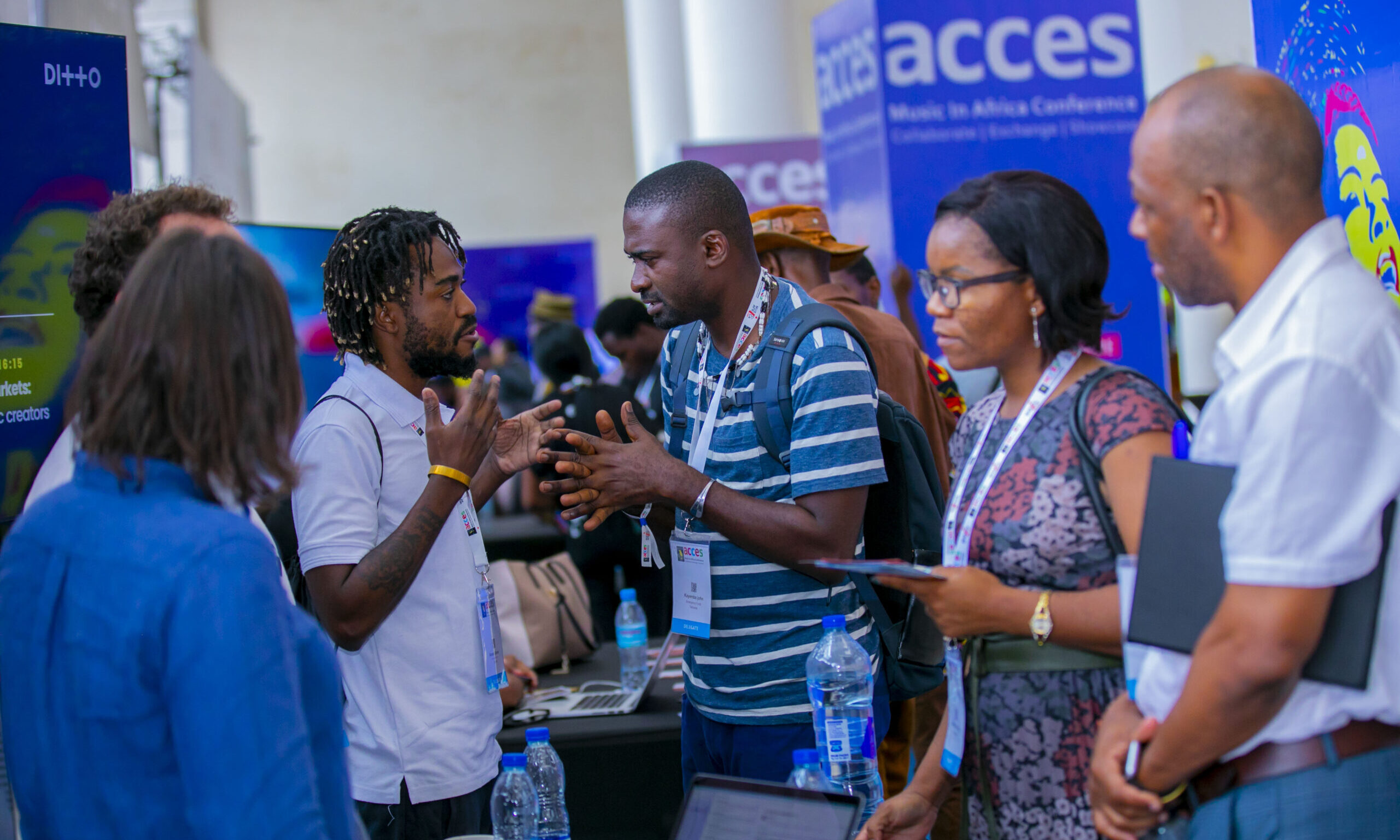
ACCES Conference and Showcase Festival is Africa's leading music industry gathering, bringing together the people shaping the future of the continent's music business. Artists, entrepreneurs, executives, investors, policymakers and cultural leaders from across Africa and around the world come to ACCES to build partnerships, exchange ideas, discover talent and create new business opportunities. Since its launch in 2017, ACCES has become the continent's premier platform for professional exchange and music market development. Combining a high-level conference with a curated showcase festival, networking, exhibitions and industry programmes, ACCES offers a unique space where creativity meets business and where African music connects with the global industry.

Gender@Work
Gender@Work

Music In Africa Gender @ Work is a three-year training programme aimed at upskilling and increasing the participation of female professionals in the African music sector. Launched by the Music In Africa Foundation (MIAF) in April 2019, the programme is connected to the MIAF’s ACCES music conference – a pan-African event held in a different African country every year. This connection enables the programme to reach new participants in a different African country every year. The programme marks the beginning of a more concerted effort by the Foundation to support the participation and inclusion of women in all facets of its programmes and the music sector in Africa as a whole. Over the three years, the programme will aim to address gender imbalances in the sector through training, lobbying, facilitating knowledge exchange and dialogues that foster the interest of women. The broader objectives of the programme are to: Provide industry training for women on critical music industry skills, focusing on: Stage management Electronic music production and recording Music business management Technical knowledge Provide an opportunity for both professional and aspiring women to benefit from the Music In Africa network and its broad range of activities in 2019, 2020 and 2021. Provide a solution-based platform in the form of a round table at ACCES with a view to identify challenges, discuss opportunities and lobby for the interests of female practitioners. Offer participants the opportunity to benefit from programmes offered by MIAF’s partners. Increase access to educational materials. Integrate participants in the broader ACCES programme to maximise experience and exposure to the industry. Record and present training materials on the www.musicinafrica.net, including but not limited to tutorials, templates and other best-practice materials. Communicate women-based themes that support the initiatives and messages of the programme. MAIN TRAINING ACTIVITIES Training in first country (Ghana): In the first year, participants will be trained on all aspects of stage management by a team of experienced stage managers from 10 to 17 November 2019. The programme will offer robust classroom training as well as practical, hands-on training in which participants will also be given the opportunity to manage various aspects of the ACCES performance programme. Training in second country: The second training iteration will take place at ACCES 2020 when the programme will diversify its course to include music production lessons and training on other music business topics. A round-table platform will also be introduced to coincide with the ACCES programme. Training in third country: The third training iteration will take place at ACCES 2021 in a different country, offering an advanced course. HOW DO YOU GET INVOLVED?  As a participant, facilitator or trainer: The programme enrolls up to 12 trainees every year. All opportunities are advertised publicly on this website, and will be added to this page. Please keep checking this page for new calls (below under UPDATES & CURRENT OPPORTUNITIES). As a partner Please contact Claire Metais at [email protected]. APPLY The call for applications for 2020 will be announced soon. The Music In Africa Gender @ Work programme is made possible with the support of the Prince Claus Fund, Siemens Stiftung and Goethe-Institut.

Sound Connects Fund
Sound Connects Fund

For cultural and creative practitioners and organisations operating in southern Africa, access to funding remains a major challenge. The COVID-19 pandemic has also had a massive impact on government policy, spending and the economy in general, and has seen spending on culture being moved further down the list of priorities. Further, the cultural and creative industries repeatedly cite four main areas where investment is needed for growth, which are increased visibility, mobility including access to new markets, finance and support structures.

Instrument Building And Repair Project

Experience the Vibrations African Instruments Exhibition online in 3D

banner image

Bobi Wine: Ugandan regime is disconnected from reality

Home/Non classé/Bobi Wine: Ugandan regime is disconnected from reality

The singer, whose real name is Robert Kyagulanyi, has been under house arrest at his Magere home in the capital Kampala since 23 April. He says he was arrested because the Ugandan authorities sought to prevent him from delivering a notification letter to the authorities about a peaceful demonstration against authoritarianism and police brutality in the East African nation.

He was detained in Busabala on the shores of Lake Victoria on Monday after the police shut down one of his concerts and fired tear gas at his fans, sources said.  

“Police and the military have been deployed at my residence since yesterday, after the violent arrest,” he wrote on Twitter. “My home is under siege. They have surrounded my fence and installed barricades on all roads leading to my home.”

Bobi Wine told Music In Africa that the Ugandan regime, led by President Yoweri Museveni, should expect mounting local and international criticism for trying to silence its critics.

“Interpreting an artist’s work as a direct call to incitement is unconstitutional,” he said. “I planned to submit the letter to the police and then head to Parliament to deliberate. I have been unable to do either of those things. No explanation has been given as to why my freedom of movement is being interfered with. The police say that they are working with orders from above.”

He added that his house arrest was part of a malicious campaign to silence free thinkers and dissenting voices speaking against bad policy and corruption.

“The regime is so disconnected from reality,” Bobi Wine said. “They think that by cutting off my interaction with the public they are blocking my agenda. They are wrong. We are in the 21 century where social media is a potent communication tool. I am using my Facebook and Twitter accounts to communicate to the masses and the message is heard even beyond Uganda.”

He also challenged fellow musicians to be more socially responsible. “It’s important that we speak as one, as it enables us to give a voice to those less heard. Music and poems were used during the Sudan revolution. It is time that we also put to use our protest music.

“I insist that we have a social responsibility to the public. These people support our work. Many artists in Uganda have been intimidated while others have been bought off by the regime, but I am glad that there are a few that stand for what is right.”

And the musician, who recently announced that he would challenge Museveni in the 2021 presidential election, has been using his time while under house arrest constructively. Yesterday, he posted a video of himself and fellow activist and musician Nubian Li composing a song with the caption, “While we’re under house arrest, let’s make some music.” In the video the two musicians sing: “Afande sipigani nawe, nakupigania” (Dear police officer, I am not fighting you but rather I am fighting for you).

Nubian Li said many members of the public were dissatisfied with Bobi Wine’s house arrest. “There have been some protests in Kampala and they will not stop,” he said. “Nothing justifies putting him under house arrest. It only shows that the government has little tolerance for challenging voices. All he did was write on Facebook and asked the public to accompany him to the police to deliver the letter. The people were willing and that was why they turned up ready to hold a peaceful protest against the obvious police brutality and other human rights abuses from the government.”

Meanwhile, the US embassy in Kampala has issued a statement about Bobi Wine’s house arrest. “Today we join the many Ugandans asking why their government has recently blocked musical concerts and radio talk shows, disrupted peaceful demonstrations and rallies, and deployed heavy-handed security forces against peaceful citizens. Uganda’s Constitution guarantees freedom of assembly and expression. We echo the Ugandan people in calling on the government to respect these rights. Strong leaders and states do not stifle speech – they allow their citizens to participate fully and without fear in a vibrant multi-party democracy,” the statement reads.

newsletter banner

Subscribe to our monthly Newsletter

Follow us on social media