
































NEFCISA
NEFCISA

The Music In Africa Foundation (MIAF) is proud of its partnership with the Industrial Development Corporation (IDC) as a Strategic Implementing Partner (SIP) for its Social Employment Fund (SEF). Through this collaboration, MIAF is running a national programme that is creating jobs, addressing skills gaps, and strengthening South Africa's creative industries — in line with the SEF's overarching goal to generate work for the common good and build community value through employment, social contribution, and inclusive economic participation. Operating under the banner NEFCISA (National Employment Facility for Creative Industries in South Africa), the initiative is recruiting and training participants, matching them with host organisations, and has already placed 1 500 workers across the country — surpassing its original target of 1 000. NEFCISA is delivered through a network of 20 host organisations spanning five provinces, who are actively hosting participants and contributing to work for the common good across South Africa's creative and cultural industries. Key Objectives: Support employment and entrepreneurship in the creative industries. Offer skills development and training programmes. Foster partnerships between public and private creative sectors. Promote South African creativity at both provincial and national levels Foster community development through social contribution.

ACCES
ACCES

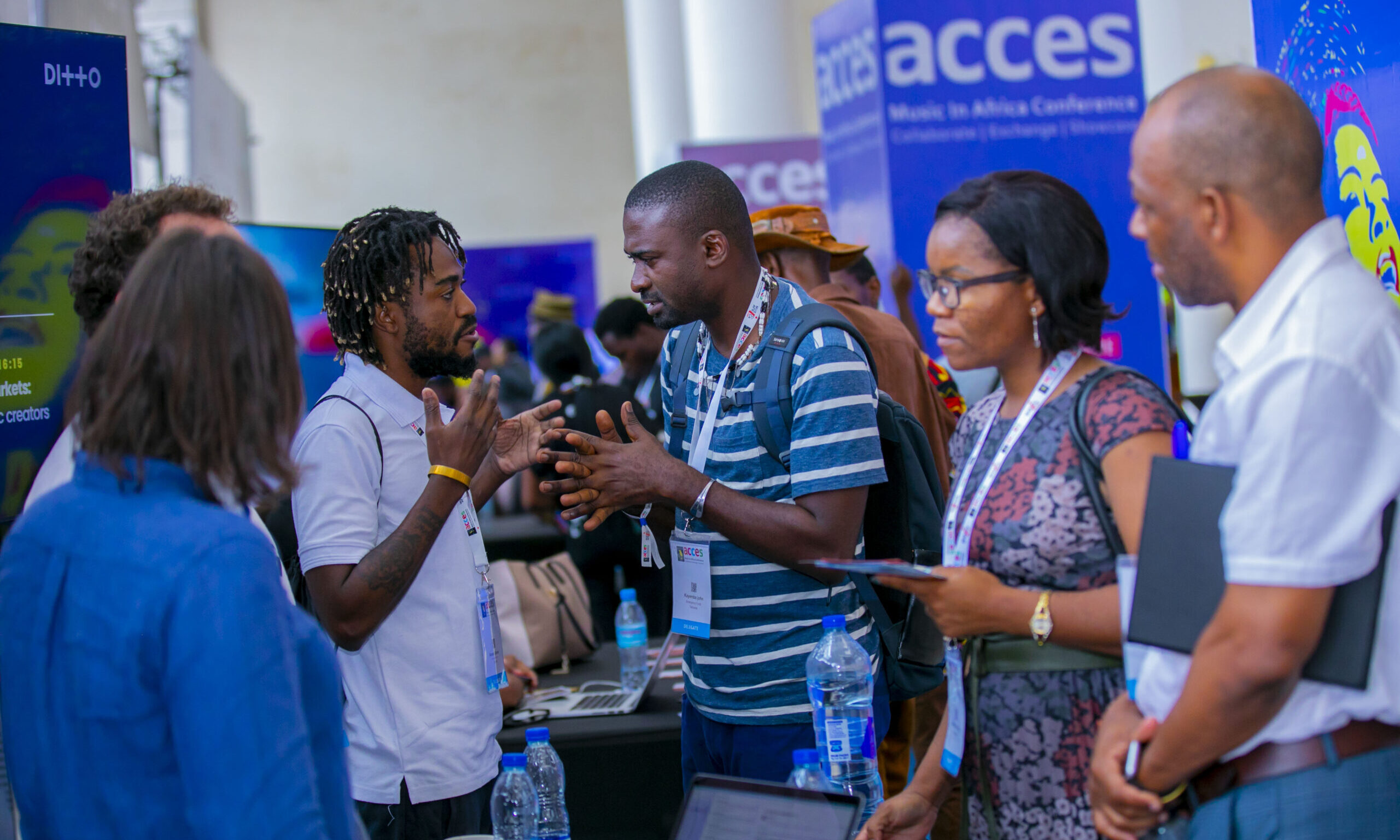
ACCES Conference and Showcase Festival is Africa's leading music industry gathering, bringing together the people shaping the future of the continent's music business. Artists, entrepreneurs, executives, investors, policymakers and cultural leaders from across Africa and around the world come to ACCES to build partnerships, exchange ideas, discover talent and create new business opportunities. Since its launch in 2017, ACCES has become the continent's premier platform for professional exchange and music market development. Combining a high-level conference with a curated showcase festival, networking, exhibitions and industry programmes, ACCES offers a unique space where creativity meets business and where African music connects with the global industry.

Gender@Work
Gender@Work

Music In Africa Gender @ Work is a three-year training programme aimed at upskilling and increasing the participation of female professionals in the African music sector. Launched by the Music In Africa Foundation (MIAF) in April 2019, the programme is connected to the MIAF’s ACCES music conference – a pan-African event held in a different African country every year. This connection enables the programme to reach new participants in a different African country every year. The programme marks the beginning of a more concerted effort by the Foundation to support the participation and inclusion of women in all facets of its programmes and the music sector in Africa as a whole. Over the three years, the programme will aim to address gender imbalances in the sector through training, lobbying, facilitating knowledge exchange and dialogues that foster the interest of women. The broader objectives of the programme are to: Provide industry training for women on critical music industry skills, focusing on: Stage management Electronic music production and recording Music business management Technical knowledge Provide an opportunity for both professional and aspiring women to benefit from the Music In Africa network and its broad range of activities in 2019, 2020 and 2021. Provide a solution-based platform in the form of a round table at ACCES with a view to identify challenges, discuss opportunities and lobby for the interests of female practitioners. Offer participants the opportunity to benefit from programmes offered by MIAF’s partners. Increase access to educational materials. Integrate participants in the broader ACCES programme to maximise experience and exposure to the industry. Record and present training materials on the www.musicinafrica.net, including but not limited to tutorials, templates and other best-practice materials. Communicate women-based themes that support the initiatives and messages of the programme. MAIN TRAINING ACTIVITIES Training in first country (Ghana): In the first year, participants will be trained on all aspects of stage management by a team of experienced stage managers from 10 to 17 November 2019. The programme will offer robust classroom training as well as practical, hands-on training in which participants will also be given the opportunity to manage various aspects of the ACCES performance programme. Training in second country: The second training iteration will take place at ACCES 2020 when the programme will diversify its course to include music production lessons and training on other music business topics. A round-table platform will also be introduced to coincide with the ACCES programme. Training in third country: The third training iteration will take place at ACCES 2021 in a different country, offering an advanced course. HOW DO YOU GET INVOLVED?  As a participant, facilitator or trainer: The programme enrolls up to 12 trainees every year. All opportunities are advertised publicly on this website, and will be added to this page. Please keep checking this page for new calls (below under UPDATES & CURRENT OPPORTUNITIES). As a partner Please contact Claire Metais at [email protected]. APPLY The call for applications for 2020 will be announced soon. The Music In Africa Gender @ Work programme is made possible with the support of the Prince Claus Fund, Siemens Stiftung and Goethe-Institut.

Sound Connects Fund
Sound Connects Fund

For cultural and creative practitioners and organisations operating in southern Africa, access to funding remains a major challenge. The COVID-19 pandemic has also had a massive impact on government policy, spending and the economy in general, and has seen spending on culture being moved further down the list of priorities. Further, the cultural and creative industries repeatedly cite four main areas where investment is needed for growth, which are increased visibility, mobility including access to new markets, finance and support structures.

Instrument Building And Repair Project

Experience the Vibrations African Instruments Exhibition online in 3D

banner image

Manu Katché : « Mes collaborations m’ont permis d'acquérir ce style particulier et reconnaissable »

Home/Non classé/Manu Katché : « Mes collaborations m’ont permis d’acquérir ce style particulier et reconnaissable »

Vous revenez au Festival Joy of Jazz après votre performance de 2012. Quel souvenir gardez-vous de votre premier passage et surtout, comment vous sentez-vous à l’approche de l’événement ?

Le souvenir de 2012 est toujours très présent dans mon esprit ! Un public à l’écoute, disponible et chaleureux…

J’espère que pour cette édition, ce sera identique, sachant que le projet que je présente cette année est assez différent du dernier. Plus électro, plus rock et plus groove et beaucoup moins jazz.

 Vous semblez vous produire le plus souvent en quartet ? Si oui, pourquoi vous aimez cette formule ?

J’aime beaucoup la formule du quartet et l’instrumentation que j’utilise, repose principalement sur ces quatre instruments que sont le clavier, la basse, la guitare et la batterie. Néanmoins, j’adorerais avoir d’autres instrumentistes sur scène (P.S : ils seront présents avec moi sur scène, à travers un ordinateur), mais les limites budgétaires ne permettent pas toujours de voyager et performer en live à plus de quatre.

 Parlez-moi de votre dernier album, The Scope : l’inspiration, le processus créatif, les collaborations et surtout quel message souhaitiez-vous faire passer ?

C’est un album que j’ai voulu résolument positif, avec la possibilité pour le public de tous bords, de recevoir cette musique sans forcément disposer de références musicales pointues. Il s’agit d’un album pour le moins accessible.

J’avais envie d’y ajouter un caractère vocal, pas seulement par les guests qui ont participé à The Scope, mais utiliser la voix comme des gimmicks guitare, brass, etc…

Le côté production/réalisation a été assez long. Je désirais travailler avec quelqu’un de la jeune génération pour être cohérent dans cette tendance électro, avec des loops et des synthés sur l’album. Nous avons donc réalisé cet opus, lui avec sa fraîcheur et son talent, moi avec mes envies et mon expérience. 

Dans votre longue carrière, vous avez collaboré avec de nombreux artistes aux genres variés tels que Peter Gabriel, Tracy Chapman, Youssou N’dour, Faada Freddy etc. Y a-t-il des moments clé ou des collaborations qui vous ont particulièrement marqué ?

Je pense qu’elles m’ont toutes marqué et m’ont permis d’être ce que je suis devenu, un musicien avec une stylistique particulière et reconnaissable. 

Pour n’en citer qu’une, je pense que la rencontre avec Peter Gabriel au tout de début de ma carrière internationale a été la plus marquante en terme d’opportunité, de positionnement et de créativité.

On assiste actuellement à un grand intérêt pour les musiques africaines, avec la vague « afrobeats ». Comment vos origines africaines ont influencé votre musique tout au long de votre carrière ? Y a-t-il des sons et des artistes (africains) qui vous inspirent particulièrement ?

Je ne pense pas que de mes origines, l’Afrique soit omniprésente dans mon jeu ainsi que dans la plupart de mes albums solos. Par ailleurs, mon approche de la batterie, certainement due principalement à mes études de piano et de percussions classiques, n’est pas totalement étrangère à mes origines.

J’écoute beaucoup de choses très différentes, avec un attachement particulier pour Youssou N’Dour, Oumou Sangaré et Faada Freddy.

À part l’Afrique du Sud en ce mois de septembre, avez-vous d’autres dates /concerts prévus sur le continent ?

 Non, seulement en Europe, en Asie, et en Nouvelle-Calédonie pour l’instant.

Aimeriez-vous collaborer avec des artistes sud-africains ? Si oui, lesquels ? 

Si cela était envisageable, oui ! Je suis ouvert à toutes les propositions d’artistes sud-africains bien entendu. Pour moi, les rencontres sont le socle de l’évolution musicale et culturelle de notre planète.

[video:https://www.youtube.com/watch?v=IAot5zg_th4&list=OLAK5uy_lagHZU-94pBMtyr7M0nHhQQRlPnNErXgk autoplay:0]

newsletter banner

Subscribe to our monthly Newsletter

Follow us on social media