

























































By Françoise Engoulou
Piracy is a plague that is wearing down the entire African music industry and Cameroon is no exception. Adapting to new technologies is a very slow and difficult process and the lack of a genuine cultural policy is undermining the activities of all stakeholders in the industry. This text provides an overview of the history of Cameroon’s recording industry.
The 1950s and 60s: origins of the recording industry
It all started in bars and cabarets, where artists used to play both traditional and modern instruments together. In the 1950s, the ‘School of music ‘ learning style was established and allowed aspiring singers and potential producers to get training by joining the band or team of an experienced singer. That is how pioneering Cameroonian artist Anne-Marie Nzié who used to sing in cabarets, recorded her first album in 1954 on a Belgian-Congolese label. She soon became a national star, thanks to a series of major concerts and regular radio airplay.
National radio was indeed the only broadcasting circuit at the time. Regular airplay led to a guaranteed success for Eboas Lottin’s album Mulema Mwan in 1962. However, one had to find favour with radio DJs. The first record after independence in 1960, Echo de l’indépendance by Charles Lembé, was recorded that year in the legendary Vogue Studio in Paris. Producers such as Joseph Tamla from Afrique Ambiance Production launched the career of Messi Martin with his album Bekono Nga Nkonda in 1964.
The 1970s, 80 and 90s: the golden age of the recording industry
The period from the 1970s until the 1990s is often referred to as the ‘golden age’ of Cameroon’s record industry because all the people involved in the process could actually make a living out of their activities and creativity was at its best. In 1983, legendary record companies such as Ekeg’s Productions and the prolific production house Ebobolofia left their mark on the industry with big-selling bikutsi albums such as the Veterans’ Kulu, released that year. Radio Cameroon’s multi-track recording studio took part in the great adventure of the band Zangalewa in 1986 with the recording of their highly successful eponymous album, followed in 1988 by Casque Colonial.
Producer Jim Records entered the 1990s with Charlotte Mbango’s hit album Konkai Makossade in 1991. It opened the door for other ambitious young artists, who created independent record companies such as Romeo Dika’s DRI Production, which produced over 70 artists, including Grace Decca 1993 album Doi la Mulema, Chantal Ayissi with Yit-ma in 1994 and Annie Anzouer with Variations in 1994. Those were the ‘good old days’ for the recording industry in Cameroon. In all major cities, music distributors would duplicate cassettes and CDs in large quantities. Some distributors such as Flash Music, Mc Pop International and Mediastore discovered new talents, such as the duo Sergeo Polo and Njhorreur’s album Le mari d’autrui in 1994.
In 1992, Alex Edo’o Edo’o produced Stars System’s album Djé Dance. This gave rise to many other recording studios and independent labels, such as Zomloa Recordz,Mapane Records, Big Boss, So Sound and Ndabott. According to producer Consty Funk, “The music industry was prosperous. The quality of artists was undeniable. Producers did their job properly, with a diversity both in musical genres and in formats, which allowed all the links of the chain to make a living out of music”. A particular ethical code was applied among artists and the quality of recordings made them competitive both on a national and international scale.
Current challenges and realities
Although some warning signs were already starting to appear by the end of the 1990s (such as the rise of piracy, and confusion in the distribution of royalties), there have not been many new measures to address these challenges. Since the year 2000, the industry has been under increasing pressure and has weakened as a result. Many still remember the lack of structures and the shady production matters that led the band Macase to give up RFI’s Discoveries Prize in 2001. It is worth mentioning that the Cameroon government allocated one billion CFA francs (about US$1.68 million) to the support of culture, but there has not been a significant sign of any accomplishments on this front. As a result, since then, producers have decided to settle only in Cameroon’s two biggest cities, Yaoundé and Douala.
Some of the companies that contributed to the development of the recording industry in Cameroon are Flash Music, Sims Production, Moussa Haissam Records, Angoula Angoula, Toure Aladji Records, Music Store, JPS Production (arguably the most effective, thanks to artists both in and outside the country), Ndikum Forsang Production, Eyabe Ekwabi Production, Essimo Oh Production and Preya Music (producer of Longue Longue and their 2001 album Ayo Africa).
Some have had to close down, such as Sonodisc, which was behind Petit Pays’ Class F, one of Cameroon’s most successful albums ever. Others are still working but have had to slow down (such as Angoula Angoula). Some come and go according to the market (such as Achille Production, which was riding quite high in 2007 thanks to the sales of Aie Jo Mamadou’s Action-Reaction). Other record labels have had to switch to different activities, such as Mc Pop Music, which became Melodie Diffusion and chose to focus on publishing and distributing.
Finally, new forms of businesses have emerged, supported by the producers themselves. These include ‘pop-up’ distributors and the so-called ‘underground’ industry in which CDs are sold illicitly. One fan would buy it, then pass it to a friend, and so on. As a result, almost all CD factories have closed. The situation is even worse with recording studios. According to Manga Ngah Sévérin (aka Lucky+ 2), the owner of V2 recording studio, delivering an album takes typically two to four days of programming , two days to record voices, two to four weeks for mixing, while mastering can take up to a whole day. All of this costs about 10 000 CFA francs per hour to record, 15 000 CFA to mix a track, 10 000 CFA to master a track, and 10 00O CFA per track for the instrumentalists. Considering the current crisis, artists are paid according to how famous they are. Producer and studio owner Bertrand Eba (of Mani Bella’s Face à Face in 2014) says one day is charged between 50 000 and 60 000 CFA.
New technologies are making it easy for anyone to have some sort of recording studio, which explains the decreasing number of distribution companies and record stores, which used to ‘officially’ deliver CDs to the market. Considering the many grey areas in legislation and institutions regarding royalties, there still hope for the industry. This is thanks to urban music producers such as Krotal’s Ndabott Production, who revealed his professional and realistic vision: artists are paid upon signing and get 15% on the sales of a limited edition of 2000 album copies.
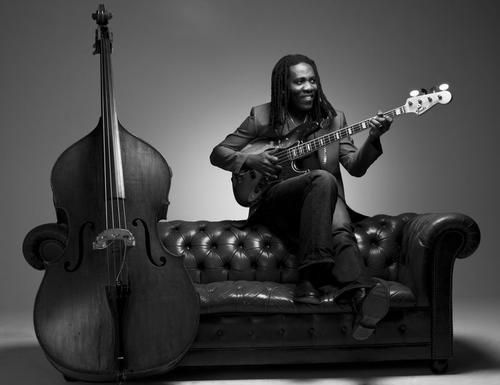
The record industry in Cameroon is struggling to provide for all those involved in the process. That is why so many artists are their own producers and increase their on stage appearances so that they can make a living out of their activities. For example, Coco Argentée produced her own albums Nostalgie in 2012 and Tresor in 2014. One can only hope for a major and positive intervention in the recording industry in Cameroon, so that it can recover from its current problems and provide more opportunities for young artists to follow in the footsteps of Manu Dibango and Richard Bona.
Sources :
-
CulturEbene: www.culturebene.com
-
FUNK, Consty. 2008. ‘Distribution networks in Cameroon’.
-
Interview: Moustik le karismatik, self-produced artist.
-
Interview: Lucky + 2, V2 recording studio, Ngousso, Yaoundé, Cameroun.
-
Interview: Mbarga Soukouss, artist.
-
Kamerbeat: http://ondoua86.unblog.fr
-
KAYESSE, Dippah. 2007. ‘Which record studio should we trust ?’ Mutations (February).
-
MBENDE, Sam. ‘The impact of forging and piracy on the music industry’.
-
National Archives in Yaoundé, Cameroon.
-
NGOUN, Robert. ‘Cameroonian producers don’t follow the digital revolution’.
-
NKENG a NKENG, Joel Christian. 2010. ‘Music piracy in Cameroon’. University of Yaounde.
-
NYAMECK, Guy. 2002. ‘How piracy took over the music industry in Cameroon’, 17 October 2002.
-
OBAM, Marion. 2007. ‘Cameroonian labels’. Mutations (12 October 2007).
-
YATCKOCKEU, Luc. ‘The situation of the music industry in Cameroon’.


Most popular

Top Naija songs of 2026
31 Mar 2026

Top Afrobeats songs of 2026
19 Mar 2026

Top amapiano songs of 2026
16 Feb 2026

Open call: CANEX Music Business Lab and Songwriting Camp
15 Oct 2026
Open call: National Arts Festival artistic director in SA
15 Oct 2026

Ghana: Mr Eazi and MOLIY’s ‘Comfort’ earns Urban Music Awards nomination
21 Oct 2026
Disclaimer: Music In Africa provides a platform for musicians and contributors to embed music and videos solely for promotional purposes. If any track or video embedded on this platform violates any copyrights please inform us immediately and we will take it down. Please read our Terms of Use for more.

Subscribe to our monthly Newsletter
Follow us on social media


Please log in to post a comment.