



























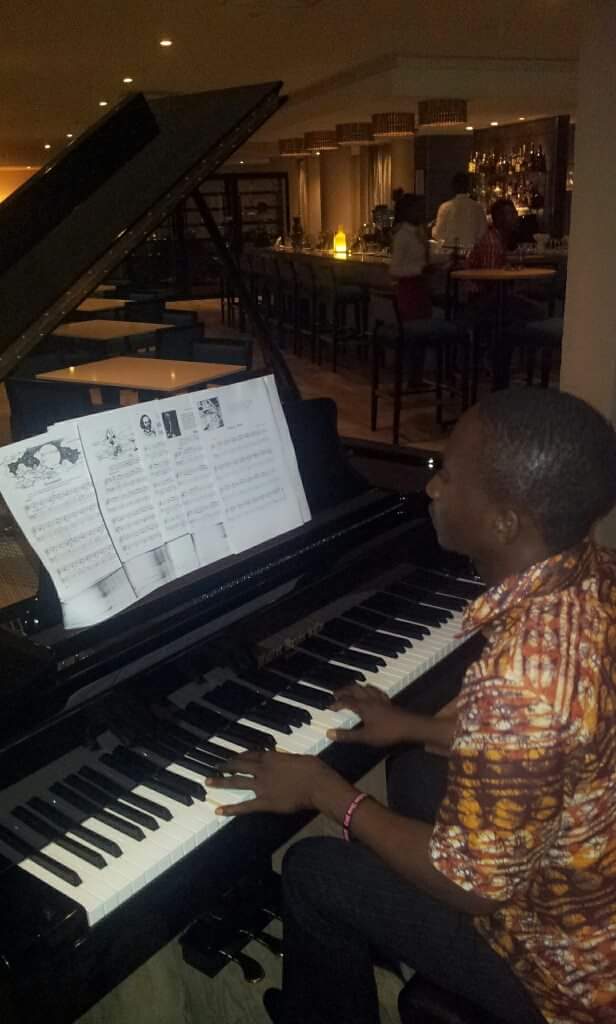


The following text presents an overview of key figures and institutions in the development of classical music in Sierra Leone.
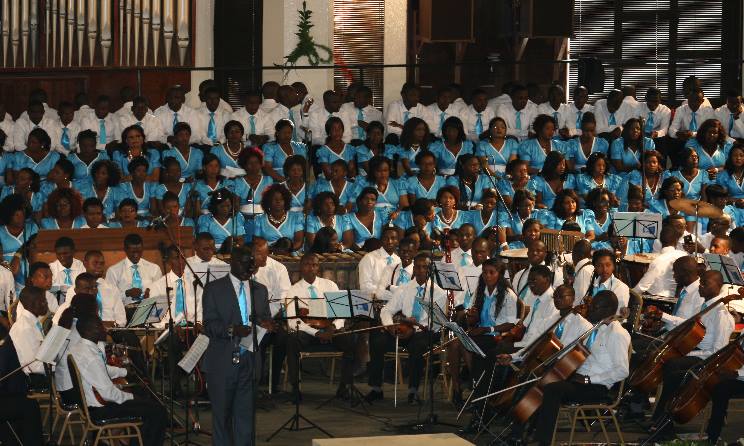
Classical music has been played in Sierra Leone since the country was a British colony. The genre, however, became popular in the late 1990s with the establishment of the Ballanta Academy of Music in 1995.
Named after the late Sierra Leonean composer, musicologist and librettist Professor Nicholas Julius George Ballanta, Ballanta Academy of Music offers music lessons in classical, jazz, contemporary and African music for individuals, churches and school bands.
Classical music is in good shape in terms of popularity, but it took the hard work of some of music maestros in the country. These maestros educated and exposed young Sierra Leoneans to music notation.
Nicolas George Julius Ballanta
Nicholas George Julius Ballanta was born on 14 March 1893 in Kissy, a town close to Sierra Leone's capital, Freetown. As a young boy during his secondary school days, Ballanta played clarinet and became sergeant of the school band. He also passed the Bachelor of Music exams at Durham University.
Ballanta spent most of life in teaching music at the Sierra Leone Grammar School in Freetown. He was well known by students of the Sierra Leone Grammar School and was said to be a mentor to young people trying to pursue a career in music. He died in 1961.
Logie Ebenezer Wright
Logie Wright was one of Sierra Leone most talented musicians. His music career began at home with his Krio family. Like many familiies, the Wrights had a harmonium, which was usually played by elder men as accompaniment to the singing of hymns. Anglican hymn singing and church life were crucial to Logie’s upbringing and musical development. As a boy, he joined the St. George’s Cathedral Choir, following in the footsteps of his older brothers. Logie's family was also gifted. He heard his father play, sing, whistle and hum two different harmonic lines simultaneously. He developed the same ability.
Without much available formal teaching available, many musicians were self-taught. Wright helped young Sierra Leoneans play the piano, sing and learn music notation by giving them lessons as there were very few music teachers at that time. The older generation had usually learnt the tonic sol-fa.
During his time in the University of Sierra Leone Fourah Bay College where he was studying Arts studies, his chief extra-curricular activity was directing live performances at the College Choir and the Glee Club. He was also on radio.
As head of the Music Department of Milton Margai College, he helped popularised classical music education. Since his retirement, he established Ballanta Academy and became its first principal. The academy was the only music school teaching classical music in the country until very recently when the Victoria College of Music started giving lessons.
Wright founded Ballanta Music Academy in the wilderness that was music education in Sierra Leone in the 1960s through to 1980s. He created music teachers for primary and secondary schools out of students with no formal music in their background within three years. His dedication to teaching left little time for original composition.
Some of his compositions include Bye Bye Baby Lullay (a Christmas carol); I Will Lift Up Mine Eyes Unto The Hills (an anthem); Psalm 100-0 Be Joyful In The Lord (an anthem in Krio); Hymn of Adoration (an anthem composed to mark the consecration of his friend, the late Rt. Rev. Prince Thompson as Anglican Bishop of Freetown and Bo, with words by Eldred Durosimi Jones, which is a favourite with choirs); Lulinden (a hymn tune for At The Name Of Jesus).
His arrangements include The National Anthem; High We Exalt Thee (melody by John Akar, words by Clifford Fyle); O Brother Where’re You Going To (Krio shout; De Spirit of Krismes (a carol by Olivette Caulker, adapted from a krio shout); Conquer Temptation (a carol by Olivette Caulker, adapted from a Krio shout); Monye di na Montie (traditional Ghanaian work).
School marching bands
Sierra Leone have lots of school marching bands that are well known to perform classical anthems, hymns, solos and jazz mostly at school thanksgivings, burials and weddings. Many of these bands have existed for a long time but some came into the picture when music education began to rise in the late 1980s – 2000. That is, after the aforementioned people improved music education in the country.
St. Joseph Secondary School band
The St. Joseph Secondary School Band is one of the most outstanding school marching bands in the country. The band members are almost all women. Director of the band Nancy Sewah said, “Every member of the band started getting music lessons from the day she enrols in the school. That has been the foundation to their outstanding performances."
Classical music today
After the civil war which lasted from 1991 to 2002 and destroyed lives and properties, pushing investors away from the country, Sierra Leone has regained its good standing again in terms of development in such fields as culture, sports, infrastructures and social activities. Classical music has become a top choice for entertainment at hotels, and for diplomats and other visitors to the country.
One group well known for providing performances in classical singing is the Ballanta Academy of Music's Music Makers. The group includes the current Ballanta Academy of Music principal a.i who is the director of the group too. And many others who obtained an Associated Board of the Royal School of Music (ABRSM) certificates in various causes like, voice, keyboard, guitar, piano and more. The group Music Makers has performed at several big occasions. One of its most performed song is 'Pakuru Masaba', a traditional song with arrangement by the late Logie Ebenezer Wright. ('Pakuru Masaba', a Temne phrase, means "God Almighty".)
Ballanta Academy of Music festival
The academy organises a choral music festival comprises of Church Choirs and individual performers every year. This is an annual festival that attracts a lots of young people. They also organise a piano recital concert every year. This features top class pianists, including Panos Karan, Joseryl Beckley and Raymond Macauley, from around the world offering to work for the music development in the country not for money. Beckley owns the newly established Rosinka Music School.
Classical music in churches
Classical music is popular in churches especially in the Methodist and Anglican churches. It is very difficult to see a Methodist or Anglican Church in Sierra Leone without an organist. Most churches use an installed pipe organ. A smaller percentage of churches use an electric organ or keyboard. Many of these churches also organise a choir festival every year.
References
- Wikipedia Nicolas Balanta profile
- Music Mask and Maestro - Yulisa Amadu Maddy


Most popular

Ghana: Mr Eazi and MOLIY’s ‘Comfort’ earns Urban Music Awards nomination
21 Oct 2026

Top Afrobeats songs of 2026
19 Mar 2026
Top Naija songs of 2026
31 Mar 2026

Top amapiano songs of 2026
16 Feb 2026
Nigeria: CANEX WKND unveils 2026 programme
21 Oct 2026
Interview: Myra Gold explores cultural identity and creative freedom on ‘Alchemy’
21 Oct 2026
Disclaimer: Music In Africa provides a platform for musicians and contributors to embed music and videos solely for promotional purposes. If any track or video embedded on this platform violates any copyrights please inform us immediately and we will take it down. Please read our Terms of Use for more.

Subscribe to our monthly Newsletter
Follow us on social media


Please log in to post a comment.