














































Boulevard Fest 2022: A three-act metamorphic story about alternative music in Morocco
28 Oct 2022 - 13:19


Act 1: Into the abyss
After a two-year COVID-inflicted hiatus, Morocco’s Boulevard Festival returned with a bang, literally and figuratively. Its 20th edition, a remarkable anniversary for any annual music festival, was welcomed with the expected excitement of a post-lockdown musical celebration featuring the talents of local and international hip hop, rock, metal and fusion artists over three days. But events on hip hop night had the power to cancel all the goodwill of 19 years in one fell swoop.

The last time I covered Boulevard was in 2018, when the organisers had pulled out all the stops to put on one of the most memorable festivals I had seen in years. My review then partly focused on the intense demeanour of Casablanca’s hip hop fans. But what was more interesting for me as an uninitiated reviewer at Boulevard was the vision behind the festival: to provide a space where everyone can come together and enjoy a mixture of non-commercial art in the face of bad-taste mass media. By now, even I know that Boulevard Festival will never waver on its promise to expose and amplify music that does not get enough airtime in the mainstream, and if it did because of some kind of untoward external pressure, it would cease to exist as a matter of principle. This is because the people behind this festival thrive on principles, especially their unwavering love for those who find meaning and joy in alternative arts. They are beholden to the fans, to the energy of the youth, and you could feel their anguish at what transpired.
The night in question showcased a line-up of hip hop artists, including the runner-up and winner of the ‘Tremplin’ competition, XXX Rays and Hero. Tremplin happens a week before the main festival at the same venue. It’s a sort of battle of the bands, allowing upcoming acts from across Morocco to play on a big stage for a chance to perform alongside established local acts and an international headliner.
Giving new talent the opportunity to perform and be discovered has always been one of Boulevard’s main missions, and many of the acts that followed had played at earlier editions, building their fanbase and gaining recognition in their country. Hip hop artists on the 2022 bill, apart from the Tremplin acts, were Iguidr, L'Morphine, ElGrandeToto, Mobydick and Dollypran.
The day started optimistically, with fans pouring into Casablanca’s RUC Stadium. The event does not sell alcohol and lets the general public attend for free, which is perhaps where the problem began. As more and more people arrived, the venue stretched to capacity. By the end of L'Morphine’s show, the mood had shifted among the masses. Fights were breaking out, people were being pushed towards the grandstand, parts of the festival infrastructure was being dismantled. The crowd became impenetrable and the concert bouncers had to carry injured people over the front railing for medical assistance. This was not the Boulevard of old, nor the one that the organisers, who were running around frantically to avert disaster, had envisioned.
Although it wasn’t exactly clear what had caused the violence, people close to the festival told me that part of it was an altercation between members of warring neighbourhood gangs. Apparently they had earmarked the festival as the battleground for their next infantile war game. Some of the people I spoke to also said there had been irresponsible social media posts made by popular rapper ElGrandeToto ahead of the event, allegedly inciting violence, who to cap it all was late for his performance on Friday night. His slow arrival added to the crowd’s palpable discontent as the organisers locked the festival grounds to stop the influx. No one in, no one out. Another lockdown and heaps of frustrated irony affixed to it. But the music continued, because if it didn’t there would have been a mass riot.
Eventually more police were dispatched to clear the crowd outside the stadium, and the next day social media pulsated with reports of armed robbery, assault and sexual violence. Police said later they hadn’t received any official complaints about the latter, but that 20 people had been arrested for theft, battery and drunkenness in public.
A bad start no doubt but an opportunity for everyone to reorganise for Day 2, which was reserved for rock and metal.
Act 2: A metallic light at the end of the tunnel
Rock and metal night was an entirely different animal, and the chaos and anxiety that had consumed the previous night was largely exorcised, even though it had left a bad taste in the mouth. For Day 2, the crowd had transformed from sinewy teenagers in tracksuits to metalheads as you know them the world over: expressive hairdos, band shirts and patches, edgy jewellery, and there was a guy resembling the famous Capitol Hill ‘QAnon Shaman’ with the horns on his head.
This year’s Tremplin rock/metal winners, Aghroomers, brought a sound constructed upon psychedelia, funk, southern blues, desert blues and Amazigh music. Imagine Hendrix sand-surfing in the Maghreb on acid. The Rabat-based band has serious potential but needs to spend a little more time in the rehearsal room if it wants to take its art to the next level – and that would mean having to do away with the blues as a departure point for most compositions. There is definitely something remarkable lurking in the heart of this band, but it will take some serious jamming to uncover it.
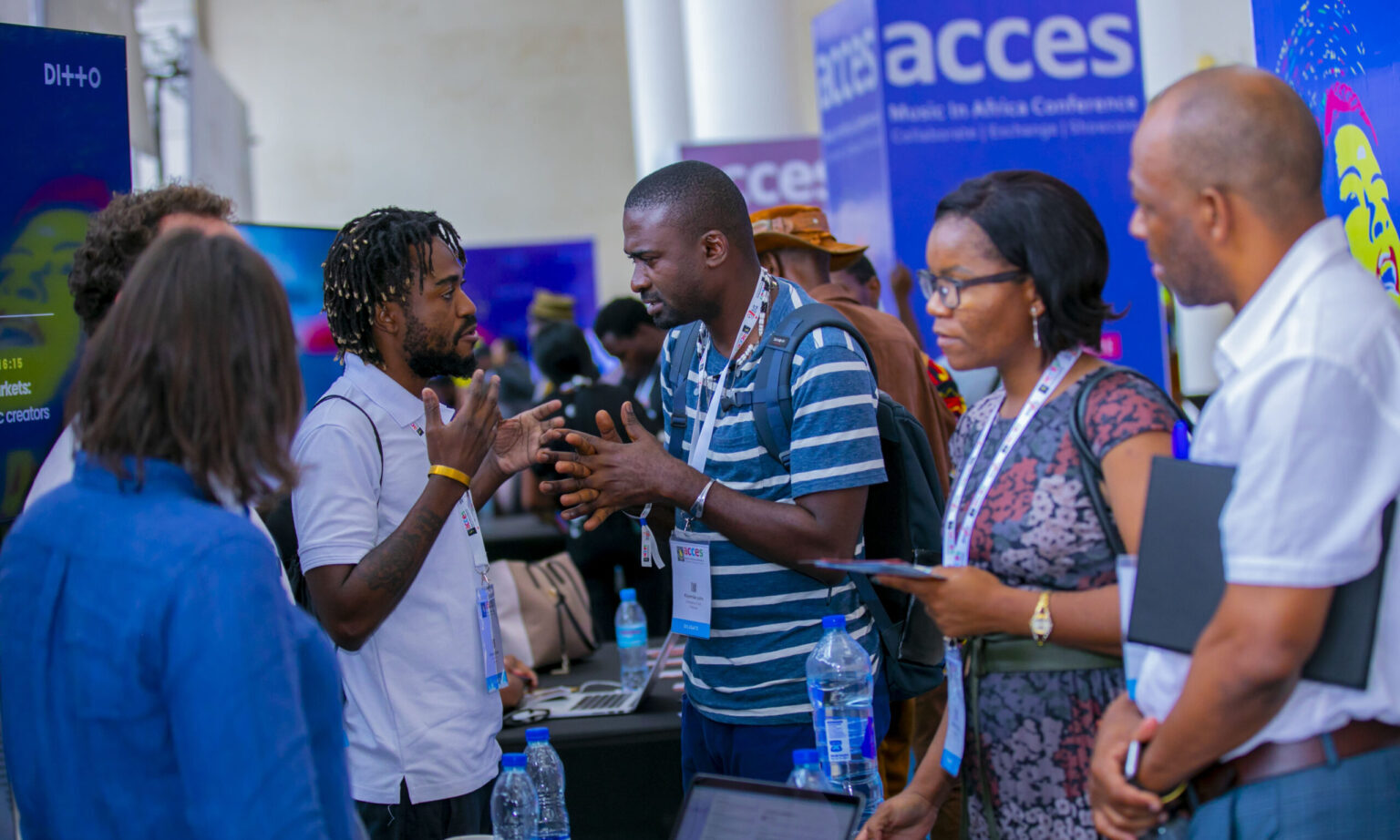
Togolese death metal band (no, this is not a typo) Arka'n Asrafokor was another highlight of the night. The band’s appearance at the festival came after they had played Music In Africa’s ACCES conference in Accra, Ghana, in 2019, where Boulevard’s organisers were blown away by their traditional take on metal and immediately undertook the task of bringing them over to Casablanca. COVID then delayed their ascension to Boulevard by two years, but the band was here now, taking the audience by total surprise. Not only because it’s not often that you see five black guys playing distorted music at a hundred miles an hour, but because the band has honed the art of blending archetypal metal grooves with African percussion to create its own style of catchy folk metal. I suppose the Sepultura Roots album is the closest way one could describe Arka'n Asrafokor’s music... “We had never heard about Roots before making our music,” Arka'n vocalist and guitarist Rock Ahavi told me backstage after his band’s performance. “All we’re doing is mixing our culture and metal. It’s our call. We’ve just come from France where people didn’t know us but after they saw us, they were like, ‘Wow!’ Playing at Boulevard was incredible. We didn’t expect people to like our music so much and it was very, very special for us.”
Next up was the tongue-in-cheek Betweenatna, a Moroccan supergroup boasting members from other well-known local bands like Darga, Reborn and Hoba Hoba Spirit. The springy punk four piece was the tightest band at the festival and provided some respite from the metal, before the most extreme act at Boulevard 2022, Polish death metal band Vader, took over with a thunderous, earth-shattering sound that reverberated throughout your spine and sinuses. Vader has been around since 1983 and is led by the 57-year-old Peter Wiwczarek, who is pure energy from the first blast beat to the last. The band played a set comprising songs written throughout the entire history of extreme metal, most notably from their highly successful album De Profundis. This is not a band to miss when they go on their 40-year celebratory tour in 2023.
Act 3: Love is among us again
If metal night was a sigh of relief from the previous night, Sunday’s fusion programme was pure mountain air – despite the fact that by now RUC Stadium had become a dustbowl from all the stomping and moshing. Having now morphed into an entirely different festival, real love and community could be felt for the first time in three days. The stalls – selling design, photography, apparel, jewellery and vinyl, among other items – were a hive of activity, and the crowd had transformed again, but this time into eclectic types, hippies, a healthy contingent of happy children and Rastafarians who were obviously there for Italian reggae-dancehall artist Alborosie. The Jamaica-based musician, sporting dreadlocks down to his feet, performed with an eight-piece ensemble and went down as one of the most memorable acts of Boulevard 2022. He was preceded by Tremplin runner-up Kamar Mansour and the competition’s winner, Khmissa, a band that could become a gnawa fusion flag bearer in Morocco and the North African region, as well as animated French electro duo L'Entourloop whose live show has them wearing octogenarian masks like Johnny Knoxville’s Bad Grandpa.
But it was the headliner and crowd favourite Hoba Hoba Spirit that brought the house down. The Casablanca-based band – which can be credited for creating arguably the most successful fusion sound on the local scene by blending reggae, ska, punk, rock and gnawa – is the kind that can drive strangers in a crowd to embrace each other and believe that there is hope after all.
A key takeaway from the popular Trainwreck: Woodstock '99 documentary, at least according to some of the commentators in the film, is the toxic culture of America in the 1990s – illustrated by unhinged hedonism, oversexualisation and lack of empathy toward others, all underpinned and exasperated by alcohol and drug abuse. Perhaps there is a similar sentiment that needs to be attached to what went on during Boulevard Festival’s hip hop night, and perhaps we can blame the COVID-19 lockdowns for impassioning young people the wrong kind of way. Whatever the source of this artless exhibitionism, those of us who love the arts and artistic expression will deplore it categorically. Let’s hope that by the time Boulevard 2023 rolls in, there won’t be a need for more anxiety and fear at what is still one of Africa’s most important music gatherings.


Most popular

Top Naija songs of 2026
31 Mar 2026

Top Afrobeats songs of 2026
19 Mar 2026
Ghana: Mr Eazi and MOLIY’s ‘Comfort’ earns Urban Music Awards nomination
21 Oct 2026

Top amapiano songs of 2026
16 Feb 2026
Open call: CANEX Music Business Lab and Songwriting Camp
15 Oct 2026
Nigeria: CANEX WKND unveils 2026 programme
21 Oct 2026
Disclaimer: Music In Africa provides a platform for musicians and contributors to embed music and videos solely for promotional purposes. If any track or video embedded on this platform violates any copyrights please inform us immediately and we will take it down. Please read our Terms of Use for more.

Subscribe to our monthly Newsletter
Follow us on social media


Please log in to post a comment.