
NEFCISA
NEFCISA

The Music In Africa Foundation (MIAF) is proud of its partnership with the Industrial Development Corporation (IDC) as a Strategic Implementing Partner (SIP) for its Social Employment Fund (SEF). Through this collaboration, MIAF is running a national programme that is creating jobs, addressing skills gaps, and strengthening South Africa's creative industries — in line with the SEF's overarching goal to generate work for the common good and build community value through employment, social contribution, and inclusive economic participation. Operating under the banner NEFCISA (National Employment Facility for Creative Industries in South Africa), the initiative is recruiting and training participants, matching them with host organisations, and has already placed 1 500 workers across the country — surpassing its original target of 1 000. NEFCISA is delivered through a network of 20 host organisations spanning five provinces, who are actively hosting participants and contributing to work for the common good across South Africa's creative and cultural industries. Key Objectives: Support employment and entrepreneurship in the creative industries. Offer skills development and training programmes. Foster partnerships between public and private creative sectors. Promote South African creativity at both provincial and national levels Foster community development through social contribution.

ACCES
ACCES

ACCES Conference and Showcase Festival is Africa's leading music industry gathering, bringing together the people shaping the future of the continent's music business. Artists, entrepreneurs, executives, investors, policymakers and cultural leaders from across Africa and around the world come to ACCES to build partnerships, exchange ideas, discover talent and create new business opportunities. Since its launch in 2017, ACCES has become the continent's premier platform for professional exchange and music market development. Combining a high-level conference with a curated showcase festival, networking, exhibitions and industry programmes, ACCES offers a unique space where creativity meets business and where African music connects with the global industry.

Gender@Work
Gender@Work

Music In Africa Gender @ Work is a three-year training programme aimed at upskilling and increasing the participation of female professionals in the African music sector. Launched by the Music In Africa Foundation (MIAF) in April 2019, the programme is connected to the MIAF’s ACCES music conference – a pan-African event held in a different African country every year. This connection enables the programme to reach new participants in a different African country every year. The programme marks the beginning of a more concerted effort by the Foundation to support the participation and inclusion of women in all facets of its programmes and the music sector in Africa as a whole. Over the three years, the programme will aim to address gender imbalances in the sector through training, lobbying, facilitating knowledge exchange and dialogues that foster the interest of women. The broader objectives of the programme are to: Provide industry training for women on critical music industry skills, focusing on: Stage management Electronic music production and recording Music business management Technical knowledge Provide an opportunity for both professional and aspiring women to benefit from the Music In Africa network and its broad range of activities in 2019, 2020 and 2021. Provide a solution-based platform in the form of a round table at ACCES with a view to identify challenges, discuss opportunities and lobby for the interests of female practitioners. Offer participants the opportunity to benefit from programmes offered by MIAF’s partners. Increase access to educational materials. Integrate participants in the broader ACCES programme to maximise experience and exposure to the industry. Record and present training materials on the www.musicinafrica.net, including but not limited to tutorials, templates and other best-practice materials. Communicate women-based themes that support the initiatives and messages of the programme. MAIN TRAINING ACTIVITIES Training in first country (Ghana): In the first year, participants will be trained on all aspects of stage management by a team of experienced stage managers from 10 to 17 November 2019. The programme will offer robust classroom training as well as practical, hands-on training in which participants will also be given the opportunity to manage various aspects of the ACCES performance programme. Training in second country: The second training iteration will take place at ACCES 2020 when the programme will diversify its course to include music production lessons and training on other music business topics. A round-table platform will also be introduced to coincide with the ACCES programme. Training in third country: The third training iteration will take place at ACCES 2021 in a different country, offering an advanced course. HOW DO YOU GET INVOLVED?  As a participant, facilitator or trainer: The programme enrolls up to 12 trainees every year. All opportunities are advertised publicly on this website, and will be added to this page. Please keep checking this page for new calls (below under UPDATES & CURRENT OPPORTUNITIES). As a partner Please contact Claire Metais at [email protected]. APPLY The call for applications for 2020 will be announced soon. The Music In Africa Gender @ Work programme is made possible with the support of the Prince Claus Fund, Siemens Stiftung and Goethe-Institut.

Sound Connects Fund
Sound Connects Fund

For cultural and creative practitioners and organisations operating in southern Africa, access to funding remains a major challenge. The COVID-19 pandemic has also had a massive impact on government policy, spending and the economy in general, and has seen spending on culture being moved further down the list of priorities. Further, the cultural and creative industries repeatedly cite four main areas where investment is needed for growth, which are increased visibility, mobility including access to new markets, finance and support structures.

Instrument Building And Repair Project

Experience the Vibrations African Instruments Exhibition online in 3D

Reviews

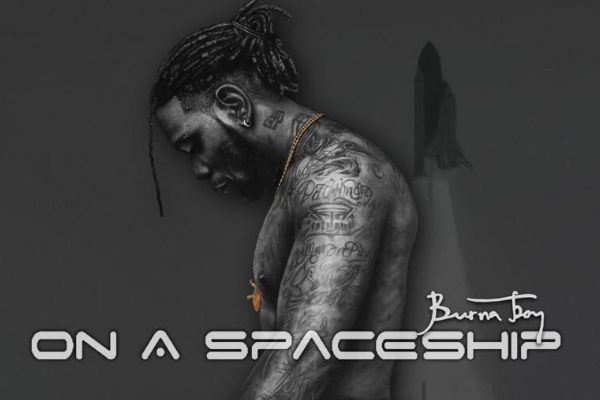
Burna Boy — On A Spaceship

08 Feb 2016 - 12:35

cc-img flag-img

Artist: Burna Boy
Album: On A Spaceship
Label, Year: Spaceship Entertainment, 2015

With On A Spaceship Burna Boy responds to industry snubbing

Burna Boy is so obsessed with critics he has now started both his studio albums with them. The intro to his new album On A Spaceship is a laundry list of his problems in the industry—as narrated by a Nigerian critic. As it is quite common to take critics for haters, you wish he took his own advice as offered on his first album, the excellent L.I.F.E (Leaving an Impact for Eternity), where he sang, "Migrate o, gyrate o. No send the people when dey hate o."

That album, which in time would be recognised as a contemporary pop classic, began with the voice of jazz writer and critic Benson Idonije, who is Burna Boy's granddad. Idonije tries to endorse his grandson's ambitions but you can tell the man's heart isn't fully into it.

You can tell he is torn between duty and taste. So he focuses on the one thing that connects his grandson and his grander taste: the sound. “His music is unique…even though it’s in the hip-hop region,” said Idonije as the song plays in the background. “But you see the good thing about his music is that it has leanings with jazz and other roots…”

The attack on hip-hop aside, Idonije is right. L.I.F.E's true value was its unusual sound. That sound is all but jettisoned on Spaceship. From the immediate high of Spaceship’s first song ‘Oluwa Burna’ and the afro-poppy goodness of ‘The Realest’, the album descends into a blur of average tunes. The disappointment is traceable to the absence of Leriq, producer of L.I.F.E. The partnership spawned a fresh sound on radio that weirdly was also a throwback. It launched Burna’s career but for all of its excellence, the album and hit single 'Like to Party' came up short at major award ceremonies.

Many pop stars would cash their cheques and shrug off the lack of awards but Burna grew up too close to criticism to not care. Maybe it’s in his genes. He cares deeply and must view his inability to win an award as an extension of criticism. On social media and in at least one interview, he has complained publicly about being shunned at major awards. Perhaps award juries are unsure the category to put an artist as singular and with an eclectic palette as Burna.

At the recent Headies the Nigerian public was treated to how artists—even ones like Olamide who one think shouldn’t care about institutions and awards, given his loyalty to the streets—react to not receiving their due. How much more Burna given his proximity to Idonije, perhaps the country's most respected music writer, and who was also manager to afrobeat maestro Fela?

Paradoxically, the response to the critic's statements on Spaceship produces the album's best song the aforementioned ‘Oluwa Burna’. The song's immediacy, its threatening note urges attention and rewards it. Coming in as first song means the whole album peaks too early. The singles tossed off in the interval of first and second album, including ‘Don Gorgon’ and ‘Rockstar’, find no space here even when they could have helped. The remarkable single ‘Soke’ is however a bonus track.

The Wizkid feature ‘Single Girl’ fails to live up to the abilities of both singers, although the electro-beat is catchy. The force of ‘Duro Ni Be’ with Phyno, which shares semblance to Davido’s ‘Fans Mi’, deserves its spot on any car’s playlist. He drawls a shot at his perceived enemies: “I no get time to go award show. How me go go sit down start convo with dis hating industry?” He may not realise it but it is the second time on the album where responding to his obsession with critics produces a highlight.

The whole enterprise puts Burna's anger into perspective. That craving for respect is connected to the young Burna's closeness to criticism. He understands its usefulness. Unfortunately, that understanding has opposing effects: He produces fine music in response; without that pressure the rest of his music dangles not too far from disposability.

Burna had always had a closeness to his pop peers in the sexual content of his songs. In fact, one of the song with a future in clubs ‘On a Very Good Day’ with Wande Coal is on the subject. Yet somehow Burna Boy looked apart from them in barely mentioning how rich he is or has gotten. He supplanted that impulse with consciousness. A foreign-schooled citizen, he identified with the underclass by channelling 1990s Naija pop rhythms on L.I.F.E , a sound produced mainly by young men from mostly deprived suburbs.

How much of the failure of Spaceship is due to Burna's chagrin at how he has been treated by the industry? Who knows? But here's a man who only wants to be an artist and not a big man and they won't let him. L.I.F.E should have won major awards. That it didn't is an indictment on Nigeria's award shows. If they failed to recognise a great album, Burna is saying, he will provide them with an average one so the snubbing can be reasonable. This theory, of course, implies that Burna Boy has cut his nose to spite the face.

In the end, the unevenness of Burna Boy's sophomore may be due to the absence of the Burna Boy-Leriq partnership, but it is also a kind of vengeful poetry directed at the industry. If the industry won’t recognise greatness, On A Spaceship is what it deserves.

Please log in to post a comment.

Most popular

Disclaimer: Music In Africa provides a platform for musicians and contributors to embed music and videos solely for promotional purposes. If any track or video embedded on this platform violates any copyrights please inform us immediately and we will take it down. Please read our Terms of Use for more.

newsletter banner

Subscribe to our monthly Newsletter

Follow us on social media