





























































Farewell to Ndikho Xaba – a little known genius of SA music
26 Jun 2019 - 11:30


By Gwen Ansell
It’s the late 1990s at the Windybrow Theatre in Johannesburg. I’m with an American-born friend whose jazz tastes were shaped by the Chicago free music scene of the 1970s. Onto the stage walks a slight, goateed figure in a blue African shirt, who proceeds to draw astounding music from… a water cooler. My friend responded: "Damn! Why didn’t I know this guy before?"
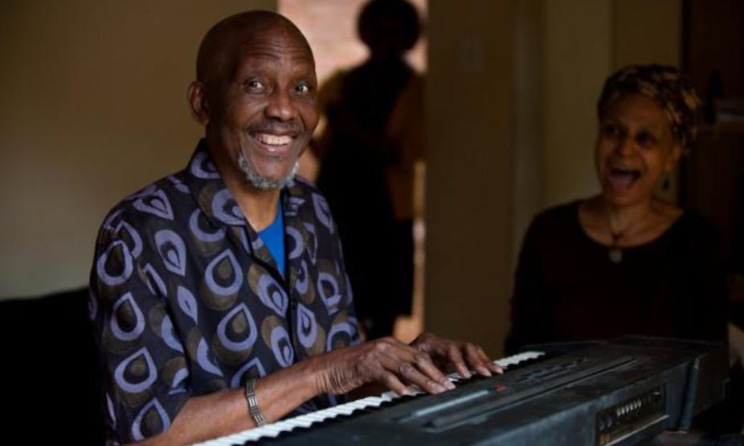
Too many people didn’t know Ndikho Douglas Xaba – multi-instrumentalist, instrument maker, composer, actor, teacher and revolutionary. Hopefully, it isn’t too late for them to learn about the legacy and contribution of this musician’s musician. Xaba died peacefully on June 11 aged 85.
Xaba’s journey took him across South Africa – from the streets of Pietermaritzburg in the province of KwaZulu-Natal to Queenstown in the Eastern Cape and the musical ferment of Johannesburg’s Dorkay House – all the way to Broadway, the jazz lofts of San Francisco, Chicago and New York, the training camps of the ANC in exile in Tanzania, the streets of post-liberation Soweto and, finally, back home again.
His music spanned a similarly broad canvas, for he drew no artificial boundaries between styles or genres. He was as comfortable imagining fearless cosmic explorations – he shared a stage with avant-garde musician Sun Ra – as with crafting instantly catchy hits such as 'Emavungweni', first covered by Hugh Masekela on the 1966 album Grrr.
Covert ANC operative
Xaba was born in Pietermaritzburg in 1934, the youngest of six sons of a Methodist minister, James George Howard Xaba, who was a covert ANC operative and founder of the Natal African Teachers Union. His mother, Emily Selina Dingaan Xaba, was a schoolteacher as well as an organist and choir leader. But, as Francis Gooding’s excellent biographical notes on the Matsuli Music Ndikho and the Natives album explain, his family hoped their son would study towards a profession. They did not encourage him in music, so he picked up a penny whistle. He often subsequently described himself as “proudly self-taught”.
Later he, and at least one brother, were active in the ANC. Their activities led to a great deal of ducking and diving, until finally the police’s Special Branch interrogated him. For his family’s sake, it was clear he must move. And so Xaba left for Johannesburg where he picked up sporadic music-related work. He commuted to Durban at times and in 1960 was part of the production of author Alan Paton’s Umkhumbane, with music by Todd Matshikiza.
Increasingly, not only police-state oppression but also the rigid cultural categories of apartheid and the denial of black originality and excellence became intolerable. His ticket out came with a role in another Paton play, Sponono, with music by Gideon uMgibe Nxumalo and an all-black cast. In 1964, the play was invited for a short Broadway run. When it ended, Xaba stayed. It was the beginning of 34 years of exile.
In America, Xaba hooked up again with Miriam Makeba, Hugh Masekela and others. Their musical campaigning, he recalled, had a clear agenda: "One: we are black. Two: we have been colonised. Three: we were enslaved. Four: we were victims of imperialism. We are victims of racism collectively – so how can you divorce yourselves?"
He had no illusions about racism in America. On arriving at Kennedy Airport on a snowy day, and being forced to pose for photographs in scanty Zulu attire he said: "… our African-American brothers who worked in the airport didn’t want anything to do with us. Because to them, here was Tarzan – live! … but after we had changed into our suits those same people are like, ‘Hey, my brother! How ya doin’ man?" Xaba created a powerful sonic evocation of those days in the track “It’s Cold in New York” on his Sunsets album.
But Xaba found a great deal in common with the underground free jazz scene across the US, and its discourse of post-civil rights African-American liberation. After New York, where he taught himself piano, he worked in San Francisco where he met his wife, poet and activist Nomusa Xaba, while giving Zulu lessons.
The band he formed, Ndikho and the Natives, played solidarity concerts and community events, mixing far-out improvisation, re-enactments of anticolonial history, solid, funky groove, spoken word and more in a single performance.
Xaba’s late 1960s/early '70s work was part of the countrywide radical cultural and political movement best known through the 1966-founded Art Ensemble of Chicago. Xaba is the only South African exile whose creativity in this context went on record; his music is compelling, surprising and unique. And it was influential.
Teacher
Xaba continued teaching for the rest of his life. He established musical instrument-making facilities and created a music curriculum for the ANC’s refugee school in Dakawa, Tanzania. On his return to South Africa from exile in 1994, he held music and instrument-making classes at his Soweto home, before moving back to Durban.
He began to perform increasingly rarely in South Africa. He had little enthusiasm for an unimaginative and often reactionary commercial music scene. He retained the power to make a conventional music scene – and society – uneasy. His music could bowl you over with its inventiveness and the breadth and erudition of its cultural references.
His life enacted the rejection of boundaries, including the bourgeois boundary between aesthetics and politics. He lived and played what he believed, uncompromisingly, and he imagined beyond any category towards a world where all peoples were family, and where oppression could and would be overcome.
Hamba Kahle.
Gwen Ansell is an associate of the Gordon Institute for Business Science at the University of Pretoria. This article first appeared on The Conversation.


Most popular

Top Naija songs of 2026
31 Mar 2026

Top Afrobeats songs of 2026
19 Mar 2026

Top amapiano songs of 2026
16 Feb 2026
Open call: CANEX Music Business Lab and Songwriting Camp
15 Oct 2026
Open call: National Arts Festival artistic director in SA
15 Oct 2026
Ghana: Mr Eazi and MOLIY’s ‘Comfort’ earns Urban Music Awards nomination
21 Oct 2026
Disclaimer: Music In Africa provides a platform for musicians and contributors to embed music and videos solely for promotional purposes. If any track or video embedded on this platform violates any copyrights please inform us immediately and we will take it down. Please read our Terms of Use for more.

Subscribe to our monthly Newsletter
Follow us on social media


Please log in to post a comment.