

























































Forum reveals progress and concerns facing Kenya’s music policy

06 Jul 2016 - 08:05


Since 2003, Kenya has been on a long and ongoing process to finalize the drafting of its national music policy. At the initiative of the Music In Africa Foundation and Goethe-Institut Kenya, stakeholders in the Kenyan music industry and representatives from various government entities gathered in Nairobi on 29 June to discuss the issues surrounding the country’s much-talked-about music policy draft, released in August 2015.
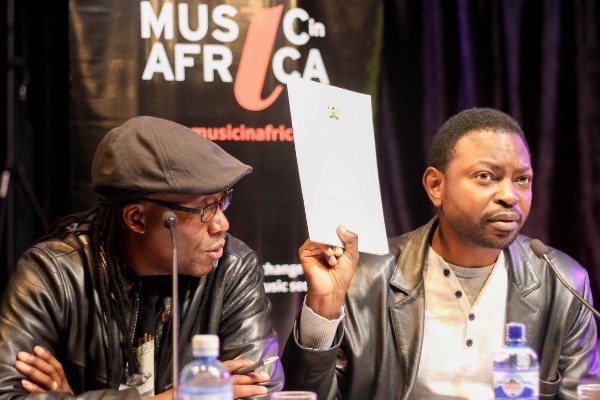
The panel comprised Merit Simiyu, acting CEO of the Music Copyright Society of Kenya (MCSK); John Katana, member of prolific Kenyan band Them Mushrooms and acting secretary General of the Kenya Musicians Union; Perry Alando, founder of the Talent Management Agency and Maureen Kunga from the Kenyan band Elani. The panel was moderated by local media personality Anyiko Owoko.
The event was attended by music professionals representing many segments of the local music sector, including musicians, record label owners, academics and entertainment journalists. The presence of Donald Otoyo, Director of the Permanent Presidential Music Commission (PPMC), was perhaps particularly important because his organisation has been facilitating the writing of the policy.
National music bill is on the cards
One of the highlights of the discussion was an announcement by Otoyo that the PPMC is now refashioning the music policy draft into a national music bill, which will be presented in parliament soon. His announcement caught the attention of the audience, opening a flood of criticism and suggestions. The discussion lasted for about three hours as participants took every opportunity to express their concerns.
Too many bills, too much bureaucracy?
George Gachara, who runs an arts collective in Nairobi called The Nest, noted that the various pieces of government legislation appear to be unnecessarily competing with each other. “In the last few months I have been involved in drafting various policies, including a Culture Bill, a Creative Economy Bill and a Language Bill - and they all sound more or less the same to me,” he said, wondering why the government seemed interested in many different laws, instead of harmonizing them.
The new music policy proposes the establishment of new institutions including the National Music Council, the Kenya Music Talent Academy and the National Music Tribunal, as well as a National Music Fund. Gachara questioned the move to create new regulatory institutions, arguing that they would translate into unnecessary costs. “Creating new institutions is not the solution; this negatively impacts the industry by raising the burden of paying salaries to an industry that is not well funded. Instead the government should strive to empower the already existing entities by having the right people in place,” he said.
Some entities feel left out
There also seemed to be dissatisfaction at the way the music policy has been drafted. Edward Sigei, acting CEO of the Kenya Copyright Board (KECOBO), said the policy would not materialize if the government did not consult comprehensively. He noted that even his organisation’s contributions to the policy had not been fully represented. “Some functions of KECOBO are being taken, yet we are not involved. Our contribution to the policy was not taken into account,” he added.
Responding to this, Otoyo said matters of royalty collection, which fall under KECOBO, would be addressed by the KECOBO Bill, which is not yet finished.
Merit Simiyu added that the government also needs to improve its communication on the policy and in general how it consults with the various entities involved.
John Katana also called on the government to diversify its activities by involving people from outside the main cities. “Nairobi is not Kenya. The dissemination of information needs to get to the grassroots,” he noted.
Also questioning the inclusiveness of the policy Wandia Njoya, head of the Department of Languages and Performing Arts at Daystar University, said she felt that the Kenyan government had not involved education stakeholders in the formulation of the policy. Wandia said without education it would be difficult for the next generation to know about the artists who are currently involved in the industry.
Broadcasters and local content quotas
One of the propositions of the music policy draft is to enforce broadcasters to adhere to prescribed local content quotas. Simiyu noted that the 60% local content target would be achieved if the National Music Bill was approved.
“This policy places a critical importance on broadcasters, who are getting away with not paying for local content. In South Africa, for instance, broadcasters are the main revenue stream for royalties. But in Kenya, MCSK spends a lot of money to collect royalties, in a tedious process, chasing down salons, kiosks. The new policy should help rope in the broadcasters and create a larger royalty pool. Levies collected from music should be ploughed back into the same industry,” he said.
Musicians encouraged to participate
Maureen Kunga encouraged fellow musicians to be more involved in the policy formulation, noting that most Kenyan artists don’t read the official documents that circulate in the industry.
“In January we became activists accidentally, by speaking about royalties,” she said. “If our royalty payment had been good, we would have never raised questions. This only happened because we had doubts. Everyone in the music and entertainment sector should read the music policy and follow up on consequent bills being passed. In law, ignorance is no defense.”
Perry Alando added that it was important for anyone involved in the music sector to read and understand the policy. He said his agency had read the document and raised their concerns, which had been taken into consideration by the relevant officials.
A platform for dialogue
Lauding the efforts of the Music In Africa Foundation and the Goethe-Institut Kenya in hosting the panel discussion, members of the public who attended the event said it was a rare opportunity to obtain vital information from officials, who are often hard to reach. This was therefore an important platform that enabled musicians and others to hear government representatives speak about the policy and to raise their own concerns. It was also a rare opportunity for policy makers to engage with the public.
Following the discussion PPMC gave Music In Africa a copy of the harmonized National Music Bill (attached to this article below). If you have any questions about the proposed bill or comments email the PPMC at [email protected].
Music In Africa Foundation and the Goethe-Institut Kenya will host another panel discussion focusing on the Kenyan music sector in September this year.


Most popular

Top Naija songs of 2026
31 Mar 2026

Top Afrobeats songs of 2026
19 Mar 2026

Ghana: Mr Eazi and MOLIY’s ‘Comfort’ earns Urban Music Awards nomination
21 Oct 2026

Top amapiano songs of 2026
16 Feb 2026

Open call: CANEX Music Business Lab and Songwriting Camp
15 Oct 2026

Nigeria: CANEX WKND unveils 2026 programme
21 Oct 2026
Disclaimer: Music In Africa provides a platform for musicians and contributors to embed music and videos solely for promotional purposes. If any track or video embedded on this platform violates any copyrights please inform us immediately and we will take it down. Please read our Terms of Use for more.

Subscribe to our monthly Newsletter
Follow us on social media


Please log in to post a comment.