












































By Kamzati Konyani
This text provides an overview of gospel music in Malawi. Following voyages of David Livingstone and other British missionaries in the 1800s, Malawi was made a British protectorate on 14 May 1891[i]. The coming of the missionaries diluted and changed the cultural practices that were there already. Most of the major Christian sects are represented in Malawi. Until the 1990s, the dominant sects were Catholics, Presbyterians and Adventists. Musically they were very traditional and gospel music at the time was synonymous with choral performances.
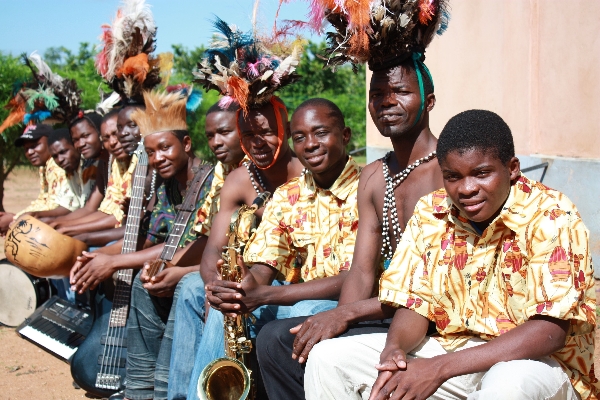
In the 1980s the Holy Cross Choir[ii] from South Africa made an impact on Malawian gospel music, inspiring similar choral performances from the likes of Mhango Salvation Choir, Katawa Singers and Chikhulupirilo Choir, incorporating light keyboard and accordion accompaniment. Using instrumentation had been viewed as blasphemous, as veteran gospel musician Willie Soko testifies: “Performing with heavy instrumentation was viewed as performing dance music, which they felt was not appropriate for God. They thought you have taken club music to church!” [iii]
In the early 1990s Malawi witnessed an increase in Pentecostal churches, which allowed for more flexible views on the use of instrumentation. Soko testifies that during those days, the churches had bands they called “praise teams”. Soloists from the churches started performing with the backing of a full band, introducing a new, modern touch to local gospel that was different from the conventional choral performances.
Distribution
Apart from the influence that the shifting popularity of Christian churches was having on gospel music, distribution also played a major role in shaping it. Another veteran musician, Paul Banda, who led one of the most popular Catholic bands, Alelluya Band, explains that until the late 1980s, Malawi only had one radio station and one recording studio, the Malawi Broadcasting Corporation[iv]. “MBC was recording music for their content and the music was not to be sold. There was no distributor,” he says.
In 1978 Banda and the Alleluya Band recorded an album Malilime, but it was not sold until 1990, when Banda negotiated with OG Issa, who at the time was making and selling mixtapes of foreign music. It became the first group to distribute music with a local distributor in Malawi.[v]This posed an opportunity to other local musicians and as a result, gospel music, which had until then been viewed as only church music, went commercial.
Some distributors, such as Clifton Bazaar Music Centre and Salimu Music Centre came into the market, but OG Issa maintained the market share. Later, with the emergence of CDs, OG Issa bought a CD-duplicating machine and got a license from the Copyright Society of Malawi (COSOMA)[vi], a statutory body that manages copyrights to distribute CDs in the country. Other competing distributors were banned from duplicating CDs. With OG Issa monopolizing the market, he gained more bargaining power, to the point where artists felt they were being ripped off. This led to some of them selling their own CDs, such as Lloyd Phiri, Grace Chinga and Ethel Kamwendo. Some opened their own shops, while others had cars that were moving around townships selling the CDs. This trend of selling continues today, although online platforms are growing in popularity[vii].
Sub-genres of Malawian gospel
Choral: While choral performances still have a significant fanbase, their style has been changed such that most now have heavy instrumentation backing them. There are a few strictly acapella groups in the country, such as Ndirande Anglican Voices, Great Angels Choir and Kamuzu Barracks Gospel Singers.
South African beat: South African gospel musicians such as Sipho Makhabane, Desmond Dube and Rebecca Malope have been idolized and used as source of inspiration for Malawian artists Grace Chinga, Lloyd Phiri and Allan Chirwa. This remains the most popular beat for Malawian gospel music and makes up a large portion of the gospel music fanbase.
Traditional: With Malawian gospel music mostly imitating ‘foreign’sounds, commentators have long called for a ‘national’ sound. One of the artists that came up with a distinct traditional sound is Ethel Kamwendo Banda. She draws from the style she was playing in Kamwendo Brothers Band and Ravers before becoming a born-again Christian, blending rhumba music with a Manganje beat to make her sound unique. Alleluya Band has also been active in including traditional sounds in their albums, with songs such as ‘MusapitendiMawu’ from their album Tiyanjane (1996) and ‘Muzichenjera’ from their album Jubilee 2000 (2000). Another group with a similar approach is the Mboniza Yesu duo, who came up with a blend of Nyau sound with South African house beats.
Urban: Urban genres such as hip-hop, RnB and dancehall have slowly risen into the mainstream, although there is still some resistance by the industry to accept them. Artists such as David Kalirani, KBG, Liwu, Gosple and Jay Josh have been making strides in widening the fanbase of urban gospel music. Live events have also been instrumental in increasing recognition of urban gospel music in Malawi. For example, Live Wise and Die Ready concert in Blantyre in 2013 was headlined by American Christian hip-hop artist Bizzle, Da Tuth while the Cross Movement Concert in 2011 was headlined by American Christian hip-hop artists Lecrae.
Reggae: Reggae has also influenced Malawi’s gospel scene. Many gospel artists just including a reggae song or two on their albums. For example, Ethel Kamwendo Banda included ‘Okondana’ in her album Uthenga. Mlaka Maliro is an artist who converted from secular to gospel music with a reggae touch.
Rhumba and Kwasakwasa: Malawi’s gospel industry has since its origin been influenced by trends in the secular music scene. In 2005 after the release of ‘Hakunamunguka Mawewe’ by Kijitonyama Choir, a Tanzanian gospel outfit, rhumba has become one of the leading sub-genres in local gospel music. Most artists do not specialise in rhumba but added some rhumba songs in their albums - for example, Grace Chinga’s ‘Ndayalura’ on her album Udzaimba Nyimbo.
Country and Western: Country and western is one of the minor subgenres in Malawian gospel. It takes up a small portion of the fanbase. Two notable country artists who were inspired by American country greats such as Jim Reeves and Kenny Rodgers are Allan Ngumuya and Sweeney Chimkango who rocked the airwaves from the 1980s to the end of the millennium.
Performances
Gospel concerts are extremely popular in Malawi, usually more than secular ones. Gospel musicians use their collective efforts when holding their shows to ensure public support. There are usually more than 10 performers during gospel concerts, unlike in secular shows where one performer can have a show with a few curtain raisers or supporting acts. Major venues for gospel concerts in are The ICA Marque in Lilongwe, Robin’s Park and Comesa Hall in Blantyre and Katoto Secondary School Hall in Mzuzu.
Gospel music in Malawi has evolved tremendously and with the adoption of a new cultural policy in Malawi, there is a promise of continuous growth in the industry.


Most popular
Open call: 2026 Gender@Work music industry training in Johannesburg
09 Oct 2026
Gambia: Suntou Susso announce UK tour for ‘The Path of a Griot’
09 Oct 2026

Top amapiano songs of 2026
16 Feb 2026

Top Afrobeats songs of 2026
19 Mar 2026
Call for applications: ACCES 2026 Emerging Artist Spotlight Competition
01 Oct 2026

Top Naija songs of 2026
31 Mar 2026
Disclaimer: Music In Africa provides a platform for musicians and contributors to embed music and videos solely for promotional purposes. If any track or video embedded on this platform violates any copyrights please inform us immediately and we will take it down. Please read our Terms of Use for more.

Subscribe to our monthly Newsletter
Follow us on social media


Please log in to post a comment.