










































High Court orders SA arts council to pay National Arts Festival R3.4m
01 Apr 2021 - 13:30


The High Court in South Africa on Wednesday ruled that the National Arts Council (NAC) pay the National Arts Festival (NAF) R3.4m (about $232 000) of its allocated grant within 72 hours.
A revised grant notification letter sent to the NAF reducing their funding has also been suspended with immediate effect. Additionally, the Minister of Sport, Arts, Culture and Recreation Nathi Mthethwa has been given until 19 April to respond to an earlier NAF appeal, and the costs were reserved.
The order follows legal action taken by the NAF, South Africa’s biggest cultural festival, against the NAC for backtracking on its initial grant offer of R8m.
Speaking to Music In Africa, NAF CEO Monica Newton said the festival had expected the NAC to pay R5.6m within three weeks after the grant was awarded on 28 January. She said the agreement stated that all NAF projects had to be implemented by 31 March and that the NAC had not paid the NAF anything to date despite the NAF immediately commencing with its work.
“They [the NAC] have been talking to the press and in industry briefings, not directly to us other than through the revised grant letter, and there’s never been an indication of double allocation,” Newton said. “We got revised offers on 5 March. This was the first time we heard of the grant reduction. On 9 March we put a settlement on the table, which was declined. We also appealed to the minister to revise it, but that was not done. We felt that the only way for us to get relief was through the courts.”
Arts organisation ASSITEJ SA has also taken the NAC to the Western Cape High Court over the council’s intention to unilaterally reduce funding. The NAC had threatened a number of organisations and individual beneficiaries that failure to sign the revised contracts would lead to forfeiture of their grants. The NAC confirmed this with Music In Africa.
News of the reduced grant publicly broke at a virtual meeting between the NAC and the arts sector in late February, when industry players were told that there was not enough money for the 1 215 approved applicants under the R300m Presidential Employment Stimulus Package (PESP). As a result, the arts council was forced to renege on its contracts with about 600 beneficiaries who had signed agreements with the body, the NAC said.
The PESP was launched as a much-needed injection into the creative economy to create and maintain jobs in the sector and support companies that suffered losses during the COVID-19 lockdown. In October last year, the Department of Sports, Arts and Culture tasked the NAC with administering the fund after it had received more than R660m from the government. Last week, it was reported that the R300m package had gone “missing“.
On Monday, 29 March, Mthethwa held a press conference to update the public and offer clarity on the funding, which is currently in its third phase. During his media briefing, Mthethwa said the budget was mismanaged and denied that there was money missing. He said the NAC had “overcommitted” the funds and that a forensic investigation had been instated to provide clarity.
“For instance, the NAC overcommitted the funds that were allocated to artists by over double the allocated amount in their possession,” he said. About R4.8m was erroneously paid out, according to Mthethwa’s department. He added that it would be unfair to ask artists to pay back the money. “I have instructed the department, working with the council, to start a process of forensic investigation,” he said.
“In the past few weeks, we have been trying to see where we can get additional funds to cover the shortfall created by the mismanagement of funds,” he said, adding that he had asked the National Treasury to “fill the gap” but that request had been rejected.
From the total grant issued to the NAC, about R84m had been paid to 639 beneficiaries by 31 March, according to the council, which has also extended the deadline for the completion of projects to the end of May. No intention to readjust the incorrect grant allocations has been communicated.
The question that many are asking now is, if there is no missing money and R84m has been paid out to date, why isn’t the council using up the remaining R216m to fulfil its obligations during a time when artists are in dire need? In late February, the NAC announced that it had suspended CEO Rosemary Mangope and CFO Clifton Changfoot pending an investigation into the mismanagement of the PESP, without clarifying whether money was allocated beyond the council’s terms of reference or if the suspended officers had directly benefitted from the funds.
Mismanagement of funds
After Mthethwa’s press briefing, NAC acting CEO Julie Diphofa indicated two levels of mismanagement that led to the revised grant notification letters: overcommitted funds by paying out more than what was requested or something approximating a system error that assigned double the funds to the beneficiaries.
NAC spokesperson Tshepo Mashiane elaborated on the usage of “overcommitted”. “When you look at all the applications that were approved by the panel, that amount in total went to R600m-plus. However, the NAC had been allocated R300m, but the reason why the amount went to R600m is that they were applicants that were allocated or awarded money over and above what they had applied for,” Mashiane said.
Forensic audit and lack of transparency
Transparency into the administration of the fund has been questioned from the onset of the process. Immediately upon receipt of a letter confirming the PESP funding, the NAC issued an open call to arts organisations and practitioners on 30 October. The NAC said it was not responsible for the adjudication process of the R300m it had received, despite the suspension of its CEO and CFO.
“We don’t sit and adjudicate anything, it’s adjudicated by an independent panel of experts,” Mashiane said. However, the adjudicators have pointed the finger back at the NAC. “Subsequent to this process, a group of adjudicators complained about how the process was handled,” Mthethwa said. “And this then landed with the new council for their further attention.”
Mthethwa said his department would also focus on the adjudicators throughout the investigation and further actions would depend on the forensic report. It is unclear whether the investigation will be done internally or if a third-party auditor will be contracted to get to the bottom of the scandal. It is also unclear how long the investigation will take.
Sit-in protest at the NAC offices
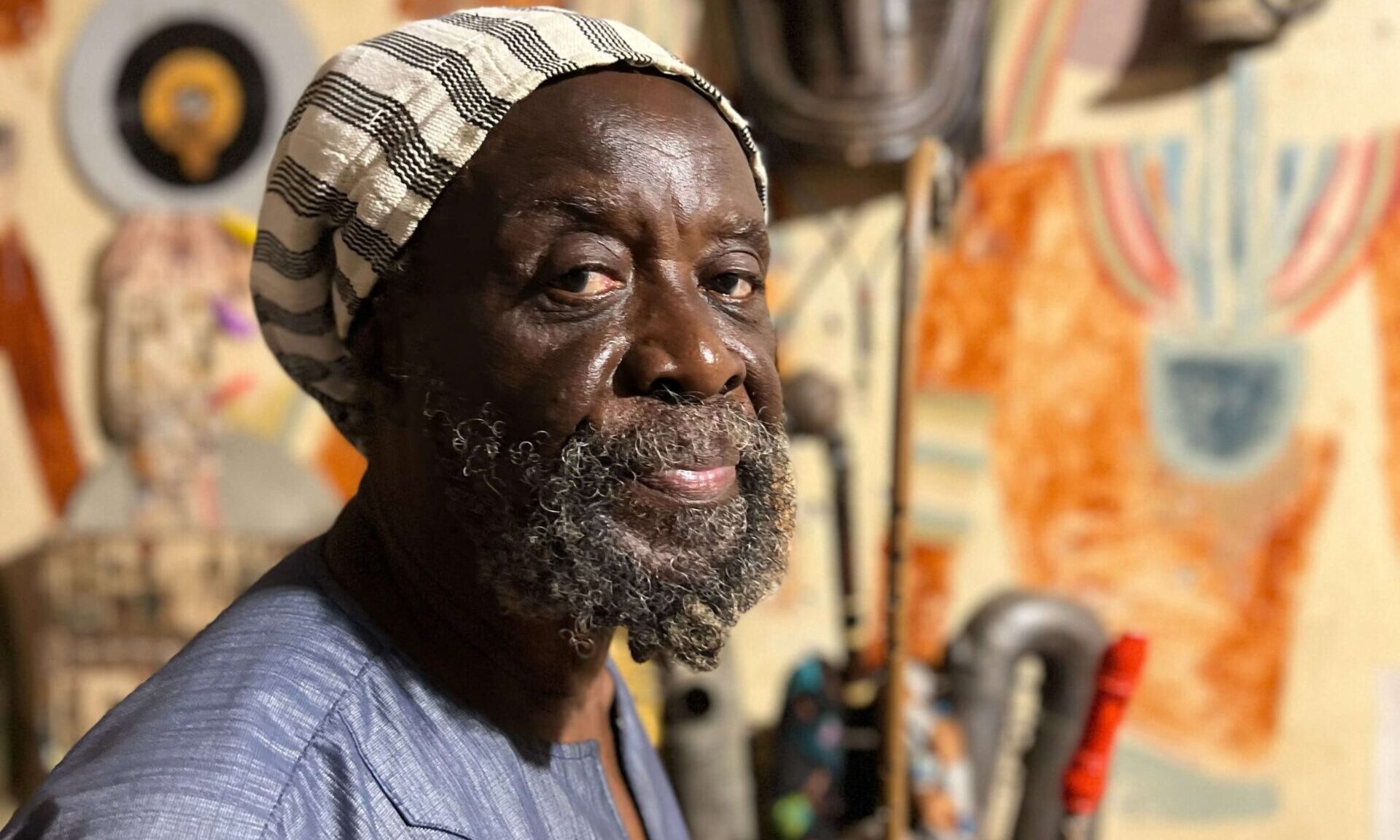
The NAC-NAF court judgement coincides with an ongoing sit-in protest by creatives led by local opera singer Sibongile Mngoma, who have been camping at the NAC offices in Johannesburg for more than a month. The artists argue that there is lack of transparency in the allocation of the R300m PESP.
“I believe they have to come clean about what happened to the money," Mngoma told Music In Africa on Tuesday. “I don’t know if it‘s missing or not, what I do know is that they need to come clean because so far they have only managed to pay R75m out of R300m, so why are they not just able to pay all this money if it’s there?“
Journalist Struan Douglas, who has reported extensively on corruption within the South African music industry over the years, said: “The problem that has been ongoing for about 10 years at the National Arts Council is that a small group of connected individuals are getting the contracts. You see that with Arthur Mafokate, who had six different companies that were awarded roughly R11m.”
Similar protests are taking place across South Africa, including in Cape Town and Bloemfontein.
“There are still a lot of questions including how the recipients [of the PESP] were decided, who has actually been allocated the funding and how the funding has been apportioned,” independent arts producer and manager Nikki Froneman said. “This is just one more issue in a long and problematic DSAC [Department of Sports, Arts and Culture] and NAC history, and potentially it’s the straw that broke the camel’s back and has made artists rise up. For a long time, there have been many issues around how artists are treated and funded, and the policies around arts and culture in South Africa.”
Additional reporting by Ano Shumba.


Most popular

Top Naija songs of 2026
31 Mar 2026

Top Afrobeats songs of 2026
19 Mar 2026
Ghana: Mr Eazi and MOLIY’s ‘Comfort’ earns Urban Music Awards nomination
21 Oct 2026

Top amapiano songs of 2026
16 Feb 2026
Open call: CANEX Music Business Lab and Songwriting Camp
15 Oct 2026
Nigeria: CANEX WKND unveils 2026 programme
21 Oct 2026
Disclaimer: Music In Africa provides a platform for musicians and contributors to embed music and videos solely for promotional purposes. If any track or video embedded on this platform violates any copyrights please inform us immediately and we will take it down. Please read our Terms of Use for more.

Subscribe to our monthly Newsletter
Follow us on social media


Please log in to post a comment.