















































Despite South Africa’s healthy stream of songwriters, earnings in the publishing sector are persistently stifled by inefficient licensing, royalty collections and distribution systems, making it difficult for many talented composers in the country to forge sustainable careers.
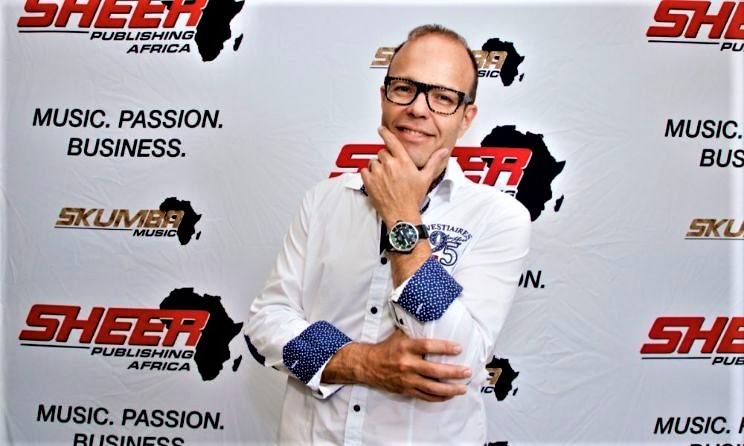
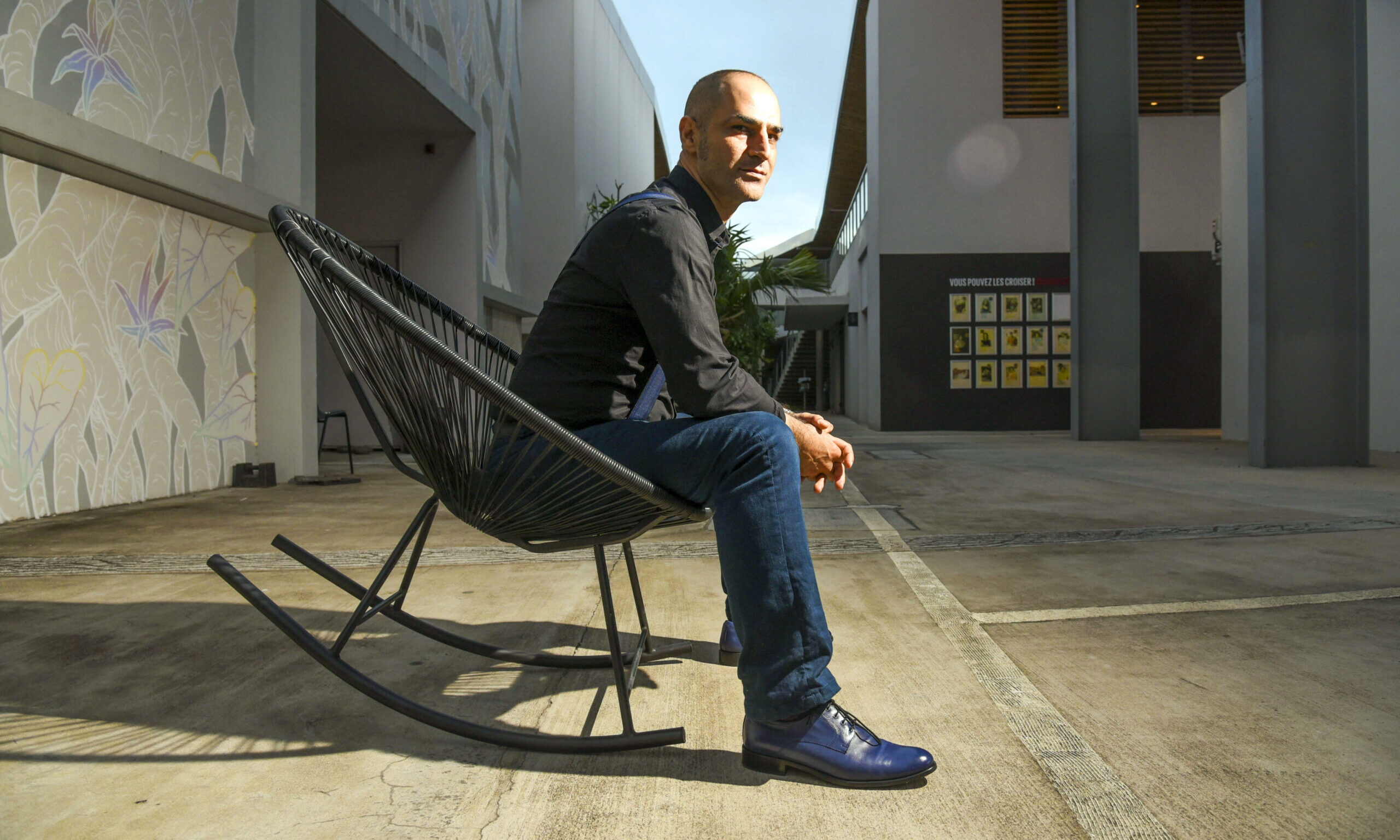
This is according to David Alexander, the newly appointed senior vice-president (SVP) of Downtown Muisic Holdings’ new global department. Alexander is also the founder and managing director of Sheer Music Publishing, the largest African-owned music publishing company on the continent, and the chairperson of the Music Publishers Association of South Africa. His new role comes about a year after Downtown acquired Sheer. The exec has strong convictions about what works and what doesn’t in the music industry, and how things can be improved. For one, he’s certain that an ineffective publishing system has led to a skewed market where a select number of songwriters are rewarded disproportionately while an overwhelming majority remain destitute.
Some of these issues, Alexander says, can be attributed to shifting music consumption trends with the introduction of algorithms, which now suggest new music and artists to listeners. This has produced a biased publishing sector characterised by monopolistic behaviour from big players who limit competition. Adding to this are high data costs in Africa, which asphyxiate the digital market’s ability to reach its full potential, while producing negative knock-on effects such as piracy.
Alexander is one of many industry players championing the localisation of music pricing to improve data access. This would entail offering music products and services in affordable daily or weekend digital packages, which could reduce the high rate of piracy on the continent and convert non-legal music consumers to paying subscribers. Improving this space is paramount for MPASA, which was created to protect the rights of publishers, writers and composers by engaging with collection societies, the government and content users like TV and radio stations, and DSPs. The association currently consists of 30 members who represent thousands of songwriters.
Alexander’s Downtown appointment will see the exec working on new-market strategies and growing the company’s existing services for creators and copyright owners globally.
Music In Africa spoke with Alexander to unpack some of the challenges afflicting the music publishing industry. We also took this opportunity to ask him for advice to help artists navigate this often confusing space.
MUSIC IN AFRICA: MPASA says it plans to undertake broad research to demonstrate the impact of the creative industry on the overall GDP in Africa. What does this plan entail?
DAVID ALEXANDER: The research project will set out to assess the economic contribution of the South African and where possible the African music industry in terms of value, employment and exports. This will be a benchmarking study and allow us to reflect in future years how the changing economic, legislative and technological circumstances in South Africa and the rest of the continent impact on the growth or decline of the music industry.
What weak points in the South African publishing industry do you think need urgent attention?
Our Copyright Act is not current and needs to be amended to reflect modern technological changes that have happened. The copyright amendment bill was recently sent back for retagging and I hope that it will be an opportunity for the stakeholders to engage with government and create a bill that works for all creators in the digital era. There is also a huge education gap that is required to assist composers with understanding how to look after their copyright.
Lack of licensed broadcasters in Africa is a major contributing factor to poor royalty collections in Africa. What do you think can be done to improve collection systems on the continent?
There has been an assumption in the past that broadcasters are properly licensed by the collective management organisation [CMO] in each respective country, but what we are actually finding is that many African CMOs are either not licensing or under-licensing their local broadcasters. The most common practice is a small monthly flat fee rather than a percentage of revenue. We [MPASA] have engaged at a high level to try to improve the licensing regime in many countries, unsuccessfully. Our new strategy is to license the repertoire that we control for the continent directly from South Africa. This is a new strategy that has yet to be implemented, but conversations have started and a process is being formulated, and we have already identified a few broadcasters that we will be approaching next month.
MPASA claims ‘CMOs do not pay songwriters according to usage of their works.’ Can you elaborate on that statement?
Firstly, all CMOs should pay strictly according to usage. The problem is that not all CMOs license music users sufficiently to create a pool of royalties after deducting a reasonable administration fee to cover their costs. If you don’t collect enough money and you spend a lot of what you collect on rent, staff and operations, the members are the ones who suffer by not receiving their due. The next step is that, having acknowledged that there is not a lot of money to distribute as royalties, there is a practice that the CMO could make payments to local members and based only on membership. In other words, it does not matter who wrote hit songs – all members get paid a flat amount of money for belonging to the CMO. This means that members are disincentivised to submit their repertoire, or data, to the CMO because the data has no impact on their payment. Then when the CMO is eventually in a position to make payments based on usage, they don’t have the data from their members to make the payments. It is a vicious spiral and one that I have personally seen at many African CMOs and heard about in many of the smaller CMOs around the world.
A recent report by UK digital entertainment management platform Synchtank indicates that publishers are losing billions due to poor data management. What is the extent of this in South Africa and across the continent?
I completely agree with the principal highlighted here, which is that poor data leads to underpayment, and that means money left on the table. Digital is the fastest-growing source of revenue for the music industry. The notable payment to the newly established MLC [Mechanical Licensing Collective] by the DSPs of more than $424m is an indicator that there is a huge data issue. Unfortunately, a lot of that data is for songs from emerging and developing markets where the desire to get their music online as quickly as possible trumps the need for first making sure that the metadata is fully compliant to ensure that the money flow is directed back to the correct songwriters in their correct shares. Even CAPASSO [the Composers, Authors and Publishers Association] in South Africa is sitting with a large amount of money for South African songs that have not been correctly notified by the composers.
What does Downtown’s new global department mean for you, as well as for creators in Africa and around the world?
As the role has just started, it’s a bit early to state what the focus of the strategy will be. What I can say is that not all new markets are moving at the same speed. The global price of data is falling but Africans pay an average of 8.8% of their monthly income for 1GB of internet access, in comparison to Latin America, which pays 3.6%, and Asians who pay 1.5% of their monthly income. This has a direct impact on the consumption of legal music. A comprehensive global strategy to service the creators and copyright owners in these markets will determine the velocity and resources required for each market, and I am excited by the prospect of rolling out more services in previously underserved markets.
How will your new appointment at Downtown affect your career at Sheer and your role at MPASA?
After 25 years in one position [Sheer managing director], I felt I had reached a ceiling as a leader on the African continent, and I am always looking to improve myself and my own skill set – and one of the ways that could happen was exposure to a bigger marketplace, and could not happen without a supportive partner. I found that support for my personal vision from the Downtown leadership team, and from the moment I walked into [Downtown Music Holdings CEO] Justin Kalifowitz’s office and saw that his one piece of art was a ceiling-to-floor relief map of Africa, I knew that he and I had a common interest. At MPASA, I had asked the board for a one-year mandate to achieve five strategic imperatives, and after that I would love to take a step back to allow some of the younger leaders on the board to take the organisation forward.
What advice would you give an emerging/indie music publishers right now?
Build your catalogue of writers, co-invest in the creation of their works and advocate for their rights. At the moment, it is amazing to see the number of online workshops that are available for those who are interested. Every organisation, both local and international that is dependent on good data, is hosting workshops to teach the importance and methodology. Workshops have been held pre-COVID and MPASA will be hosting a couple of online workshops this year.
What is the most lucrative or untapped income stream for songwriters in the African music market at the moment?
I would have to say that the largest opportunity right now is in digital. The major DSPs that operate on the continent like Apple Music, Spotify and Deezer are fully compliant in their licensing and therefore if an artist releases their music on the major DSPs through a bona fide service, like CD Baby or similar, then both the artist and the songwriter should be able to be paid for all of the streams of their music.
Many emerging composers are typically faced with the question of how to best protect a new composition. What is the easiest to do this?
Notify your song to your local performing rights organisation, either directly or via your publisher. Keep a record of your work, files on the computer and any correspondence around splits. Take screenshots if the conversations are on the phone and keep the pictures safe.
What are some of the mistakes that songwriters often make and what is the best advice you can give an emerging songwriter right now?
Often the songwriter and the artist are the same person and in a hurry to service the needs of the artist – in other words, to get the latest single out online as quickly as possible. The songwriter is then compromised by mistakes that could be fixed easily with time – like getting a split sheet signed off between all of the songwriters who contributed to the song. Firstly, listen to lots of music and not just the music that you like. Secondly, write music like it’s your career. Work on it every day no matter what. Thirdly, work with others – the average number of songwriters on a top-100 song is growing every year.
Would you say it is better for indie artits to self-publish or to seek out an agent to administer their rights?
Both options are available. If a songwriter wants to self-publish, they can use a service like Songtrust and collect their income from around the globe very easily. The role of the publisher is to add value to the song by exploiting the song into mediums that earn more revenue than what would be earned from simply making the song available online – like adding the song to a TV show or a film, or the really big payday when getting the song used on an ad.


Most popular

Top Naija songs of 2026
31 Mar 2026

Top amapiano songs of 2026
16 Feb 2026

Top Afrobeats songs of 2026
19 Mar 2026

AFRIMA 2026: All the winners
12 Jan 2026
Call for applications: ACCES 2026 Emerging Artist Spotlight Competition
01 Oct 2026

Goethe-Institut Kenya brings Ghanaian and Kenyan artists together for MobiArts concert
05 Oct 2026
Disclaimer: Music In Africa provides a platform for musicians and contributors to embed music and videos solely for promotional purposes. If any track or video embedded on this platform violates any copyrights please inform us immediately and we will take it down. Please read our Terms of Use for more.

Subscribe to our monthly Newsletter
Follow us on social media


Please log in to post a comment.