
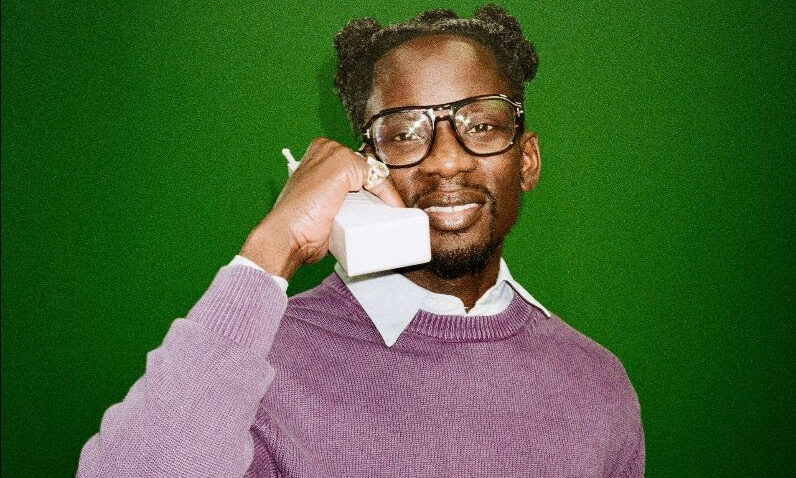























































He has been described as a musician and activist. His story is one of overcoming adversity and beating the odds. Instead of letting his refugee status define him, Jaiksana Soro decided to become a voice for his people, highlighting their plight through his music and empowering them through grassroots projects. Music In Africa recently had the privilege of engaging this rising hip hop artist about music, his organisation Platform Africa and his vision for a peaceful, prosperous South Sudan.
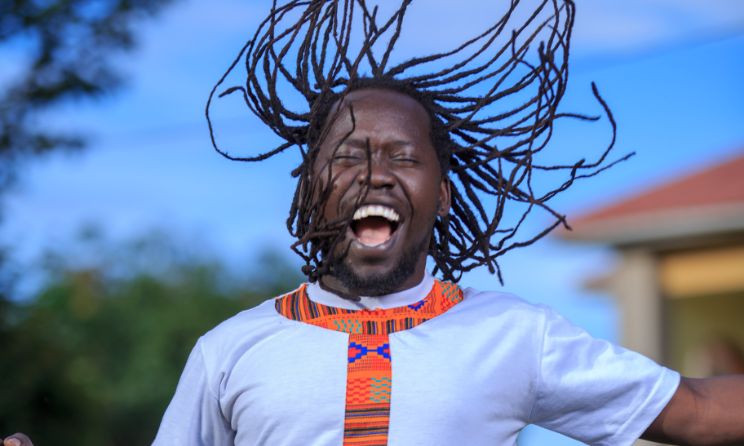
MUSIC IN AFRICA: Tell us about yourself as a South Sudanese, as a refugee, as a musician and as a changemaker.
JAIKSANA: I was born in a refugee camp in northern Uganda on 2 August 1996. A brutal civil conflict had displaced countless people from Southern Sudan [now South Sudan], including my parents. In the refugee camps, we were faced with the challenge of trying to make a living in the absence of opportunities, deprived of everyday living necessities. So when the Comprehensive Peace Agreement was reached in 2005 and we were able to return to South Sudan under the repatriation programme, we were not only relieved but also hopeful.
However, after a few years, things began to go wrong. Another conflict pitting South Sudan President Salva Kiir and his deputy Riek Machar erupted between 2013 and 2016, causing us to return to the refugee camp. I was turning 20 in 2016, so I was more aware of things, and it was sad to have a home one day and then have everything taken away from you the next. That year, instead of despairing, I decided to co-found Platform Africa, a non-profit organisation dedicated to changing the narrative and empowering refugees. My music continues on that building block, telling stories and empowering others through it.
What does your music mean to you and what do you hope to achieve through it?
Writing songs and putting them out there can be really powerful. When you consider a song as a vehicle and what it can carry, music can be an important medium that helps put a mirror on society or help us find meaning in the face of difficult situations. Apart from my personal story and the issues I faced – such as conflict, being displaced to a refugee camp and dealing with my anxiety – things are really hard right now. The music project I am currently working on titled I Am Still Alive is about that: navigating my mental health and reflecting on subjects like family, displacement, dealing with loss and finding peace.
I hope that by being open about my experiences, I can create music that is rooted in real-life issues that people can relate to. When I released my song ‘Run’, which is about self-love and transcending the obstacles that hold us back in life, I received a lot of positive feedback and inspiring stories from people for whom my music played a therapeutic role in their lives and helped them overcome their struggles. When I wrote it, I didn't know it was something that a lot of people would come to relate to. I wrote a song to heal and free myself, and for that to be meaningful to other people is very empowering. In addition, I hope that my music sets a precedent and emboldens people in the South Sudanese music space to be able to own and tell their stories no matter the shape or form of their native lens.
Why hip hop? How did you get introduced to the genre?
We didn‘t have a lot of music to listen to while growing up because my mother, like many other women in the refugee community, never owned a radio, let alone a TV. So all the music I interacted with came from video halls and bars with TVs. Video halls are like makeshift theatres because there‘s usually just one old 32-inch TV and a bunch of people, sometimes hundreds, gathered to experience music and the outside world. Since it was expensive to afford, we made sure to save and use our money for the most interesting programmes. For me, a Sunday programme called SM, short for Special Music, was my favourite, and it was here that I got introduced to R&B and hip hop, and beyond just learning about new genres of music, I also experienced the use of words, rhythm and melodies to tell stories, and remind institutional power where true power lies. Fast forward to the present date, I feel that hip hop has helped me find better alternatives to deal with issues in life. I dealt with anxiety, and still do wrestle with big questions around the meaning of life, and I built a relationship with music as a healing agent, using it as a crutch and a form of therapeutic relief or escape.
When I decided to work on my album, I naturally fell back on my favourite genre – hip hop. I wanted my music to be uplifting, but at the same time I wanted it to start conversations on issues that are often overlooked in our communities, like mental health or displacement, and rap is a form of expression that allows that kind of depth, and the ability to build lyrics with layered meanings that leave bread crumbs for people to follow and form their own interpretations of things.
What are the other genres you embrace?
Besides rap music, the other genre that I like is experimental music. My younger siblings are both rookie producers, and they sometimes make music that doesn't use instruments in the conventional way, yet when you hear it, you go like, “Wow, this is aesthetically pleasing, in a melodic sense.” Because they’re not fluent in music theory, their creativity is not fenced in by the constraints of what professional or classical music should sound like, giving them the unique advantage of using surprise as an element of their compositional aesthetic. I am always blown away by the creative sounds they come up with. My brother Taylor Beats once sat in a room with a musician called Franko jamming on the piano and they ended up making a record about local South Sudanese food. They talked about food in a comedic way and the song topped the charts in South Sudan. Do we call that an experimental music theme?
Another genre that I love is Afrobeats, which I prefer to describe as African sounds because I don’t want to use the word ‘Afrobeats’ as a blanket term that portrays the continent/African music as a monolith. African music is finally assuming its position on the world stage – songs like ‘Ameno’, ‘Love Nwantiti’, 'Jerusalema', or musicians like Diamond Platnumz and Burna Boy. Others are enjoying record numbers of streaming, viral challenges and dance videos on short-form video platforms like TikTok, Reels and YouTube Shorts. But the standout point is that African sounds and the genres or styles evolving from the continents are fresh. Because they’re uniquely tied to our identity and cultures and it’s something that only we can bring to the table, so there’s a responsibility on the part of African creators to document our sounds and patterns.
Finally, R&B and EDM are among the other genres on my list. The album I am currently working on is a musical palette that blends many of these genres and incorporates sound samples that push the boundaries of sound design and integration of themes to strengthen both message and meaning.
Who are your greatest influences musically, and what role do your Sudanese roots play in your music? What is the role of traditional music?
Witt Lowry, Ivan B, and NF are my biggest influences but I also listened to a lot of Emmanuel Jal’s music in the past. His War Child album was ground-breaking in terms of how he presented the stories of former child soldiers like himself. To answer your second question on the role of my South Sudanese roots in my music, I was basically raised in times of civil conflict, lived as a refugee and witnessed domestic violence. Because of that, I am constantly working to bring about change in my life and community through my activism and music, so my roots and story are like a map or guide of where I came from, where I am now and where I want to go. In a few words, it helps me become authentic and I want for my music to mean something. In terms of sound, I am also exploring our local South Sudanese sounds and incorporating some of them into my music to create something that is holistically different and unique.
Traditional music, in my view, promotes the creation of identity and community. Each community has its own collection of instruments, structures or rhythms and vocabulary, which serves as a powerful tool for people to not only celebrate who they are but also to recreate what has gone before and to establish who they want to be in the future. In an age where technology is revolutionising how we listen to music, a focus on developing digital libraries of our traditional music is essential not only to preserve it but also to allow people to sample and improve it. I’m not sure if it’s just me, but the amapiano genre from South Africa, for example, sounds just like my traditional music from the Pojulu tribe. Who knows, if we are able to create a collection of our sound and incorporate amapiano, we could be the next global fad.
How can you describe your journey as a musician so far?
This is usually where we list all of our trophies and accolades and brag about our vast wealth, but for me this is a chapter that has yet to be written. However, I was nominated for the Best New and Promising Artist at the South Sudan Musician Awards in my first year as a musician, and despite not winning, that went a long way in proving we have the right foot in the door. Our message of self-positivity has quickly earned us a large following and listeners across South Sudan, Uganda the US, Germany and beyond.
What are your future goals?
Setting up a music studio in the refugee camp is one of them. I want to offer everyone in the refugee camp a voice and a platform to express themselves. We recently began a podcasting and media production programme for refugees in the Rhino Camp refugee settlement through our organisation Platform Africa. We secured a project called #ASKnet, short for Access to Skills and Knowledge network, and in parts of the workshops I was able to bring my producer DJ Poppa to record some tracks for the refugees, and the experience is still one of the best I’ve had this year. We are currently working on a mobile lab project in partnership with Global Innovation Gathering where we took a truck and converted it into a mobile workshop and workspace to deliver workshops to remote villages in the refugee camp. So we’re hoping to set up a mini studio in the lab project to produce music as well.
In addition to that, I want to establish South Sudan's first professional label and assist in the development of the future generation of storytellers.
Your vision for South Sudan?
My vision for South Sudan is simple. I want to see a country that can put its tumultuous past behind it and build a just, peaceful and affluent future that is led by its youth. This has to start with a political will to make it happen, meaning the implementation of the Revitalised Agreement on the Resolution of the Conflict in the Republic of South Sudan.


Most popular

Top Naija songs of 2026
31 Mar 2026

Top Afrobeats songs of 2026
19 Mar 2026

Top amapiano songs of 2026
16 Feb 2026
Open call: CANEX Music Business Lab and Songwriting Camp
15 Oct 2026
Ghana: Mr Eazi and MOLIY’s ‘Comfort’ earns Urban Music Awards nomination
21 Oct 2026
Nigeria: CANEX WKND unveils 2026 programme
21 Oct 2026
Disclaimer: Music In Africa provides a platform for musicians and contributors to embed music and videos solely for promotional purposes. If any track or video embedded on this platform violates any copyrights please inform us immediately and we will take it down. Please read our Terms of Use for more.

Subscribe to our monthly Newsletter
Follow us on social media


Please log in to post a comment.