

















































NEFCISA
NEFCISA

The Music In Africa Foundation (MIAF) is proud of its partnership with the Industrial Development Corporation (IDC) as a Strategic Implementing Partner (SIP) for its Social Employment Fund (SEF). Through this collaboration, MIAF is running a national programme that is creating jobs, addressing skills gaps, and strengthening South Africa's creative industries — in line with the SEF's overarching goal to generate work for the common good and build community value through employment, social contribution, and inclusive economic participation. Operating under the banner NEFCISA (National Employment Facility for Creative Industries in South Africa), the initiative is recruiting and training participants, matching them with host organisations, and has already placed 1 500 workers across the country — surpassing its original target of 1 000. NEFCISA is delivered through a network of 20 host organisations spanning five provinces, who are actively hosting participants and contributing to work for the common good across South Africa's creative and cultural industries. Key Objectives: Support employment and entrepreneurship in the creative industries. Offer skills development and training programmes. Foster partnerships between public and private creative sectors. Promote South African creativity at both provincial and national levels Foster community development through social contribution.

ACCES
ACCES

ACCES Conference and Showcase Festival is Africa's leading music industry gathering, bringing together the people shaping the future of the continent's music business. Artists, entrepreneurs, executives, investors, policymakers and cultural leaders from across Africa and around the world come to ACCES to build partnerships, exchange ideas, discover talent and create new business opportunities. Since its launch in 2017, ACCES has become the continent's premier platform for professional exchange and music market development. Combining a high-level conference with a curated showcase festival, networking, exhibitions and industry programmes, ACCES offers a unique space where creativity meets business and where African music connects with the global industry.

Gender@Work
Gender@Work

Music In Africa Gender @ Work is a three-year training programme aimed at upskilling and increasing the participation of female professionals in the African music sector. Launched by the Music In Africa Foundation (MIAF) in April 2019, the programme is connected to the MIAF’s ACCES music conference – a pan-African event held in a different African country every year. This connection enables the programme to reach new participants in a different African country every year. The programme marks the beginning of a more concerted effort by the Foundation to support the participation and inclusion of women in all facets of its programmes and the music sector in Africa as a whole. Over the three years, the programme will aim to address gender imbalances in the sector through training, lobbying, facilitating knowledge exchange and dialogues that foster the interest of women. The broader objectives of the programme are to: Provide industry training for women on critical music industry skills, focusing on: Stage management Electronic music production and recording Music business management Technical knowledge Provide an opportunity for both professional and aspiring women to benefit from the Music In Africa network and its broad range of activities in 2019, 2020 and 2021. Provide a solution-based platform in the form of a round table at ACCES with a view to identify challenges, discuss opportunities and lobby for the interests of female practitioners. Offer participants the opportunity to benefit from programmes offered by MIAF’s partners. Increase access to educational materials. Integrate participants in the broader ACCES programme to maximise experience and exposure to the industry. Record and present training materials on the www.musicinafrica.net, including but not limited to tutorials, templates and other best-practice materials. Communicate women-based themes that support the initiatives and messages of the programme. MAIN TRAINING ACTIVITIES Training in first country (Ghana): In the first year, participants will be trained on all aspects of stage management by a team of experienced stage managers from 10 to 17 November 2019. The programme will offer robust classroom training as well as practical, hands-on training in which participants will also be given the opportunity to manage various aspects of the ACCES performance programme. Training in second country: The second training iteration will take place at ACCES 2020 when the programme will diversify its course to include music production lessons and training on other music business topics. A round-table platform will also be introduced to coincide with the ACCES programme. Training in third country: The third training iteration will take place at ACCES 2021 in a different country, offering an advanced course. HOW DO YOU GET INVOLVED?  As a participant, facilitator or trainer: The programme enrolls up to 12 trainees every year. All opportunities are advertised publicly on this website, and will be added to this page. Please keep checking this page for new calls (below under UPDATES & CURRENT OPPORTUNITIES). As a partner Please contact Claire Metais at [email protected]. APPLY The call for applications for 2020 will be announced soon. The Music In Africa Gender @ Work programme is made possible with the support of the Prince Claus Fund, Siemens Stiftung and Goethe-Institut.

Sound Connects Fund
Sound Connects Fund

For cultural and creative practitioners and organisations operating in southern Africa, access to funding remains a major challenge. The COVID-19 pandemic has also had a massive impact on government policy, spending and the economy in general, and has seen spending on culture being moved further down the list of priorities. Further, the cultural and creative industries repeatedly cite four main areas where investment is needed for growth, which are increased visibility, mobility including access to new markets, finance and support structures.

Instrument Building And Repair Project

Experience the Vibrations African Instruments Exhibition online in 3D

News

Kenya: MCSK asks MPAKE to stop collecting royalties

24 Jul 2018 - 15:53

cc-img flag-img

The Music Copyright Society of Kenya (MCSK) has issued the Music Publishers Association of Kenya (MPAKE) with a notice to cease with immediate effect any further collections of royalties for Kenyan and international copyrighted musical works that are exclusively assigned to the society.
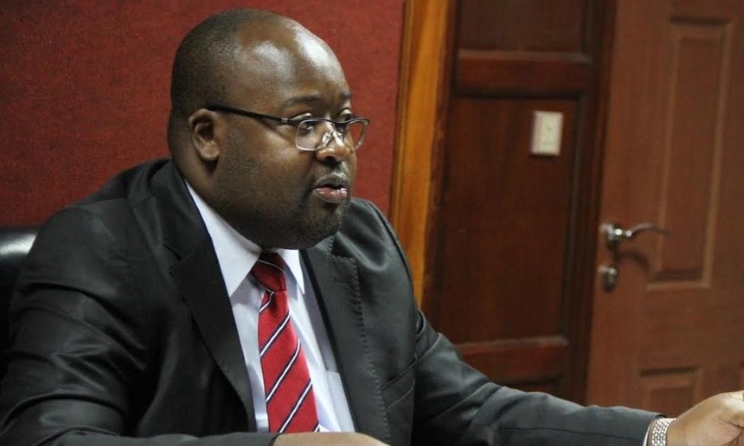
Justice David Majanja is one of the three judges who delivered the 13 July ruling.

In a letter delivered yesterday, the MCSK through its chairperson Lazarus Muoki Muli said MPAKE had no legal basis to act as a collective management organisation (CMO), as its registration and licensing was unconstitutional and violated the provisions of Section 5 of the Fair Administrative Actions Act and Article 47(1) of the Constitution of Kenya.

This development comes after the Kenya Copyright Board (KECOBO) placed an advert in various local newspapers on 19 July highlighting MPAKE, the Performers Rights Society of Kenya (PRISK) and the Kenya Association of Music Producers (KAMP) as the only bodies licensed to collect royalties.

KECOBO's move is in conflict with a Kakamega high court judgment delivered on 13 July by justices Ruth Sitati, David Majanja and Thripsisa Cherere, who nullified MPAKE’s licence to collect and distribute royalties on behalf of copyright holders. They declared that KECOBO’s process of issuing MPAKE with licence No CS 005 on 27 March 2017 was null and void.

The high court sitting also directed the MCSK to account for all licence fees and royalties it collected from 1 January 2017 to date, while KECOBO was asked to proceed with the process of calling for new applications for CMOs under Section 46 (2) of the Copyright Act.

According to the KECOBO advert, the court only declared MPAKE’s 2017 licence invalid and did not raise any issue with a licence that was issued on 17 February 2018. This, KECOBO said, validated MPAKE’s 2018 directive to collect royalties.

A copyright lawyer close to the developments, who spoke on condition of anonymity, told Music In Africa that there was no room for interpretation if a court had ruled a licence null and void.

“If you look at the advert, it is obvious that KECOBO was either misadvised or their intention is to mislead the public,” the lawyer said. “The directives of the ruling are in black and white. In fact, if you ask any lawyer independently, they will tell you that once anything has been declared null and void any other subsequent actions are deemed to be null and void.

"Whichever agreement MPAKE ventured into by virtue of the licence are null and void. Whatever arrangements that were there between MPAKE and any other body are null and void. It is unfortunate that KECOBO, being an institution under the attorney-general’s office, would want to mislead the public as to what the court directed.”

The lawyer said paragraph 37 of the ruling made it clear that the MCSK was at liberty to decide how to collect royalties for its members by virtue of deed of assignment.

Paragraph 37 states: “There is nothing in the Copyright Act which limits the ability of MCSK to collect royalties on behalf of its members and as KECOBO pointed out, the licensed CMO is required to collect royalties on behalf of non-members and it is up to [the] MCSK to decide how it wants to collect royalties on behalf of its members."

An MCSK representative, who also spoke on condition of anonymity, said the CMO would be able to account for all monies it had collected between 2017 to date.

“We have been collecting royalties and licence fees and we have records to prove that,” the MCSK representative said. “However, this past year has been very damaging. We have lost a lot. Currently, we have not been paid for seven months and several of our regional offices have been shut down.

"We have even been forced to dispose of some of our assets just to be able to sustain our offices. So if we are asked to account for the money we have collected, it’s very easy, we have no money.”

"What KECOBO is not coming out and telling the public truthfully is that before we were denied our licence we religiously submitted reports after every three months. At some point it became very hard to collect because KECOBO was not facilitating the enforcement and prosecution process. I think the plan was to frustrate what we do so that the public would lose faith in us and so they could bring in someone they have vested interest in.”

Afro-fusion musician Sam Ondieki said the court’s ruling had triggered a heated debate among musicians, many of whom were only interested in whether royalties would be paid out to them.

“We have waited for an entire year for this verdict,” Ondieki said. “So we are not so much keen in knowing who will be the next CMO. As musicians we want to be paid our royalties before we transfer rights to someone else. We do not know who to believe among the two [MCSK and MPAKE], although the court’s directive is clear.

"Personally, I can openly say that it is impossible for me to trust the MCSK. I have been a member for about 10 years and I am yet to receive a penny, yet my songs have been receiving airplay.”

Please log in to post a comment.

Most popular

Disclaimer: Music In Africa provides a platform for musicians and contributors to embed music and videos solely for promotional purposes. If any track or video embedded on this platform violates any copyrights please inform us immediately and we will take it down. Please read our Terms of Use for more.

newsletter banner

Subscribe to our monthly Newsletter

Follow us on social media



