




























































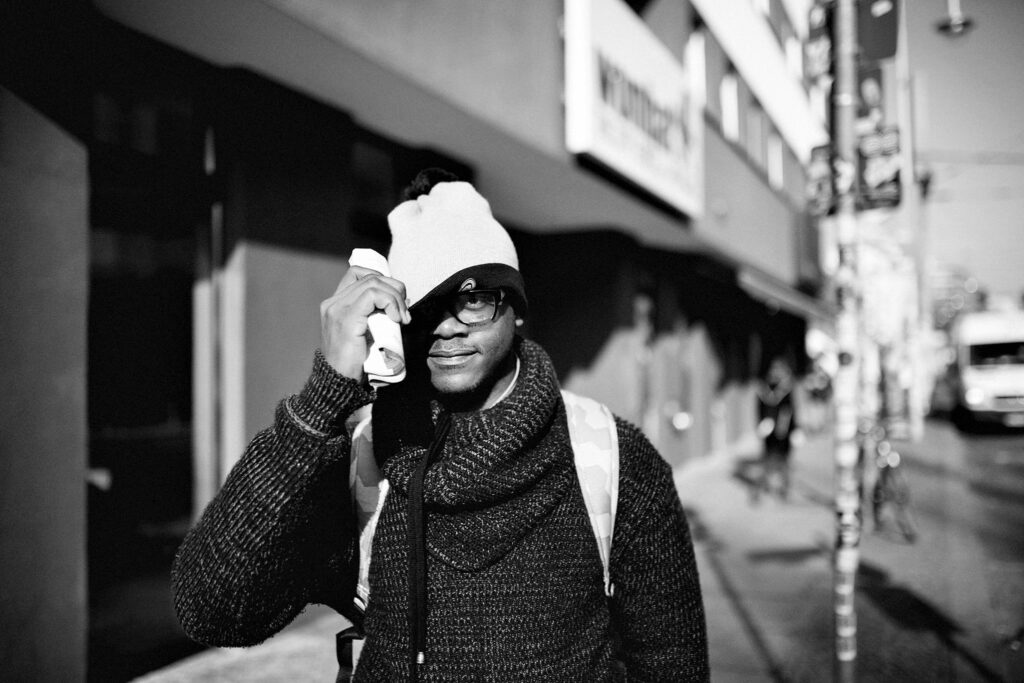


Questions attend the arrival of a new talent. Who he? Where he from? What are his influences? The answers are Kiss Daniel, also called Vado; South-west, Nigeria. But the last question is tricky.

On occasion, his vocal styling locates early 2face; on others 9ice; on most Kiss Daniel, whatever that turns out to be.
On the first song off his outstanding debut album New Era, Kiss Daniel gets in on the fun. He has his own question: Who the new king? he inquires. Quite a cheeky, provocative question to ask by a new artist who’s nominating himself for the throne. His candidacy comes on the strength of four successful singles: ‘Woju’, ‘Laye’, ‘Good Time’, ‘Mama’.
The first one was a surprise hit, after ‘Shoye’ his debut single failed to catch enough fire. The second was a rip-off of ‘Woju’, something he alludes to on ‘Nothing Dey’, an elegiac debut album closer in the manner of Asa’s ‘Iba’: “Nothing dey if I use one track to blow your mind away.” ‘Good Time’, the third single, was and remains excellent pop music. The fourth reassured his audience of the man’s talent for pop music. Together, these songs are Kiss Daniel's submission to the kingmaking jury. If the only objection to his being taken seriously was the lack of an album, well here you go.
Every debut album announces an artist. The Nigerian pop album goes one extra: It also announces a producer or a group of producers. New Era has Beatburx, DJ Coublon, Kimzbeatz, Young John, Masterkraft and J Sleek. The hit-making DJ Coublon has more songs, but Masterkraft’s two contributions are noteworthy—if only because, strangely, Masterkraft is well-known and yet underrated.
His work on the dazzling ‘Sin City’ forces Kiss Daniel to pursue the beat in snatches, as the lyrics fragment into blissful incoherence. The beat starts, pauses, resumes, changes, all the time leaving Kiss Daniel to get on, let go, laugh, play around. The beat plays on at the end, as though in triumph over an exhausted artist. It’s quite a lot of activity to pack into a song of under three minutes. If ‘Sin City’ works by innovating as the seconds go by, Wizkid’s ‘Baba Nla’, another song of fewer than three minutes, works via repetition.
On Masterkraft’s other production, ‘Jombo’, the lyrics take the shine. A smart take on the popular Nigerian stereotype of the Yoruba male as a coward, the song follows a romance doomed because of the ethnicities of the lovers. Smartly, the song inserts hilarity into a serious situation. Our narrator tells Amaka, his pregnant lover:
I no wan run… But then Your father is violent Your mother is black belt She sabi karate
Love may conquer all, as they say, but on this evidence, it will not survive grievous bodily harm. Our Yoruba lover boy will have to leave his Igbo girlfriend, declaring love on the run. (On 'Mama', Kiss Daniel, perhaps enabled by his college education, subverts the traditional romantic lines: “Girl, I’II shoot for you,” he says before adding: “Ain’t gone kill, baby just a bullet wound.” On ‘Kiss Me’, a deliberate wedding song, there is vulnerability and discomfort when he says “Kiss me, baby. Open your mouth. Amuse me.”)
The listener has to pay attention to hear the album’s better lines for two reasons. First, Kiss Daniel belongs to a special group of singers. Those with a style assuring you that whatever they say is immaterial. Like a kind of seducer, he has mastered the rhythm of verbal love and hardly enunciates. It is not about what he is saying. It is about how he makes you feel. The trick here is that those words are as important as the way they sound. So it’s easy to miss Kiss Daniel say what sounds like, “It’s okay if you snore” to a woman on the swoony ballad ‘Give Into’.
That line is unprecedented if those are his words. In contemporary Nigerian pop, women don’t do things like that. They mostly get paired with generic energetic verbs. They shake, they twerk, they want your money, they dance, they get made love to, they get married.
Second, the assortment of producers on the record are so engaged that the beats are mostly well executed. When Kiss Daniel says on ‘Another Day’, “Another album, another 17 hits”, better be sure that he means it.
On repeated listens, unfortunately, New Era has a uniformity of pop goodness that threatens to remove the uniqueness of some songs. This flaw is aided by the presence of genuinely similar songs. Besides ‘Woju’/’Laye’, a number of the songs—the DJ Coublon produced ‘Are You Alright’/’Alone’ pair in particular—share similar progression in both mood and music.
“If it ain’t broken don’t fix it” may be good advice in life but not within an album. Certainly not one asserting the arrival of a new era. Fortunately, the fate of the album will rest on how instead of producing a compilation of singles, Kiss Daniel has made an album that coheres.
Even so, the sceptic may ask: What new era though? In terms of sound, in some ways and with calibrations, it is still Wande Coal’s era. In terms of pop success, it is Wizkid’s era. In terms of recording almost an entire album solo (label mate SugarBoy is on 3 of the album’s 20 songs), Olamide got there with his Eyan Mayweather album.
But those are wrong parameters of judgment. Wande and Wizkid are not the competition. Wizkid’s debut album was released a half-decade ago. Wande Coal’s debut is almost ten years old. Both are dinosaurs at this point. With New Era, Kiss Daniel is staking a claim before anyone new does. Of the candidates for the new king position, Lil Kesh went first but named his album Young and Getting It, implying that money is the goal. Kiss Daniel wants more. At the minimum, Kiss Daniel wants longevity.
He's claiming it already. “Lord, I have a feeling I’ll be here for long,” goes the hook from New Era’s penultimate song. Somewhat presumptuous? Yes. But then New Era proves Kiss Daniel can back it up. Any of the younger acts thinking to release a better album this year may have to invent a genre.
Artist: Kiss Daniel
Album: New Era
Label, Year: G Worldwide Entertainment, 2016


Most popular

Top Naija songs of 2026
31 Mar 2026

Top Afrobeats songs of 2026
19 Mar 2026

Ghana: Mr Eazi and MOLIY’s ‘Comfort’ earns Urban Music Awards nomination
21 Oct 2026

Top amapiano songs of 2026
16 Feb 2026
Open call: CANEX Music Business Lab and Songwriting Camp
15 Oct 2026

Nigeria: CANEX WKND unveils 2026 programme
21 Oct 2026
Disclaimer: Music In Africa provides a platform for musicians and contributors to embed music and videos solely for promotional purposes. If any track or video embedded on this platform violates any copyrights please inform us immediately and we will take it down. Please read our Terms of Use for more.

Subscribe to our monthly Newsletter
Follow us on social media


Please log in to post a comment.