




























































This article provides an overview of the Basotho musical genre known as litolobonya, a form of song and dance performed exclusively by women and girls.
The history of litolobonya
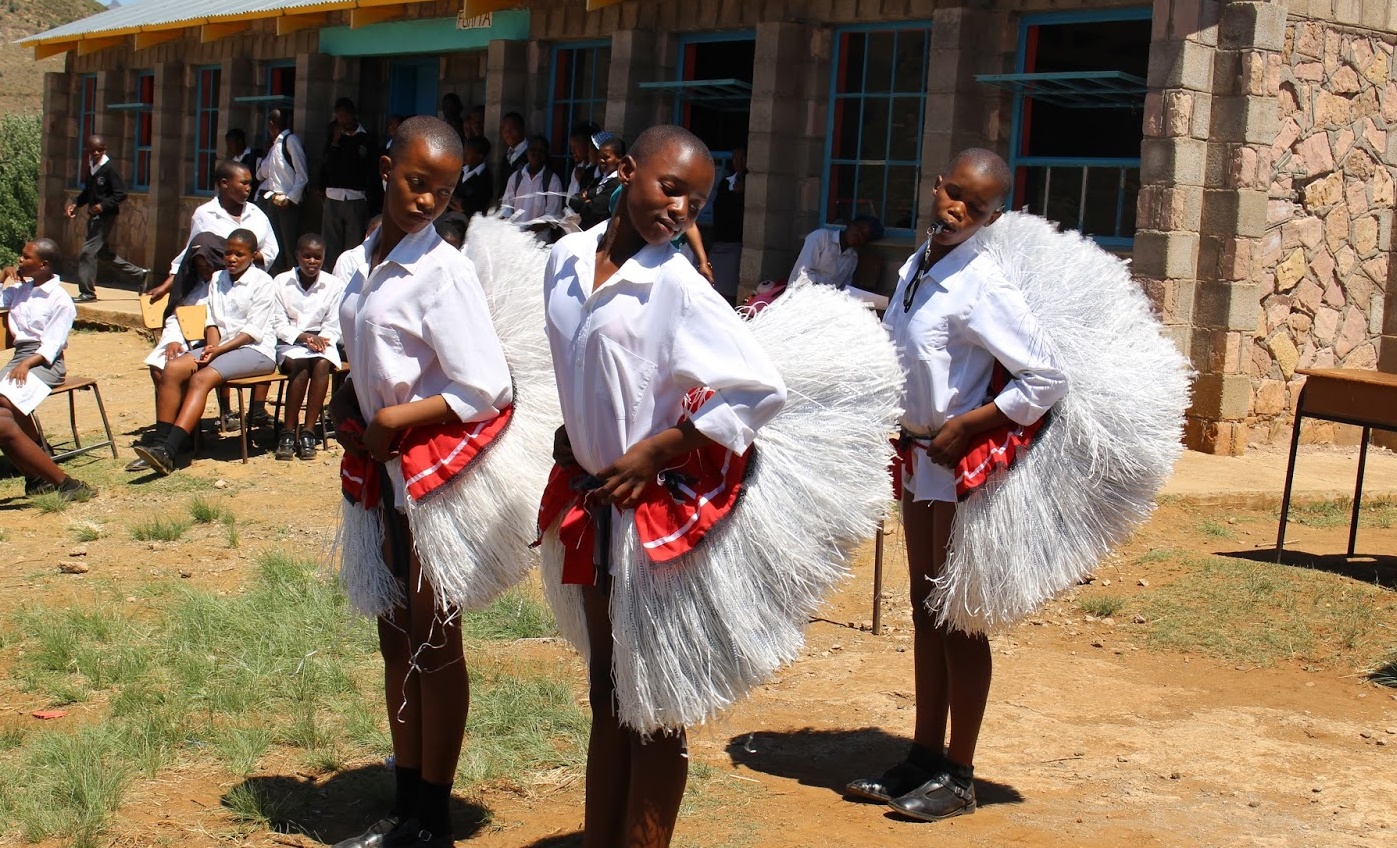
Lesotho has a rich cultural heritage as the birthplace of many musical genres. Although some of these have become extinct over the years, the genre and cultural practice known as litolobonya has endured. Litolobonya is a form of song and dance exclusively for girls and married women. The girls’ version of litolobonya is performed in the open, where everyone may watch, but the version for women is highly secretive and is performed only by those who have given live birth[1].
The women’s version of litolobonya is performed at social events called pitiki: the celebrations that follow the birth of a child. To this day, and under threat of punishment, men are forbidden to enter any house or venue where women are performing the dance. The main instruments used in litolobonya music are the sekupu (a drum made of cowhide stretched over a 20-litre tin) and a whistle. Strictly, every performer has to wear thethana (a traditional skirt made of fibre and beads) and other forms of attire, which may differ by region[2].
The music is exclusive to women because it gives them a platform, at the onset of motherhood, to express their sexuality and share their innermost concerns with other women without fear of being judged. In addition, the genre is still used as a tool to empower newly married women, giving them tips on family management and how to cope with the strenuous nature of family life. In this way, litolobonya music functions as an important cultural practice, a way of transmitting knowledge and wisdom from one generation to the next and influencing the mores and values of the community[3].
Decline in the 1990s and resurgence in the 2000s
Although litolobonya has never been a form of popular music, changing social attitudes in Lesotho have influenced the prevalence of the cultural practice in the country. From the mid-1980s to the early 1990s, litolobonya music saw a decline, as it came to be perceived as ‘backward’ and an activity for ‘rural’ women only. With the widespread uptake of Christianity in Lesotho, some even regarded the tradition as ‘pagan’ and some men would prohibit their wives from taking part in the litolobonya ritual. There are folksongs from this period composed by women pleading with their husbands and in-laws to allow them to join litolobonya groups[4].
However, a strong cultural reawakening – motivated by growing divorce rates and fears about ‘moral degeneration’ – led to the revival of litolobonya, which came to be considered as a possible remedy to social ills. Since the early 2000s, the revival has been significant: a practice that was maligned has once again been embraced by the majority of Basotho women. Interestingly, the most successful pitiki groups in Lesotho are now often led by educated businesswomen. The tradition is now seen as a powerful platform for women to address their marital problems and as a valuable support network where most of the songs are about the problems that married and single mothers face on a daily basis. Women gather at local halls to watch concerts by local litolobonya groups, and these spaces have thrown a lifeline to many unemployed women by giving them chance to earn a living[5].
At the time of writing (2018-19), there is a market for litolobonya performances in both rural and urban areas of Lesotho, and local radio stations play an important role in advertising and promoting these women-only social gatherings. The rise of these litolobonya groups has also strengthened the position of Basotho women in the workplace, creating related sources of employment (such as the manufacturing of club-affiliated blankets and other accessories) and providing additional labour-related support in the form of emergency medical funds and funeral plans for group members[6].
Schools have also played a pivotal role in resuscitating litolobonya music. Schools throughout Lesotho now hold Cultural Days where traditional music is performed. A key feature of these celebrations is the performance of the girls’ version of the litolobonya dance[7].
The influence of litolobonya on other music genres
Litolobonya music has influenced many genres of Basotho music, most significantly famo, the country’s most famous export. Popular famo groups like Bo-Mme Ba Maphutseng and individual artists like Mmotseng have incorporated litolobonya sounds and rhythms into their music, as have renowned singers like Puseletso Seema ('Ya Pota Ngwetsi') and hip hop artists like Juvinile ('Litolobonya')[8].
Litolobonya music in the mainstream
Despite its renewed popularity, litolobonya music remains under-marketed as a popular music form, and existing recordings are not available in music shops. However, litolobonya groups market their own music during phone-in programmes on various radio stations across Lesotho, and through holding live concerts on weekends. There are many litolobonya groups in Lesotho, but the two most important are Litutla and Lingoetsi tsa Nkhono Kholu. Most recently, one of the newest radio stations in Lesotho, Molisa ea Molemo FM, has garnered support after dedicating airtime to upcoming litolobonya artists[9].
Resources and citations:
[1] http://make-upmusicmoneyme.blogspot.com/2014/07/traditional-basotho-dancing-litolobonya.html
[2] https://books.google.co.za/books?id=q33HL9pdVdkC&pg=PA168&lpg=PA168&dq=pitiki+AND+litolobonya&source=bl&ots=vfM3Mtytxv&sig=EP7CKLl7QBAjIBouaSlytxl6Rxw&hl=en&sa=X&ved=2ahUKEwjE_Y_8nsvcAhUOPsAKHT0zDxkQ6AEwDHoECAcQAQ#v=onepage&q=pitiki&f=false
[3] http://www.thejournalist.org.za/kau-kauru/history-told-painful-spectacle
[4] http://scholar.ufs.ac.za:8080/xmlui/bitstream/handle/11660/7608/MolapoELM.pdf?sequence=1&isAllowed=y
[5] https://mallydoor.wordpress.com/2011/09/12/76/
[6] https://www.news24.com/SouthAfrica/Local/Express-News/pitiki-celebration-to-empower-women-20170411
[7] http://bethspencer.blogspot.com/2015/07/litolobonya-camera-free-cultural-moment.html
[8] http://www.lestimes.com/juvinile-calls-it-a-day/
[9] https://moafrikafmradio.com
Disclaimer: Music In Africa's Overviews provide broad information about the music scenes in African countries. Music In Africa understands that the information in some of these texts could become outdated with time. If you would like to provide updated information or corrections to any of our Overview texts, please contact us at [email protected].
Editing by David Cornwell


Most popular

Top Naija songs of 2026
31 Mar 2026

Top Afrobeats songs of 2026
19 Mar 2026

Ghana: Mr Eazi and MOLIY’s ‘Comfort’ earns Urban Music Awards nomination
21 Oct 2026

Top amapiano songs of 2026
16 Feb 2026

Open call: CANEX Music Business Lab and Songwriting Camp
15 Oct 2026
Nigeria: CANEX WKND unveils 2026 programme
21 Oct 2026
Disclaimer: Music In Africa provides a platform for musicians and contributors to embed music and videos solely for promotional purposes. If any track or video embedded on this platform violates any copyrights please inform us immediately and we will take it down. Please read our Terms of Use for more.

Subscribe to our monthly Newsletter
Follow us on social media


Please log in to post a comment.