

























































By Marafaele Mohloboli
This article provides an overview of famo music, one of Lesotho’s most recognisable genres.
The origins of famo
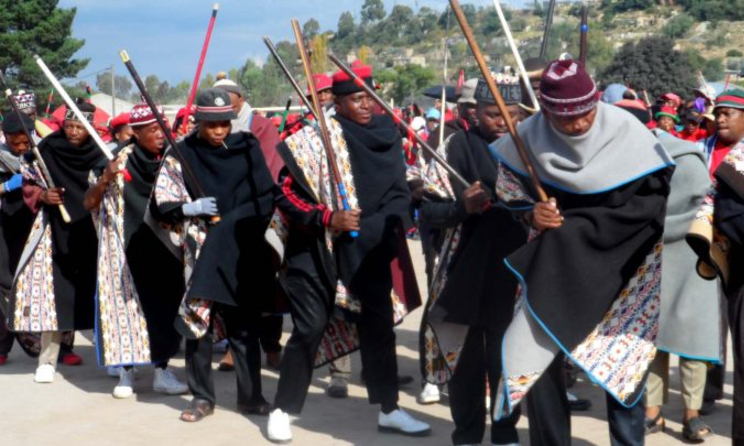
The famo music genre emerged in the 1920s in the mines of South Africa, where many Basotho men worked as migrant labourers due to the lack of employment opportunities in their own country. The music gained popularity in the townships of Soweto in Johannesburg, with most of it played in Randfontein and Carletonville as well as in in Snawana, Phiri, Molapo, Mapetla, Naledi and Moletsane – the preferred meeting places of the criminal network of Basotho migrants who called themselves the Marashea (The Russians). In a bid to protect workers from urban gangs and other rival groups in and around the mines of Johannesburg, famo music became a method of unifying Basotho men, and it was played in shebeens (bars) where it was safe for them to relax after a day’s work[1].
In the 1980s – the same time that the accordion became an established instrument of the famo musical tradition – some Basotho women, including Puseletso Seema, also migrated to South Africa to become part of the famo entertainment circle.
Famo bands earned money by holding concerts in community halls or shebeens, while in Lesotho the popularity of the genre remained consigned to rural areas. However, famo music eventually became recognised as an important Basotho cultural tradition, and is now regularly showcased at festivities like the Independence Day Celebrations[2].
Famo artists: Rivalry and violence
Famous famo artists from the north of Lesotho include Apollo Ntabanyane, a 50-year industry veteran who declared himself 'The King of Famo' in 1974, and Lebohang Letsohla, the leader of the group Sefako sa Menoaneng, which represented Lesotho at the 2016 Africa Day Celebrations in India[3].
The southern part of Lesotho boasts artists like Rethabile Makete, bandleader of the famo group Terene, and who is popularly known as Khosi Mosotho Chakela. Terene are the bitter rivals of another famo group from the south known as Seakhi, whose ranks include leading music industry figures Bereng 'Lekase' Majoro and Lehlohonolo 'Mahlanya' Maketsi[4].
The source of rivalry between these two famo groups seems to have stemmed from the establishment of funeral schemes at the turn of the 2000s. These were bereavement funds set up to aid members of the respective groups during times of mourning, but tensions developed soon and violence broke out along gang lines. Makete and Majoro both fled to South Africa after receiving death threats, while related ‘turf wars’ have resulted in the deaths of dozens of artists in the region[5].
With the violence surrounding famo music beginning to enter the world of politics (both the Seakhi and Terene gangs define themselves along factional political lines), in 2015, the Tourism, Environment and Culture Minister of Lesotho, Likeleli Tampane, called for a temporary ban on famo music on all Basotho radio stations while the government tried to find a solution to the killings, which she claimed were “the result of famo’s offensive lyrics”[6].
Despite this atmosphere of violence and intimidation, some famo groups have managed to gain popularity without fear of victimisation. These include Theoha le Koenane, Mantša, Mojalihloho, Khopolo, Bokaako, Moketa, Phoka and Mahlanya.
Instruments and gender dynamics
Famo music is a combination of voices and instruments such as the accordion (koriana in Sesotho), the concertina (korosetina) and the moropa, a 20-litre tin drum covered with a tyre tube. A piece of wire strung with manyenenyene (metal bottle caps) is attached to the tube to give a jangling accompaniment, and the drum is played either with bare hands or cut-up tyre straps[7].
Most famo groups are composed entirely of men, with women occasionally performing background dancing and ululations. So far, there have only been a handful of women artists who have been able to change the famo landscape. They include Puseletso Seema, Mme Motseng, and one of the only female famo groups, Bomme Ba Maphutseng.
Listenership
Famo enjoys wide listenership both in Lesotho and in neighbouring countries such as South Africa, Botswana and Swaziland. With the emergence of new artists from the region of Leribe in the north of the country, and with women beginning to incorporate famo into the dance tradition known as litolobonya, famo’s audience is becoming increasingly diverse. Radio stations in Lesotho feature programmes devoted to famo music, with some of them playing on South African stations, such as Lesedi FM, which has a mostly Basotho listenership)[8].
Amid calls from the government to clamp down on famo, listenership is arguably now at its peak due to widespread piracy. Music is often copied onto rewritable media, while artists have been awaiting royalties following the introduction of new Copyright Regulations in 2015. Speaking at the time, the Constitutional Affairs Copyright Registrar Monyane Makhetha asserted that “the Copyright Order No 13 of 1989 states that no one can use any artist’s material without their consent, but it is quite difficult with our artists because they are divided along their party lines and rivalry and therefore do not have a unified voice.”
Promulgated by the Minister of Tourism, Environment and Culture to compel broadcasters to pay artists for using their work, these new systems of copyright enforcement did not appear to have had any substantive effect in Lesotho at the time of writing (2018-19)[9].
This idea is substantiated by Sello Lephosa, an artist and marketing professional who operates in the Lesotho music industry. He claims that musicians have been promised support from the government to regulate their music and to secure royalty payments, but nothing has yet transpired on the ground. He also says that most famo royalties are collected in South Africa by various music producers.
Resources and citations:
[1] https://www.thepost.co.ls/insight/famo-music-the-past-the-politics-and-the-future/
[2] https://en.wikipedia.org/wiki/Famo
[3] http://www.lestimes.com/apollo-brings-house-down-at-apica/
[4] https://www.thepost.co.ls/insight/famo-music-the-past-the-politics-and-the-future/
[5] http://www.lestimes.com/famo-gang-war/
[6] http://www.lestimes.com/govt-cracks-down-on-famo/
[7] https://en.wikipedia.org/wiki/Famo
[8] https://www.news24.com/MyNews24/Open-letter-to-Lesedi-FM-20120822
[9] http://sundayexpress.co.ls/new-law-to-ensure-royalties-for-artistes/
Disclaimer: Music In Africa's Overviews provide broad information about the music scenes in African countries. Music In Africa understands that the information in some of these texts could become outdated with time. If you would like to provide updated information or corrections to any of our Overview texts, please contact us at [email protected].
Editing by David Cornwell


Most popular

Call For Applications : ACCES seeks a UK-based performer
10 Sep 2026

Top amapiano songs of 2026
16 Feb 2026

Top Afrobeats songs of 2026
19 Mar 2026

Open call: Ernst von Siemens Music Foundation 2026 funding programmes
04 Sep 2026

Open call: FAME Week Africa, Pressure Cooker Studios songwriting camp
09 Sep 2026

Open call: Goethe-Institut grants for Southern African creatives
08 Sep 2026

Open call: SAMRO Music Creation Support Fund
02 Sep 2026
Disclaimer: Music In Africa provides a platform for musicians and contributors to embed music and videos solely for promotional purposes. If any track or video embedded on this platform violates any copyrights please inform us immediately and we will take it down. Please read our Terms of Use for more.

Subscribe to our monthly Newsletter
Follow us on social media


Please log in to post a comment.