

















































By Selma Neshiko
This text provides an overview of the live music scene in Namibia. Back in the days before independence, when Namibia was still under the rule South Africa and segregated according to the policy of apartheid, live music was a popular form of entertainment for most Namibians, including black communities who had few recreational facilities. They would use live music as an appropriate opportunity to mingle freely as people from all walks of life came together - sometimes plotting the downfall of the much-hated South African apartheid regime. A significant chunk of the finest musicians used to work as migrant labourers in the mines of South Africa and honed their skills there. Most were self-taught and learnt by mingling with other musicians from the region.
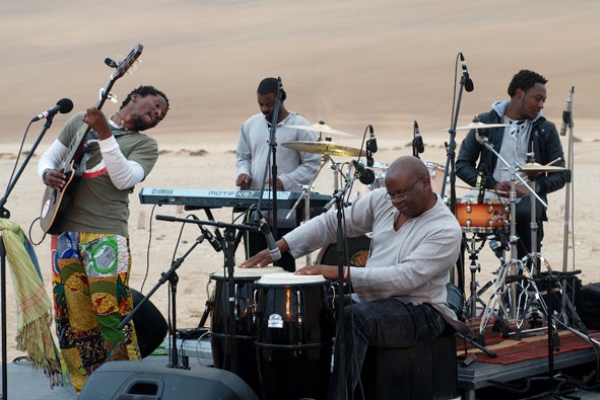
Under apartheid, every residential area, divided according to ethnicity, had its own live bands. The Damara people had Ou Leyden and Xari-Xurob (mbaqanga), Herero’s took pride in the Bee Bop Brothers (mbaqanga and pop), while the Oshiwambo had the Dakotas (rock and mbaqanga). It’s important to mention that in those days, the Damara people were considered the most urbanized tribe and would therefore typically be amongst the frontrunners in the Namibian musical industry, as can be attested by the exploits of veteran saxophonists Xari-Xurob and Leyden Naftalie, while the likes of Johannes Warmgat Mureko also stood out, matching more celebrated musicians pound for pound.
Venues
Today Namibia’s live music scene continues to thrive, although it faces numerous challenges that will be discussed later in this text. It’s good to note that in recent years many live bands have resurfaced again, but this can mainly be found amongst the more ‘serious’ musicians and genres. Nevertheless, first-time visitors to Namibia may be surprised to find themselves being entertained by live music at various venues around the country. If one moves around in Windhoek in particular (the biggest hostess of live music), one will find a small but exciting live music scene.
Windhoek plays host to some of the best-attended music festivals and shows in the country. The Warehouse Theatre is the most popular venue for live music, hosting famed live shows such as Song Night, acoustic shows and so on. There are also venues like the National Theatre of Namibia (NTN), Goethe Center, Franco-Namibian Cultural Centre (FNCC), Jojos Café, Hage Geingob Stadium, Independence Arena, Hilton Kalabar and many others, which are also very much active in hosting live shows on a daily basis.
The capital city is not the only place where music lovers can be treated to good music, however. Venues like the German Hostel Hall (in Luderitz), the Swakopmund Indoor Center (in Swakopmund), the Keetmanshoop Youth Centre (in Keetmanshoop) and Ongwediva Trade Fair Centre and Bennies Park (both in Ongwediva) also provide a conducive environment for musicians of all genres to stage live performances.
Festivals
Almost every town in Namibia hosts a range of music festivals, concerts and related events every year, which are attended by thousands of fans from across the country. Below are some of the most popular.
The annual Windhoek Jazz Festival brings together more than 5000 people every year from all corners of the country. Some of Africa’s biggest stars have headlined the much anticipated event, including the likes of South African acts Freshlyground, Lira, Selaelo Selota, Hugh Masekela and Zahara and Malian legend Salif Keita.
World Music Day celebrations, held all over the world on or around 21 June, is one of the biggest fiesta in Namibia’s live music calendar. Every year, music lovers from across the country can enjoy live music from their favourite local acts, both upcoming and established, for free. The festival is hosted in numerous towns, including Windhoek, Swakopmund, Oshakati and Keetmanshoop, and typically focusses entirely on live performances.
Another popular event is the Swakopmunder Musikwoche, an annual music event taking place in the town of Swakopmund under the patronage of the German Evangelic-Lutheran church. Every December, music professionals are brought from national and international institutions to instruct and assist Namibian musicians from far and wide. The event has featured prominent experts such as Alexander Fokkens (South Africa), Hans-Jochen Stiefel (Germany), Dr Eric McIntyre (USA ) and many others. The event normally lasts nine to ten days and culminates in a series of concerts that are open to the public.
Other popular festivals and live music events in Namibia that draw large crowds are Nam Rock, the Namibian Annual Music Awards (NAMA), the /Ae//Gams Festival, Last Banding Standing, Hart van Windhoek, the Summer House Festival, the Tsumeb Copper Festival, the Ongwediva Trade Fair and the Luderitz Crayfish Festival, just to mention a few.
Promotors
Despite the hardships, Namibia has notable and credible music promoters such as Sidman Xolele, Mathew Shikongo and others, who have brought bands from South Africa and pitted them against local bands in popular ‘battle of the bands’ festivals.
Deal Done Records has become one of the largest music labels in the country and hosts a selection of artist from different genres of music. The label is owned by Serbian-born Dragan Djokic, popularly known as Antonio, who is passionate about live music and has been signing up some of the best local live acts, such as award-winning Stardust, Ann Singer and Ethnixs, all with the aim of encouraging a culture of live music in Namibia.[i]
Another recognizable promoter is Ernst Herma, who has become a popular promoter of live music in Namibia by successively hosting live music events on most weekends at local venues, also with the aim of strengthening the local live music scene.
Namibia is becoming an increasingly popular destination for touring international stars. The country has over the years hosted the likes of British reggae band UB40, Irish heartthrobs Westlife, Grammy-winning American rapper Eve and American hit-maker Trey Songz (in celebration of the country's 25th independence celebrations in May 2015). Grammy-winning American group Boyz II Men are due to perform at a new annual concert, Windhoek Draught Live, at the Hage Geingob Stadium in Windhoek on 30 October 2015.
Challenges
Despite its potential, the Namibian live music industry faced numerous challenges. Firstly, the scene is not properly marketed. This can arguably be attributed to the emergence of fly-by-night promoters who have no clue about the subject at hand. There are too many people pretending to ‘know’ the industry. While there are many talented and disciplined musicians, Namibia does not have a big music market. This is exacerbated by a generation gap. Young music revellers don't take kindly to the musical genres of yesteryear (so-called ‘old school’ music), while more mature, middle-class audiences would prefer musical concerts where they can sit and enjoy music with a glass of wine.
For artists, the music industry at the moment seems to be similar to higher education in Namibia. It does not matter how much money you spend, or how much work you put in, there is no guarantee you’ll ever get anything out of it in the end. Some artists end up hosting live shows for free simply to get exposure.
Another obstacle is the preference for international music, combined with the absence of genuine pubs and nightclubs in a city as big as Windhoek. Music by Namibian artists still very rarely features on these playlists. Even club promoters and managers currently concentrate more on featuring international artists in order to attract large crowds.
Even though the industry is filled with talent, another major obstacle that musicians and promoters still face is a lack of funds to pursue their careers, to perform with live bands, or to tour the country. There is a perceived lack of funding: companies don't want to pay, NGOs don't want to invest in music and also most expo's and trade fairs would prefer backtrack artist because they can't afford to pay for a full ‘back line’ (drums, percussions, guitar amplifiers, etc.).
While live entertainment is nothing new to the Namibian music industry, somewhere along the way it has withered away because of artists performing with ‘backtracks’ instead of live bands. At one stage, most Namibian musicians depended on ‘backtracking’ for live performances. This was largely because of the rising costs of the sound equipment and sound and lighting engineers. Lately Namibian musicians have realised that people are not willing to pay for backtracking shows. Evidently, live performers are more likely to fill a venue compared to backtracking artists, simply because people respond better to live performances. Most music lovers looking for live elements regard the use of backtracks, and lip-syncing in particular, as ‘daylight robbery’. Because of this, live music has started to re-emerge. Some musicians who used to do backtracking have changed to doing live performances. However, some artists continue to backtrack to cut costs.
The growing demand for live concerts has been a major contribution in encouraging the live music scene in the industry. Live music in Namibia contributes significantly to the economy as it provides job opportunities for young musicians wanted to play music professionally and full-time. Namibian artists are now focusing more on live shows to help them grow and to open more doors for them locally and internationally. Young artists such as Elemotho, Shishani and Erna Chimu have been making waves internationally and are steadily building a name for themselves, largely through their live shows. Also in line are the Ugly Creatures, Ras Sheehama, Big Ben, Lize Ehlers and Bullet Ya Kaoko, just to mention a few, who are known for their advocacy of live music. In general it is probably fair to say that Namibia is currently going through a huge transition in its music industry, driven by increasing demand for live performances.


Most popular

Top Naija songs of 2026
31 Mar 2026

Top Afrobeats songs of 2026
19 Mar 2026
Ghana: Mr Eazi and MOLIY’s ‘Comfort’ earns Urban Music Awards nomination
21 Oct 2026

Top amapiano songs of 2026
16 Feb 2026
Open call: CANEX Music Business Lab and Songwriting Camp
15 Oct 2026
Nigeria: CANEX WKND unveils 2026 programme
21 Oct 2026
Disclaimer: Music In Africa provides a platform for musicians and contributors to embed music and videos solely for promotional purposes. If any track or video embedded on this platform violates any copyrights please inform us immediately and we will take it down. Please read our Terms of Use for more.

Subscribe to our monthly Newsletter
Follow us on social media


Please log in to post a comment.