

























































By Edgar R. Batte
Music piracy is a growing concern affecting Uganda’s music industry. While some musicians have been forced to go to court to protect their music and image, their experiences are slowly setting a precedent, so that future musicians are better protected, and can continue to make a living from music. This overview text analyses the extent of piracy in Uganda and the efforts being made to promote awareness of copyrights and royalty collection - and to enforce copyright protection.
What is copyright?
Norman Mbabazi Akiiki, a lawyer and team leader and President of Intellectual Property Centre (IPC), defines copyright as a bundle of exclusive legal rights concerned with the protection of literary and artistic works, often referred to just as ‘works’. The IPC does intellectual property awareness and training, lobbying for best practice legislation and liaising between users and the creators of works of intellectual innovation.
Mbabazi says the aim of copyright is to promote science, culture and the arts. It is the framework through which artists’ creative endeavors are rewarded and recognized. “Copyright is a property right. It is a form of intellectual property and like any other property, copyright can be transferred, bought, sold or inherited. This is described in more detail in the section on licensing and assignment,” he adds.
Copyright comprises two main sets of rights: the economic rights and the moral rights. The economic rights are the rights of reproduction, broadcasting, public performance, adaptation, translation, public recitation, public display, distribution, and so on. The moral rights include the author's right to object to any distortion, mutilation or other modification of his work that might be prejudicial to his honour or reputation.
Royalty collection
During the colonial times, a British body called Performing Rights Society of England (PRS) handled all Ugandan musicians’ rights. The musicians got royalties from Radio Uganda – the only radio then after independence. Music wasn’t aired for free until 1971 when Idi Amin became president and all the copyrights went up in smoke. The late former president suspended PRS operations in Uganda, and Radio Uganda stopped paying the artistes their royalties.
These days, the average Ugandan artist lives off money he or she earns from music shows or concerts, which is their sure way to get quick money to sustain themselves and their families. This means they will travel a lot, within Kampala, its suburbs and towns beyond to perform yet if they were earning off their royalties it could save the strenuous work and travels. For example, The Observer newspaper in Uganda reports between January 1 and May 31 2006, Capital FM played artiste Ngoni’s ‘Nasima Gwe’ hit a total of 543 times. The artiste was not paid.
The fight against piracy: key cases
Mbabazi says that there have been very few cases where artists have taken copyright infringement to the courts of law. “A few cases have been filed on behalf of the artist through their collecting societies. UPRS has filed over 3 cases and lost one, settled one and won one case, though it was a criminal matter that was managed by UPRS as the complainant,” he adds.
- Nince Henry vs Nakumatt & X-Zone International
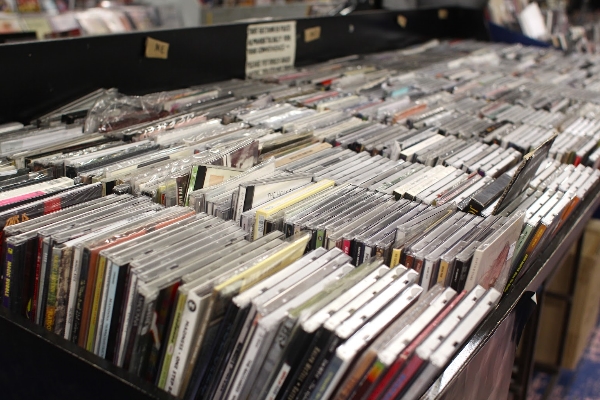
Artiste Nince Henry, real name Henry Ssekyanzi, woke up to the news that his music was on the shelves of one of the top shopping malls in Kampala. This was a fortnight to his concert and he was still debating on what song would be the title track to this album and finalizing on its artwork. A pirate had worked ahead of him, named the album, designed a CD cover and sold it to Nakumatt shopping mall. The album on display at the mall was titled Omukyala Bamukwata Mpola, which the artiste said was a wrong title as the correct one is Mpola Mpola, one of his popular songs. The CD at Nakumatt even had a warning that copyright of the CDs and music were reserved and printed by X-Zone International of H&B Plaza, Plot 36, room 18, Luwum Street.
“I have not yet released an album. I am still thinking and drawing mental pictures of how my original CD cover will look like and then there I see a pirated copy of my CDs,” the artiste told this reporter. “I tried to engage the management at Nakumatt but they simply ignored me. So I bought a copy of the CD and in the morning I called my lawyer, Ms Sylvia Busingye. She told me to go back to the supermarket and buy a second CD. On returning, all the CDs had been removed from the shelf,” Henry said.
His lawyer then decided they should take action. Henry sued the mall over copyright. According to Ms Busingye of Busingye & Co. Advocates, they opened a case against Nakumatt and X-Zone International. When they sought a comment from both X-Zone International and Mr Bernard Mutua, the Country Manager of Nakumatt, Uganda, they declined to comment on the matter “since it was in court”. Justice Christopher Madrama Izama had served the artiste and his lawyers a court order to confiscate any material that could be used as exhibits.
Henry Ssekyanzi’s case against X-Zone International and Nakumatt Oasis is still ongoing at the Commercial Court, nearing its conclusion. One thing that this case emphasized is the fact that one who provides a platform or a premise for infringement is as guilty as the person directly infringing the copyright.
Mr James Wasula, a lawyer and leader of Uganda Performing Right Society (UPRS)[i], said the action initiated by the artiste was a step in the right direction. “The action itself is a milestone. It is good to know that more artistes are getting to learn about the infringement on their copyright,” he said. Mr Wasula adds that the government has showed support for copyright by introducing an intellectual property unit in the Uganda Police Force. However it will take solidarity among artistes to effectively protect their copyright given that some artistes willingly offer their music to pirates
- Angela Katatumba vs Anti-Corruption Coalition Uganda (ACCU)
Another milestone that has been achieved was the case of artiste Angela Katatumba, who won against Anti-Corruption Coalition Uganda (ACCU), a charity organization, for unlawfully using her song in an advert without her consent. For this Justice Christopher Madrama of the Commercial Division of the High Court has ordered ACCU to pay Katatumba damages worth Shs30 million (about USD$9000). “The unimpeachable evidence in this case is that the defendant’s (ACCU) officials thought they did not require the plaintiff’s consent for use of her song in the advertisement jingle in question. Being aware of the copyright ownership of the plaintiff, they used the song with impunity,” held Justice Madrama. The case arises from the ACCU campaign where the song was used at a time when riots took place on the issue of de-gazetting of Namanve Forest.
- UFMI vs Papa & Zai Plaza
Music piracy is often closely related to piracy in the film industry, and regulating piracy needs to take more music and film into account. The Uganda Federation of Movie Industry (UFMI)[ii], the audio-visual collective management organization, recently rounded up a top movie pirate, a one Papa, in Kampala. Papa has been released on Police bond though he spent about 36 hours in detention. At the moment UFMI is working on the criminal charges against him, including Copyright infringement contrary to section 47 of the Act; offering for sale audio visual works without a security device issued by the collecting society contrary to regulation 19 of the regulations; obstructing, importing an apparatus and machinery knowing that it is to be used for infringing copyright according to section 47(4); distribution of pirated audio visual works contrary to section 47(7)and obstruction of an inspector in discharge of his duties contrary to section 54(4)(a), (b), (c), (d). The UFMI has gathered the evidence and intends to also prosecute the owner of Zai Plaza, one of the shopping malls in Kampala, for harbouring and offering his premises to a known pirate as stated in section 47(3).
What needs to be done?
Mbabazi says the status of copyright in Uganda today as far as the law in existence is, is that one can say that as a developing country the law so far covers what the arts industry needs to transit to the next level of Intellectual Property Development. He however notes that looking at the transition of times, the current status of copyright holds more weight than the times of 1970s and 80s. He questions whether the current system of copyright caters for the economic and moral rights for creative artists and if it holds the confidence of users. “We are looking at issues like enabling creators and the creative industry to extract appropriate value from their works, while also protecting the interests of users. Because of the digital era users, there is need to be able to identify genuine works and locate the owner of those works,” he observes.
- Education and awareness campaigns
Mbabazi explains that rights holders typically have little knowledge about their rights. Even then, he adds, the users of their rights are basically the main employers of these artists, and so there is fear by the artists that they could lose popularity if they took any users to court. They are also put off by the lengthy and expensive court process. He adds: “However there are reforms that are necessary to transit to the next level. For example there is need to create awareness on Intellectual Property among the masses countrywide. The targets of this campaign are the users, rights holders, government officials and legislators who in turn shall make the required laws and the need to have Extended Collective Mandates for collecting societies in our copyright laws.”
- Stricter punishments
In Uganda enforcement of copyright has been low because the enforcement agencies are not as vibrant and able as our brothers in Kenya. Besides, stakeholders in Uganda have limited awareness of copyright and lack access to specialized legal training, resources and counsel. This leads to a situation where the rights’ holders never exploit their works financially. Secondly, those in the industry have taken advantage of the rights’ holders’ ignorance. Mbabazi also advocates for tightening of the punishments and fines to copyright infringers, advocating for an increment on six-year sentence on top of payment of a fine amounting to Shs2m (about $600).
- Centralized, coordinated oversight of intellectual property
Mbabazi cites unlicensed broadcasting and lack of professionalism in the sector as well as the uncooperative attitude of the national regulator, Uganda Communications Commission (UCC)[iii] as a major challenge for the effective utilization of copyright. This is in addition to lack of authenticity and authorized agents/retailers/distribution channels, which means that with the driven demand for copyrighted works, the pirates will definitely exploit the opportunity.
“There is also a need for specialized legal counsel and training which is not readily available and in most cases unaffordable. There also is a lot of bureaucracy in the industry in addition to having scattered departments all looking at copyright - for example, music and film are looked at as cultural aspects under the Ministry of Gender, Labour and Social Development, registration of copyright is by Uganda Registration Services Bureau under the Ministry of Justice and Constitutional Affairs, censorship is under the Ministry of Information and National Guidance and at the same time exhibitors are regulated by the Uganda Communications Commission under Ministry of ICT. To remedy this it is necessary to have one body administering all intellectual property matters,” argues Mbabazi.
"There is lack of funding of the film industry, which makes it difficult to promote growth for start-ups, hence less contribution to copyright. There is absence of a National Copyright Commission charged with the role of promotion and growth of the industry. Also TV and Radio stations do not compensate well for local content nor give it publicity. Specialized legal counsel and training is also not readily available or where it is, it is mostly unaffordable," Mbabazi adds about the challenges facing enforcing copyright and royalties in Uganda.
Artists like Nince Henry agree, saying that the law is in place and is very good but the process is very long and that it would be nice if specific courts handling these issues are set up in order to fast-track cases. Mesach Semakula, another artiste, says that the enforcement is long overdue and urges government agencies responsible to do their work efficiently.
While piracy is a growing concern in Uganda, actions are being taken so that musicians can be protected. Much work still needs to be done to promote awareness of copyrights and royalty collection, to enforce stricter punishments against those found guilty of piracy, and to strengthen and co-ordinate the bodies tasked with protecting copyrights and fighting piracy.


Most popular
Gambia: Suntou Susso announce UK tour for ‘The Path of a Griot’
09 Oct 2026

Top amapiano songs of 2026
16 Feb 2026

Top Afrobeats songs of 2026
19 Mar 2026
Open call: 2026 Gender@Work music industry training in Johannesburg
09 Oct 2026

Top Naija songs of 2026
31 Mar 2026
Open call: National Arts Festival artistic director in SA
15 Oct 2026
Disclaimer: Music In Africa provides a platform for musicians and contributors to embed music and videos solely for promotional purposes. If any track or video embedded on this platform violates any copyrights please inform us immediately and we will take it down. Please read our Terms of Use for more.

Subscribe to our monthly Newsletter
Follow us on social media


Please log in to post a comment.