






























































This article provides an overview of traditional musical instruments in Lesotho, focusing on the lesiba and the mamokhorong.

Lesotho has a proud heritage of traditional music. Although the strength of this music usually lies in the use of expressive, dynamic vocals accompanied by complex polyrhythms and dances, there are also a number of traditional instruments that have become synonymous with the sounds of Basotho folk music[1].
These instruments are played by musicians of any age or gender, but historically would depend on the availability of the materials needed for their construction. Some instruments could only be made, and played, at certain times of the year, while others were built to be played all year round and to withstand changing weather conditions[2].
Against this backdrop, two main instruments have emerged to characterise the sound of traditional Basotho music.
The lesiba
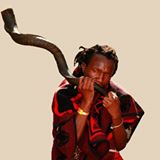
The lesiba is regarded as Lesotho's national musical instrument. Also known as the ‘herd boy’s gramophone’, this unique instrument is officially classed as a ‘stringed-wind’ instrument[3].
The lesiba consists of a flattened quill attached to a long piece of sinew string, which is itself stretched over a piece of hardwood. The wood acts as the resonating surface for the string. However – unlike most stringed instruments – what is unique about the lesiba is that its string is not plucked, bowed or struck in any way, but rather resonated by the player’s mouth. As the player holds his hands around the quill and inhales or exhales against it, the string vibrates against the wood and creates the instrument's distinctive sound. Vocalisation techniques can create harmonies in a limited, though emotive, scale[4].
Although somewhat simplistic in appearance, the lesiba can be challenging to play and is often described as a ‘personal’ musical instrument. If two players share the same instrument, they will each adjust the quill, and tighten or loosen the string to allow the instrument to resonate according to the players' individual voices. In recent years, the strings – traditionally made from animal sinew or twisted horsehair – have been constructed from nylon and thin metal wires. There are a number of birds that the quill of the instrument is made from, including hawks, geese and owls; the key is to find feathers that are strong enough to remain rigid yet soft enough to allow vibration[5].
While it is customary for Basotho boy herders to play the lesiba for their own personal amusement and to soothe their cattle, there have been some notable uses of the instrument in popular musical. Letsema Matsela used the lesiba in his mohobelo dance song 'In the Time of the Cannibals', and South African jazz legend Sipho ‘Hotstix’ Mabuse followed suit on 'Thaba Bosiu', which appeared on his influential 1996 album Township Child [6].
The mamokhorong (sekhankula)
The mamokhorong, which is also known as the sekhankula, is one of the latest inclusions in the fabric of traditional Basotho music.
This bowed monochord instrument, sometimes referred to as a ‘single-string violin’, is usually constructed from a five-litre tin can resonator. A stalk, or long piece of wood, is inserted into the tin can, and a wire is strung between the end of the stalk and the base of the can. The wire is then played with a friction bow, and the player controls the pitch by stopping the notes on the wire with his thumb and index finger. Like the lesiba, the mamokhorong is another instrument traditionally played by herders to entertain themselves, but musicians such as Kabelo Makolometse have considerably raised its profile within Basotho music[8].
There are two ways to play the mamokhorong : either by holding the resonator over one's head, or by holding it against the waist with the stalk balancing on the shoulders. The sound the instrument produces is the same in both cases, even if the bowing and stopping techniques differ slightly. A bow made from cow or horse hair is required for friction, and players will smear the bow with pine resin, tar or Euphorbia basutica (vingerpol). Tuning the instrument requires a player to understand the tone and range of his or her own voice, and players will sometimes press and dent the sides of the resonator for fine-tuning purposes[9].
The sound of the mamokhorong has been likened to that of a ‘cracked violin’ or a metallic version of the Ethiopian masinko. The size, shape and quality of the tin greatly influences how the instrument sounds, while the size of the bow and the velocity with which it is played determines the amplitude. As the instrument is played, the resin on the bow is gradually depleted, which also affects the sound[10].
The music composed by mamokhorong musicians is usually circular in form, consisting of a repeating verse-chorus-verse-chorus structure. The songs tend to deal with topical issues and personal experiences. The instrument usually complements the voice, or substitutes the melody in place of the voice, while the most proficient players weave serobele whistling and praise poetry into their performances.
Resources and citations:
- [1] https://www.conservationmusic.org/lesotho/
- [2], [4], [5], [9] & [10] Kirby, Percival. Musical Instruments of the Indigenous People. Johannesburg: Wits University Press, 2013
- [3] https://en.wikipedia.org/wiki/Lesiba
- [6] Levine, Laurie. The Drumcafe's Traditional Music of South Africa. Pretoria: Jacana, 2005
- [7] http://www.windmusik.com/html/goura.htm
- [8] Wells, Robin E. An Introduction to the Music of the Basotho. Johannesburg: Wits University Press, 1996
Disclaimer: Music In Africa's Overviews provide broad information about the music scenes in African countries. Music In Africa understands that the information in some of these texts could become outdated with time. If you would like to provide updated information or corrections to any of our Overview texts, please contact us at [email protected].
Editing by David Cornwell


Most popular

Top Naija songs of 2026
31 Mar 2026

Top Afrobeats songs of 2026
19 Mar 2026

Top amapiano songs of 2026
16 Feb 2026

Ghana: Mr Eazi and MOLIY’s ‘Comfort’ earns Urban Music Awards nomination
21 Oct 2026

Open call: CANEX Music Business Lab and Songwriting Camp
15 Oct 2026

Nigeria: CANEX WKND unveils 2026 programme
21 Oct 2026
Disclaimer: Music In Africa provides a platform for musicians and contributors to embed music and videos solely for promotional purposes. If any track or video embedded on this platform violates any copyrights please inform us immediately and we will take it down. Please read our Terms of Use for more.

Subscribe to our monthly Newsletter
Follow us on social media


Please log in to post a comment.