
































































Classic East African music from the 1960s, 70s and 80s, known as zilipendwa in Tanzania (or zilizopendwa in Kenya) - meaning literally “those who were loved” - today risks fading into oblivion, with only a handful of bands remaining active.
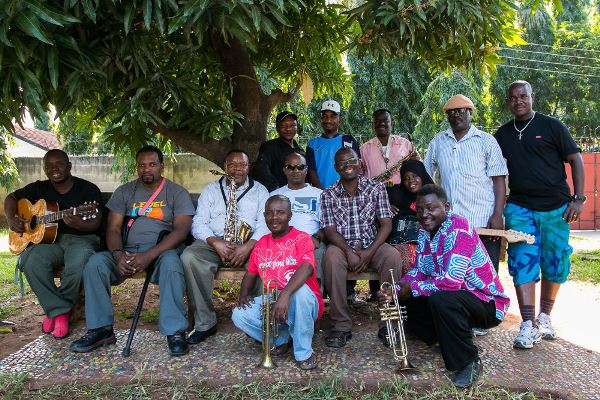
Fortunately, two like-minded people want to document and preserve the legacy of this infectious East African music in a new film. Filmmaker Amil Shivji and Rebecca Corey from the Tanzania Heritage Project (THP) are co-directing the documentary, dubbed Wahenga. Shooting is already underway in Tanzania.
In Tanzania, zilipendwa is considered something of a "meta-genre", the characteristics of which vary depending on the time. The term was initially reserved for East- and Central African dance music that was popular during the post-independence period of the 1960s and early 70s, but over time came to describe the music of the mid-1970s through to the late 1980s, a time commonly associated with the socialist policies of president Julius Nyerere, whose policies ensured that Tanzania was a musical powerhouse of the entire region. In recent years, however, the genre has taken a hit from new sounds such as hip-hop. Fans of zilipendwa are most eloquent about its value in their lives when making humorous comparisons with bongo flava, the country's own unique style of R&B-influenced hip-hop.
In neighbouring Kenya, meanwhile, against the backdrop of Kenyan independence in 1963 and the rising tide of African nationalism, Nairobi’s zilizopendwa of this era is remembered by Kenyan fans, musicians and critics as a "golden era" when local musicians and studios were able to create a viable, Kiswahili-based idiom of high quality, providing Kenya with a distinct musical identity to accompany its new statehood. Yet, this period was short-lived, and was superseded by the ethnically oriented benga style that emerged in the mainstream in the early 1970s.
In a recent interview with Smart Monkey TV, Amil Shivji spoke about the need to preserve this legacy through film: “With Tanzanian and African cinema, documentaries tend to either be about the Serengeti and safaris, or NGO-driven films that are about malnutrition, children who need food, etc. But what about creative documentaries that talk about the things we are always forgetting about?”
On the surface, the new documentary is a story about how zilipendwa music is on the verge of dying out and how it could be forgotten in another decade's time. The filmmakers hope the documentary will give some recognition to the artists and individuals who are committed to keeping this music alive. On a deeper level, Rebecca hopes the film will help awaken a deeper political and social consciousness among people who are deeply (but often unknowingly) affected by the erosion of local cultures. “We hope the film will inspire pride in the Tanzanians who see it as they recall the persistence, resilience and creativity their musical culture and history represent - and that the story will also be inspiring and compelling to audiences around the continent and the world," she explains.
“We hope the Wahenga documentary will bring to light some of the forgotten music and artists that made the 1960s to the 1980s, the golden age of Tanzanian and East African music, riding the wave of post-independence pride and nationalism, and supported by Nyerere's Ujamaa policies," adds Rebecca. "We also hope it will show people the urgency of preserving this music and its message, especially in these days of globalized pop music and the resulting cultural imperialism and homogenization of music and culture.”
The two main zilipendwa bands that have stood the test of time and remain active in Dar es Salaam today are the DDC Mlimani Park Orchestra (also known by their nickname Sikinde) and Msondo Ngoma (who have undergone several name changes over the decades, from NUTA Jazz Band to Juwata Jazz Band, then OTTU Jazz). The two bands are set to be featured in the upcoming documentary. Some of their current and former members appear as central characters of the film and the film's directors aim to elucidate these groups' histories.
Rebecca has also been working with John Kitime, a respected Tanzanian musical activist (and Music In Africa contributor), as he sets out on a mission to put together an all-star band from the old days to revive this classic Tanzanian sound. The documentary will follow the band’s journey as they look for a record label and showcase their talent to young Tanzanians who never experienced their heyday in the 1970s and 80s.
Production is already well underway. “We started shooting last May," says Rebecca. "We received the Docubox East African Documentary Film Fund grant, which has also given us the opportunity to attend two master-class workshops with international documentary filmmakers, who have helped us develop and improve our project. We expect to film for another few months before beginning the editing process.
Watch extracts from the upcoming documentary Wahenga in the video below.
[video:https://vimeo.com/151483954 autoplay:0]
The Tanzania Heritage Project was founded in 2012 with the aim of preserving and celebrating Tanzania’s rich musical heritage, although It wasn't until 2015 that the organisation acquired the equipment required to begin professionally digitizing analogue reel-to-reel tapes. “Using Studer and Tandberg reel players and a top-end analogue-to-digital converter, we've finally been able to begin the transfer process in earnest. Before that we were doing mostly research, interviews, and advocacy around cultural preservation," explains Rebecca.
To date the project has digitized over 65 zilipendwa recordings, although only a limited selection is currently available on their website. “We want to make sure that when we make the music available publicly, we also have all of the background, contextual information so that people can truly explore and understand the music and its history and stories,” says Rebecca. "We want to provide the written lyrics and translations for songs, and of course also have this music repatriated to the musicians and their descendants - and gotten their permission to post it online".


Most popular

Gambia: Suntou Susso announce UK tour for ‘The Path of a Griot’
09 Oct 2026

Top amapiano songs of 2026
16 Feb 2026

Top Afrobeats songs of 2026
19 Mar 2026
Open call: 2026 Gender@Work music industry training in Johannesburg
09 Oct 2026

Top Naija songs of 2026
31 Mar 2026

Open call: National Arts Festival artistic director in SA
15 Oct 2026
Disclaimer: Music In Africa provides a platform for musicians and contributors to embed music and videos solely for promotional purposes. If any track or video embedded on this platform violates any copyrights please inform us immediately and we will take it down. Please read our Terms of Use for more.

Subscribe to our monthly Newsletter
Follow us on social media


Please log in to post a comment.