






















































Opportunities for musicians in Swaziland
13 Apr 2016 - 14:05


This text provides an overview of the various opportunities available to musicians in Swaziland in order to make a living from their music.
In the Southern African kingdom of Swaziland between South Africa and Mozambique, gospel music undoubtedly leads in terms of popularity. The country’s gospel musicians have made a lot of money, and some are even popular outside the borders of Swaziland, such as the Ncandweni Christ Ambassadors and Shongwe & Khuphuka Saved Group. While gospel leads the way, the country has also seen growth in other genres, such as Afro-pop, soul, jazz and hip-hop, thanks to the success of artists such as Tlale Makhene, Bholoja, Mbongiseni Ngubane and rap duo Siyinqaba, among others.
Live performances
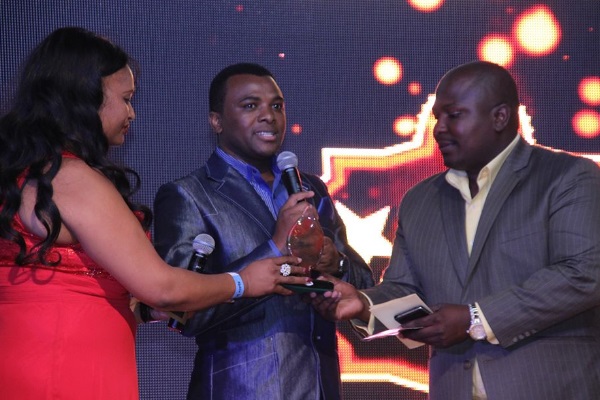
Live performances are the primary way for most Swazi musicians to earn a living. MTN Bushfire is one of Africa biggest music festivals. With an audience of 15 000 to 25 000 people over one weekend, the festival provides a platform for Swazi musicians as well as international stars. For upcoming local acts to qualify to perform at Bushfire, Swazi artists are also invited to partake in the Sibebe Friday Night Live competition, sponsored by Sibebe Premium Lager. Entrants must first perform gigs with the help of House On Fire and Sibebe Premium Lager, which are held at the end of every month. When the monthly performances are complete, House On Fire hosts a Battle Of The Bands, the winner of which earns prize money and a slot to perform at the Bushfire Festival. The most recent winner was a female Afro-soul singer Nomsa M, who performed at the Bushfire in 2015.
Every year there is the Swaziland International Trade Fair (SITF)[i], where corporate businesses and small companies show off their work and market their brands. The event also provides a chance for Swazi musicians to get business. The Swaziland Arts and Music Association (SWAMA)[ii] submits a list of all registered artists to the Swaziland Investment Promotion Agency (SIPA), which is responsible for hosting the event. From this list, SIPA picks the most active acts and books them to perform.
Currently the International Trade Fair and MTN Bushfire are the most popular and lucrative platforms in the country. For many musicians another goal is to get corporate gigs because they pay well.
Music education and workshops
Swaziland is still a developing country and a lot of things have only just begun. For example, the Malaysia-based Limkokwing University of Creative Technology recently opened a campus in Swaziland[iii] . It is still the only Swazi tertiary institution that offers training in multimedia studies and music production, inspiring Swazi musicians to develop their technical skills. With proper music education, they are then able to start their own recordings studios or labels and get into the music business. Since the opening of the university, more professionals flooding the local music industry with good quality music and music videos – for example Man-Pee Studios and Shalom Productions, which is co-owned by Limkokwing graduate Phesheya Kunene.
Those interested in learning musical instruments and other performing arts can attend Yandza, a music school/foundation started by popular Afro-soul musician Bholoja (Mbongiseni Ngubane) in 2009. Young upcoming Afro-soul/pop musician Sandziso Matsebula is one product of the school, who did guitar lessons at Yandza before emerged as a professional musician.
The organisers of the Bushfire festival always hosts workshops, known as the Arts Round Table, which helps increase knowledge and skills in the artistic community, enabling artists to succeed as professionals in the entertainment industry. In 2015 this workshop was held at the Malkerns Country Club and led by Brian Banda, a lecturer of cultural and heritage studies.
In 2015 Swazi musicians also had access to the Essential Music Workshop, which was powered by the Swaziland National Council of Arts and Culture (SNCAC) [iv], Destiny Music and MTN Swaziland. The workshop was held at the MTN Swaziland headquarters and conducted by Pastor Jabu Hlongwane, one of the founders of Joyous Celebration. It covered topics such as songwriting, arrangement, sound systems, performance, the business of music and artist management, among others.
Talent searches
In 2008, the Swaziland National Youth Council (SNYC), together with the SNCAC, organized and hosted a national talent search, the Ingcayizivele Arts and Culture Festival. Although successful, since then there were no talent searches until 2015, when the Swaziland Arts and Music Association (SWAMA), led by its president Lutfo Dlamini, together with the SNCAC came up with an idea of bringing back a national talent search competition, the Tinkhundla 55 (T55) talent search competition.
Swaziland is made of 55 tinkhundla, a system of governance based on traditional administrative subdivisions . These are scattered across the districts: 14 in Hhohho District, 11 in Lubombo District, 16 in the Manzini District and 14 in Shiselweni District. The talent search auditions started in all 55 tinkhundla, with selected judges looking for talent in music, dance and other art forms . The winners were then shortlisted and only 50 we chosen. Voting lines were opened, allowing the public to choose the top 20 to compete at the semi-finals for a place in the top five. The talent search auditions were broadcast live on Swazi TV, making it easier for the viewers to choose and vote for their favorite performers. The T55 grand finale was held at Mavuso Trade Centre, where the top five contestants battled for a brand new car and a E55 000 (US$3300) cash prize. All five finalists won recording deals with a South African record company SPM Production owned by Sipho Mkhwanazi to help them kickstart their music careers.
Radio and TV airplay
Swaziland has one radio station and two national television stations. The Swaziland Broadcasting Information and Services (SBIS) is a government radio station divided in to two channels: SBIS1, which is the Siswati Channel, and SBIS2, the English and youth channel. In terms of television, the government-owned Swazi TV[v] is most popular, while Channel Swazi (or Channel S) is a smaller independent station.
Musicians use radio and television for promoting their music. The English SBIS2 plays 70% Swazi music. They have programmess playing 100% Swazi content, such as ‘Swazi Rhythm’ hosted by DJ Lindz (Lindelwa Mafa) and the weekly ‘MTN SBIS Top 20 Chart Show’. Some musicians appear on TV to do interviews and market their material. Swazi TV has a programme hosted by Mangaliso Elfoe Matsebula called 'The Beat Down', which promotes invited for interviews and performances[vi].
Radio and TV exposure can help musicians promote and market their music through airplay, by pushing their brands and promoting their gigs. More airplay helps musicians to gain more recognition, grow their brands, get more gigs and ultimately earn more money.
Copyrights and royalty collection
In Swaziland there is currently no official Copyright Bill governing the collection and distribution of royalties, traditionally an important income stream for artists in other countries. Instead the country has been using the Swaziland National Council of Arts and Culture (SNCAC) Bill of 2000 - but with this bill they were not able to collect royalties. As a result, no artists are able to make money from radio and TV airplay. The SNCAC have been working on a draft Copyright Bill, which has been submitted to parliament for review.
While opportunities remain relatively limited for musicians in Swaziland compared to larger countries, it is important to recognize that the country is currently in the building stage, laying the foundations for strong music industry. Already the country has seen a lot of improvement. In 2015 the SNCAC brought back the National Arts and Culture Awards, and the Swaziland Arts and Music Association (SWAMA) elected a powerful politician in Lutfo Dlamini, a former minister of numerous different government departments, to lead the association. Dlamini has already come with a lot of ideas, such as new workshops, pushing for the Copyright Bill, an annual SWAMA music festival and the Tinkhundla 55 talent search – all of which bode well for the future of a Swazi music industry that will enable musicians to make a living from their craft.


Most popular

Top Naija songs of 2026
31 Mar 2026

Top Afrobeats songs of 2026
19 Mar 2026
Ghana: Mr Eazi and MOLIY’s ‘Comfort’ earns Urban Music Awards nomination
21 Oct 2026

Top amapiano songs of 2026
16 Feb 2026
Open call: CANEX Music Business Lab and Songwriting Camp
15 Oct 2026
Nigeria: CANEX WKND unveils 2026 programme
21 Oct 2026
Disclaimer: Music In Africa provides a platform for musicians and contributors to embed music and videos solely for promotional purposes. If any track or video embedded on this platform violates any copyrights please inform us immediately and we will take it down. Please read our Terms of Use for more.

Subscribe to our monthly Newsletter
Follow us on social media


Please log in to post a comment.