































NEFCISA
NEFCISA

The Music In Africa Foundation (MIAF) is proud of its partnership with the Industrial Development Corporation (IDC) as a Strategic Implementing Partner (SIP) for its Social Employment Fund (SEF). Through this collaboration, MIAF is running a national programme that is creating jobs, addressing skills gaps, and strengthening South Africa's creative industries — in line with the SEF's overarching goal to generate work for the common good and build community value through employment, social contribution, and inclusive economic participation. Operating under the banner NEFCISA (National Employment Facility for Creative Industries in South Africa), the initiative is recruiting and training participants, matching them with host organisations, and has already placed 1 500 workers across the country — surpassing its original target of 1 000. NEFCISA is delivered through a network of 20 host organisations spanning five provinces, who are actively hosting participants and contributing to work for the common good across South Africa's creative and cultural industries. Key Objectives: Support employment and entrepreneurship in the creative industries. Offer skills development and training programmes. Foster partnerships between public and private creative sectors. Promote South African creativity at both provincial and national levels Foster community development through social contribution.

ACCES
ACCES

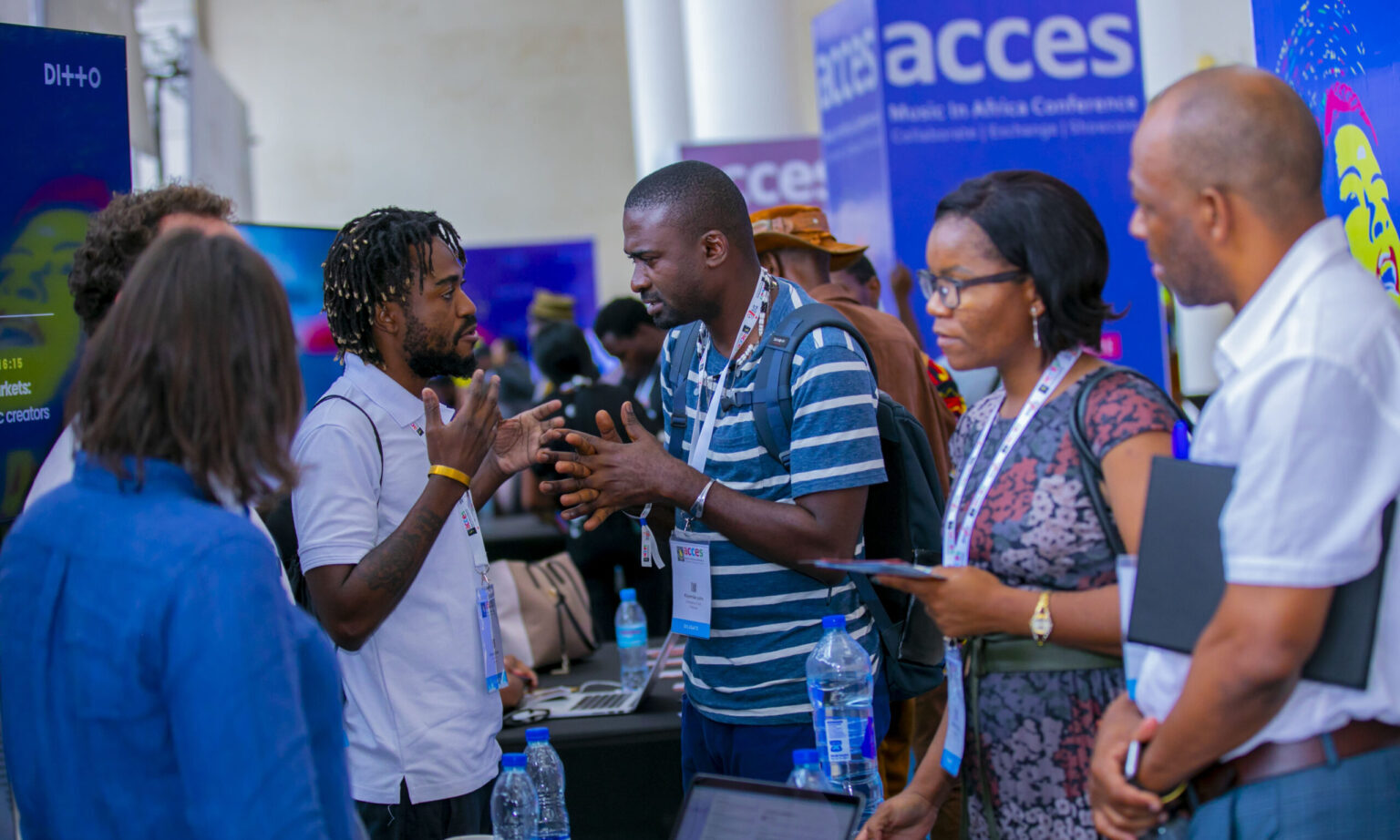
ACCES Conference and Showcase Festival is Africa's leading music industry gathering, bringing together the people shaping the future of the continent's music business. Artists, entrepreneurs, executives, investors, policymakers and cultural leaders from across Africa and around the world come to ACCES to build partnerships, exchange ideas, discover talent and create new business opportunities. Since its launch in 2017, ACCES has become the continent's premier platform for professional exchange and music market development. Combining a high-level conference with a curated showcase festival, networking, exhibitions and industry programmes, ACCES offers a unique space where creativity meets business and where African music connects with the global industry.

Gender@Work
Gender@Work

Music In Africa Gender @ Work is a three-year training programme aimed at upskilling and increasing the participation of female professionals in the African music sector. Launched by the Music In Africa Foundation (MIAF) in April 2019, the programme is connected to the MIAF’s ACCES music conference – a pan-African event held in a different African country every year. This connection enables the programme to reach new participants in a different African country every year. The programme marks the beginning of a more concerted effort by the Foundation to support the participation and inclusion of women in all facets of its programmes and the music sector in Africa as a whole. Over the three years, the programme will aim to address gender imbalances in the sector through training, lobbying, facilitating knowledge exchange and dialogues that foster the interest of women. The broader objectives of the programme are to: Provide industry training for women on critical music industry skills, focusing on: Stage management Electronic music production and recording Music business management Technical knowledge Provide an opportunity for both professional and aspiring women to benefit from the Music In Africa network and its broad range of activities in 2019, 2020 and 2021. Provide a solution-based platform in the form of a round table at ACCES with a view to identify challenges, discuss opportunities and lobby for the interests of female practitioners. Offer participants the opportunity to benefit from programmes offered by MIAF’s partners. Increase access to educational materials. Integrate participants in the broader ACCES programme to maximise experience and exposure to the industry. Record and present training materials on the www.musicinafrica.net, including but not limited to tutorials, templates and other best-practice materials. Communicate women-based themes that support the initiatives and messages of the programme. MAIN TRAINING ACTIVITIES Training in first country (Ghana): In the first year, participants will be trained on all aspects of stage management by a team of experienced stage managers from 10 to 17 November 2019. The programme will offer robust classroom training as well as practical, hands-on training in which participants will also be given the opportunity to manage various aspects of the ACCES performance programme. Training in second country: The second training iteration will take place at ACCES 2020 when the programme will diversify its course to include music production lessons and training on other music business topics. A round-table platform will also be introduced to coincide with the ACCES programme. Training in third country: The third training iteration will take place at ACCES 2021 in a different country, offering an advanced course. HOW DO YOU GET INVOLVED?  As a participant, facilitator or trainer: The programme enrolls up to 12 trainees every year. All opportunities are advertised publicly on this website, and will be added to this page. Please keep checking this page for new calls (below under UPDATES & CURRENT OPPORTUNITIES). As a partner Please contact Claire Metais at [email protected]. APPLY The call for applications for 2020 will be announced soon. The Music In Africa Gender @ Work programme is made possible with the support of the Prince Claus Fund, Siemens Stiftung and Goethe-Institut.

Sound Connects Fund
Sound Connects Fund

For cultural and creative practitioners and organisations operating in southern Africa, access to funding remains a major challenge. The COVID-19 pandemic has also had a massive impact on government policy, spending and the economy in general, and has seen spending on culture being moved further down the list of priorities. Further, the cultural and creative industries repeatedly cite four main areas where investment is needed for growth, which are increased visibility, mobility including access to new markets, finance and support structures.

Instrument Building And Repair Project

Experience the Vibrations African Instruments Exhibition online in 3D

News

RiSA raises alarm over copyright and performers’ protection amendment bills

20 Apr 2023 - 15:44

cc-img flag-img

The Recording Industry of South Africa (RiSA) has voiced concerns about harmful provisions in the Copyright Amendment and Performers’ Protection Amendment bills.
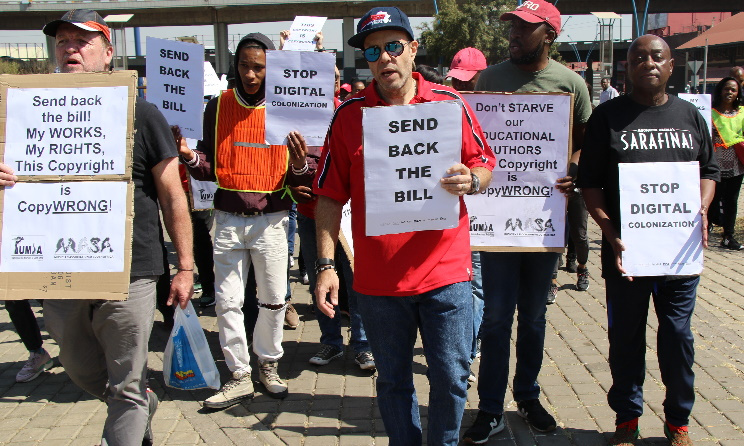
Protesters, led by Gabi Le Roux and David Alexander, marching against the Copyright Amendment Bill in Johannesburg, South Africa, in 2019. Photo: Music In Africa

RiSA made representations to the select committee on trade and industry, economic development, small business development, tourism, employment and labour sitting in Cape Town earlier this month on the two bills, which it deems regressive in relation to the rights of creators.

“Some of the provisions of these bills would interfere with freedom of contract, undermine the protection of creative works, lead to legal and commercial uncertainty, and create a disincentive from local and international companies to invest in South African cultural industries,” RiSA CEO Nhlanhla Sibisi said. “A thriving South African cultural sector that creates jobs and generates tax revenues needs robust copyright protection and fair and predictable copyright exceptions.”

In its submission, RiSA made two recommendations “to avoid the most damaging and harmful consequences of the proposed amendments.” The first recommendation is to annul several provisions in Section 39 of the Copyright Amendment Bill that RiSA says deprive artists and producers of their freedom to contract. They also extend ministerial powers to regulate private contractual arrangements.

The second recommendation is in relation to Section 12A of the same bill, which introduces the open-ended ‘fair use’ concept into South African copyright law. This, RiSA says, would cause a substantial risk to the local creative sector instead of benefiting it.

“The importation of the US-style ‘fair use’ exception in the Copyright Amendment Bill must be resisted. It would undermine the protection of the South African creative community, create significant legal uncertainty and benefit mainly large foreign companies seeking to use South African works for free,” it said.

RiSA said if the two bills were signed into law in their current state, they would have dire consequences for local creatives and copyrighted works. “As a result, artists would be harmed by the weakening of South Africa’s domestic music market and the ability of the South African industry to export local music.”

It added: “RiSA strongly supports the initiative of the Department of Trade, Industry and Competition and Parliament to modernise South Africa’s copyright law to make it a gold standard and to bring it into line with international treaties, including the WIPO [World Intellectual Property Organisation] Performances and Phonograms Treaty (WPPT), the WIPO Copyright Treaty (WCT) and international best practice, ensuring that they protect all participants in the music value chain but cautions against the unintended consequences of some of the provisions in the bills.”

A protracted process

In 2017, a group of concerned industry bodies under the umbrella of the South African Copyright Alliance wrote to the parliamentary portfolio committee on trade and industry about similar concerns that RiSA is voicing now. The alliance – comprising RiSA, the Southern African Music Rights Organisation, the Composers, Authors and Publishers Association, the Dramatic, Artistic and Literary Rights Organisation, the South African Music Performance Rights Association, the Musicians Association of South Africa and the Music Publishers’ Association of South Africa – mainly argued that users of copyright-protected material, such as broadcasters and digital music services, should never enjoy the same privileges as the creators of that material. The Copyright Amendment Bill was gazetted by the Department of Trade and Industry (DTI), led by former minister Rob Davies, that same year.

Six years later, groups representing creatives in South Africa continue to reiterate the same fears with little resolution in sight. This after President Cyril Ramaphosa challenged the legality of the two bills in 2019, sending them back from his office where they were awaiting his signature to be signed into law, through his lawyers to the DTI and the Department of Sport, Arts and Culture to investigate whether the bills were in fact invasive of creators‘ rights. It was found that the bills were unconstitutional and Ramaphosa referred them back to Parliament in 2020, citing that sections dealing with the ‘fair use’ concept had not been put up for public comment.

Public hearings are currently ongoing across the country on the two bills, with the Free State and North West provinces hosting the final sessions.

Please log in to post a comment.

Most popular

Disclaimer: Music In Africa provides a platform for musicians and contributors to embed music and videos solely for promotional purposes. If any track or video embedded on this platform violates any copyrights please inform us immediately and we will take it down. Please read our Terms of Use for more.

newsletter banner

Subscribe to our monthly Newsletter

Follow us on social media