



















































Tabu Osusa: Fela’s successor doesn’t have to be a Kuti
20 Sep 2018 - 14:58


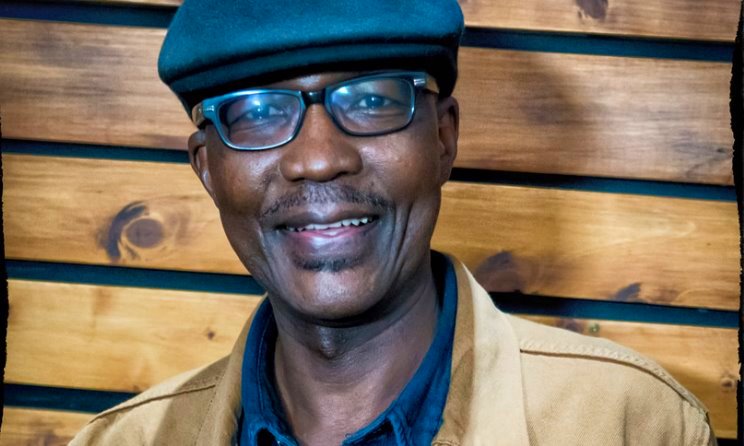
The prominent Kenyan producer and record label founder Tabu Osusa spoke with Music In Africa when he visited Nigeria recently. In this interview, Osusa, who is also a published author, speaks about Fela, the state of Afrobeat, why he is no fan of collaborations between musicians.
MUSIC IN AFRICA: How is Afrobeat music received in Kenya today?
TABU OSUSA: To us, Afrobeat died with the king of Afrobeat, Fela Kuti. I know his sons are carrying on. But unfortunately, it is very difficult for them to fit in their father’s shoes. Femi, who I believe has veered away from his father’s path, plays something totally different. I know it is Afrobeat still but it is more rock, more experimental. I think Seun is the one really playing Afrobeat—maybe because he is using some of his father’s musicians.
But some say Seun is not quite original for that reason.
I can argue that it is original but it is so difficult to win if you’re Fela’s son. I think Fela was a genius because he started a genre and there are very few musicians who have done that. Even Bob Marley did not do that. He took reggae to another level; Fela started Afrobeat.
There was juju music and you would know better since you are Nigerian, and there was jazz. But Fela managed to combine the two into a genre. How many musicians have created their own genre? Very few.
Would you say that he exhausted the options?
Yes, I think. You put it well. He exhausted the options. [Laughs] That is why anybody trying to do Afrobeat is a Fela wannabe. You find that Fela already did that. There are guys doing it but it doesn’t sound convincing and original like Fela’s. To be honest, Fela was not the greatest saxophonist or keyboardist but he played those instruments in a unique way. He was not clinically good when it comes to playing an instrument, but he played it differently.
If it was possible for the same man who created a genre to exhaust its possibilities, then how good was the genre? Isn’t this a failure of the sound?
I think it was very good. I don’t think it was a failure. If there was no Afrobeat we won’t be having Afro-pop.
It is hard to see a connection beyond a few songs.
There is a connection. The only problem is that the youth are lazy. They don’t work on it well enough. And if you think you guys have a problem, we have a bigger one in Kenya. There is a big disconnect between today’s musicians and the older generation.
In Kenya, today’s youth are actually copying music from Nigeria. Some are copying music from South Africa. The trouble with these artists is they become Afro-pop stars before they become musicians. But you must study the music, the traditional music of Nigeria. Then you say: 'This is how Fela played it; I’m going to play it like this. But you take Fela’s music and you don’t understand it because it was complicated, it was jazz. You must understand jazz first and then traditional music, then you can play Afrobeat. Some have tried it but Fela was too good. But somebody will come. Somebody like Fela only comes after a few years or maybe a few decades.
Will the person have to be from the Kuti family?
No. I think that that is the problem. Everybody is looking at Femi and Seun Kuti. And I think they also think wrongfully that they own the beat.
Wrongfully?
Yes, wrongfully, because they don’t own it. Fela played it and it belongs to Africa. The successor doesn’t even have to come from Nigeria. I have heard Japanese, Koreans playing Afrobeat and I was shocked. And they are doing it so well. But I’d love the new Fela to be African.
But he doesn’t have to be African?
I would love him to be African. That is why it is Afro. I think Fela would like the same. It is our music.
I hear there are many white bands playing the music.
That is good but I don’t think they should be the ones leading the way for us to follow. It should come from Nigeria, but if the Nigerians have failed to do it, well Africa should do something about it. I was at Felabration last year. I enjoyed it but I was expecting the proper Afrobeat. I was kind of disappointed, but I could live with it.
What do you think about collaboration between Afrobeat and pop?
Well, I am a judge at AFRIMA but this is my personal opinion: I detest collaboration. I think it kills music. It shouldn’t be the norm. Like every other track is a collaboration between this and that. The music begins to sound the same, generic.
When you had music from South Africa different from Nigeria, it was good, it was diverse. But now we are trying to make one sound because musicians have stopped musicians; it is the producers who have become musicians. And it is boring. One producer creates a beat, he calls a musician from Kenya, then he gets a musician from South Africa and he does the same thing. It kills creativity.
What does this mean for the idea of a pan-Africanism via music?
That can happen if artists visit each other, Kenyan artists playing in Nigeria and vice versa. That is something fresh. But if you find an artist from Kenya playing the same beat as from Nigeria then it will be boring after a while. It feels a bit like incest. We used to have nice Congolese rhumba, nice Afrobeat, even juju, benga, kwaito. I enjoy that kind of thing and that can still be maintained. I am not saying people should not collaborate but it should be once in a while. But they are doing it for commercial purposes.
Not for artistic reasons?
Yes because they want to hit this crowd. So they have to get Wizkid or Davido because they want to get the Nigerian market.
But the Nigerian audience is famously insular.
I agree. But why don’t they become an opening act for the guy? Why can’t a top Nigerian artist invite a top Kenyan artist to his show? “My brother from Kenya would play benga music…”
Some might argue about that a concert is hardly the place for discovering music.
So why can’t the radio open up to music from Kenya? How do they know people don’t like it without trying? Music has become commercial.
But hasn't it always been commercial?
Yes, but most of these musicians don’t believe in these musicians they are collaborating with. I am sure they are paid. I’d prefer if they did it in good faith, but they are just guns for hire. The smaller artist is looking for a bigger artist so that he can be propelled to stardom. But it means the artist doesn’t have what it takes when he is alone.


Most popular

Top Naija songs of 2026
31 Mar 2026

Top Afrobeats songs of 2026
19 Mar 2026

Top amapiano songs of 2026
16 Feb 2026
Ghana: Mr Eazi and MOLIY’s ‘Comfort’ earns Urban Music Awards nomination
21 Oct 2026

Open call: CANEX Music Business Lab and Songwriting Camp
15 Oct 2026
Nigeria: CANEX WKND unveils 2026 programme
21 Oct 2026
Disclaimer: Music In Africa provides a platform for musicians and contributors to embed music and videos solely for promotional purposes. If any track or video embedded on this platform violates any copyrights please inform us immediately and we will take it down. Please read our Terms of Use for more.

Subscribe to our monthly Newsletter
Follow us on social media


Please log in to post a comment.