












































NEFCISA
NEFCISA

The Music In Africa Foundation (MIAF) is proud of its partnership with the Industrial Development Corporation (IDC) as a Strategic Implementing Partner (SIP) for its Social Employment Fund (SEF). Through this collaboration, MIAF is running a national programme that is creating jobs, addressing skills gaps, and strengthening South Africa's creative industries — in line with the SEF's overarching goal to generate work for the common good and build community value through employment, social contribution, and inclusive economic participation. Operating under the banner NEFCISA (National Employment Facility for Creative Industries in South Africa), the initiative is recruiting and training participants, matching them with host organisations, and has already placed 1 500 workers across the country — surpassing its original target of 1 000. NEFCISA is delivered through a network of 20 host organisations spanning five provinces, who are actively hosting participants and contributing to work for the common good across South Africa's creative and cultural industries. Key Objectives: Support employment and entrepreneurship in the creative industries. Offer skills development and training programmes. Foster partnerships between public and private creative sectors. Promote South African creativity at both provincial and national levels Foster community development through social contribution.

ACCES
ACCES

ACCES Conference and Showcase Festival is Africa's leading music industry gathering, bringing together the people shaping the future of the continent's music business. Artists, entrepreneurs, executives, investors, policymakers and cultural leaders from across Africa and around the world come to ACCES to build partnerships, exchange ideas, discover talent and create new business opportunities. Since its launch in 2017, ACCES has become the continent's premier platform for professional exchange and music market development. Combining a high-level conference with a curated showcase festival, networking, exhibitions and industry programmes, ACCES offers a unique space where creativity meets business and where African music connects with the global industry.

Gender@Work
Gender@Work

Music In Africa Gender @ Work is a three-year training programme aimed at upskilling and increasing the participation of female professionals in the African music sector. Launched by the Music In Africa Foundation (MIAF) in April 2019, the programme is connected to the MIAF’s ACCES music conference – a pan-African event held in a different African country every year. This connection enables the programme to reach new participants in a different African country every year. The programme marks the beginning of a more concerted effort by the Foundation to support the participation and inclusion of women in all facets of its programmes and the music sector in Africa as a whole. Over the three years, the programme will aim to address gender imbalances in the sector through training, lobbying, facilitating knowledge exchange and dialogues that foster the interest of women. The broader objectives of the programme are to: Provide industry training for women on critical music industry skills, focusing on: Stage management Electronic music production and recording Music business management Technical knowledge Provide an opportunity for both professional and aspiring women to benefit from the Music In Africa network and its broad range of activities in 2019, 2020 and 2021. Provide a solution-based platform in the form of a round table at ACCES with a view to identify challenges, discuss opportunities and lobby for the interests of female practitioners. Offer participants the opportunity to benefit from programmes offered by MIAF’s partners. Increase access to educational materials. Integrate participants in the broader ACCES programme to maximise experience and exposure to the industry. Record and present training materials on the www.musicinafrica.net, including but not limited to tutorials, templates and other best-practice materials. Communicate women-based themes that support the initiatives and messages of the programme. MAIN TRAINING ACTIVITIES Training in first country (Ghana): In the first year, participants will be trained on all aspects of stage management by a team of experienced stage managers from 10 to 17 November 2019. The programme will offer robust classroom training as well as practical, hands-on training in which participants will also be given the opportunity to manage various aspects of the ACCES performance programme. Training in second country: The second training iteration will take place at ACCES 2020 when the programme will diversify its course to include music production lessons and training on other music business topics. A round-table platform will also be introduced to coincide with the ACCES programme. Training in third country: The third training iteration will take place at ACCES 2021 in a different country, offering an advanced course. HOW DO YOU GET INVOLVED?  As a participant, facilitator or trainer: The programme enrolls up to 12 trainees every year. All opportunities are advertised publicly on this website, and will be added to this page. Please keep checking this page for new calls (below under UPDATES & CURRENT OPPORTUNITIES). As a partner Please contact Claire Metais at [email protected]. APPLY The call for applications for 2020 will be announced soon. The Music In Africa Gender @ Work programme is made possible with the support of the Prince Claus Fund, Siemens Stiftung and Goethe-Institut.

Sound Connects Fund
Sound Connects Fund

For cultural and creative practitioners and organisations operating in southern Africa, access to funding remains a major challenge. The COVID-19 pandemic has also had a massive impact on government policy, spending and the economy in general, and has seen spending on culture being moved further down the list of priorities. Further, the cultural and creative industries repeatedly cite four main areas where investment is needed for growth, which are increased visibility, mobility including access to new markets, finance and support structures.

Instrument Building And Repair Project

Experience the Vibrations African Instruments Exhibition online in 3D

Features

Tsholofelo Mapisa on how to be an independent musician with commercial appeal
22 Oct 2019 - 12:22

cc-img flag-img

Tsholofelo Mapisa is the type of artist who likes to get her hands dirty. Everything she does must be perfect, especially her music. During the recording of her debut album, she flew some Durban-based artists to Joburg just to get a trusted opinion on her work.
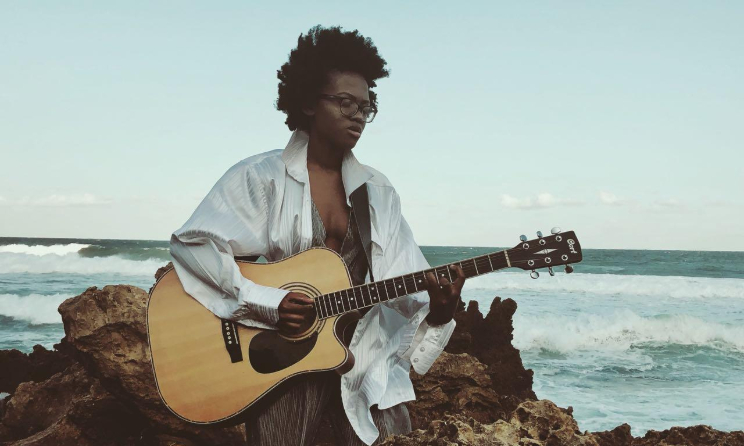
South African singer-songwriter Tsholofelo Mapisa.

She’s a different breed; highly ambitious and talented with a clear destination in her mind.

When she was born, her parents wanted to make a statement amid the tribal tensions in the '90s by giving her the Sotho name Tsholofelo, although the family was Zulu. This statement was, “Before we are Zulu, Xhosa or Sotho, we are all African first," Mapisa tells Music In Africa.

This cosmopolitan value runs through her veins to this day and can be heard in the fusion of styles she employs in her music. If music had to be described through the lens of social dynamics, then Mapisa's choice of expression is definitely not tribal. Rather, it's unafraid to invite in the 'other' and attempt to create something new.

This piece could be about her music alone, but the talented musician offers more that one can learn from. The Durban-born singer-songwriter is currently enrolled in a master’s degree at the University of KwaZulu-Natal. As part of her research, she’s exploring different ways in which a musician can create authentic music that can also appeal to ordinary people, without compromising the creative process. It’s a dilemma that even established musicians have to deal with.

Being an uncompromising musician herself, Mapisa’s journey resembles that of many struggling independent artists, especially females, who are trying to break into the music industry. After releasing her debut album Becoming in 2017, the budding musician will use her knowledge, education and personal experiences to tackle common issues that artists face on the daily.

"It’s a tug of war between music as an art and music as a product," she says. "Finding the right balance between the two can be tricky and it involves wearing different caps. I’m also not as business savvy as I should be. Dropping my album exposed that part of myself that I realised I needed to work on.

"The end goal of music is priceless, you can’t put a figure on it. But because I, and many artists, have daily expenses, what I do for a living has to pay my bills. So we become pressured to create music that we can also sell commercially. It then becomes a tug of war.”

I ask her if one can be an independent artist and still have commercial appeal.

"Yes, but in different ways. Every artist has their own path. First, you need to be good at what you do. If you do this, people will find you. Secondly, stay true to yourself. Doing something you like, whether it's popular or not, is the first step to succeeding; you need to resonate with yourself before other people resonate with you.

"Stay focused and be honest with yourself. If certain things don’t work for you, they just don’t work. Also, don’t believe in your own hype. It’s important to always want to grow. At the centre of everything should be love for the music, for the art."

Becoming is about evolving and constantly growing as a person. At 25 years old, Mapisa feels like there’s a lot of pressure on young people to have it all figured out.

"There’s so much happening just in terms of us learning and trying to become adults. Our identity keeps on changing, as it should. We are under no obligation to be the same people that we were 10 minutes ago. And as long as you’re changing in the right direction that is true to yourself then you’re on the right track," she says.

Even though Mapisa may be young, her position as an independent has pushed her to think deeply about the different strategies that are required of an artist to forge a successful career.

"People romanticise a lot about being an independent artist but do not understand that it’s hard," she says. "Delegate. It’s very important to have a team, you cannot do everything on your own. Trying to do everything on your own takes away from where your focus should really be. Find people you trust to have them go over your stuff.

"Have patience. It’s easy to burn out and eventually become counterproductive. My personal goal when I play guitar is to find healing for myself. But it’s very easy to get lost in what other people are saying or what you want them to say.

Mapisa's main influences are jazz, alternative and folk music. She believes that her music, which she describes as "eclectic", is for the discerning crowd. “It’s for people who actually want to listen to the music," she says, adding that she's keen to experiment with electronic artists, such as Black Coffee, in the future.

“I’m also really enjoying Zoë Modiga. I think it’s because we're kind of doing the same thing," Mapisa says.

Please log in to post a comment.

Most popular

Disclaimer: Music In Africa provides a platform for musicians and contributors to embed music and videos solely for promotional purposes. If any track or video embedded on this platform violates any copyrights please inform us immediately and we will take it down. Please read our Terms of Use for more.

newsletter banner

Subscribe to our monthly Newsletter

Follow us on social media