



































NEFCISA
NEFCISA

The Music In Africa Foundation (MIAF) is proud of its partnership with the Industrial Development Corporation (IDC) as a Strategic Implementing Partner (SIP) for its Social Employment Fund (SEF). Through this collaboration, MIAF is running a national programme that is creating jobs, addressing skills gaps, and strengthening South Africa's creative industries — in line with the SEF's overarching goal to generate work for the common good and build community value through employment, social contribution, and inclusive economic participation. Operating under the banner NEFCISA (National Employment Facility for Creative Industries in South Africa), the initiative is recruiting and training participants, matching them with host organisations, and has already placed 1 500 workers across the country — surpassing its original target of 1 000. NEFCISA is delivered through a network of 20 host organisations spanning five provinces, who are actively hosting participants and contributing to work for the common good across South Africa's creative and cultural industries. Key Objectives: Support employment and entrepreneurship in the creative industries. Offer skills development and training programmes. Foster partnerships between public and private creative sectors. Promote South African creativity at both provincial and national levels Foster community development through social contribution.

ACCES
ACCES

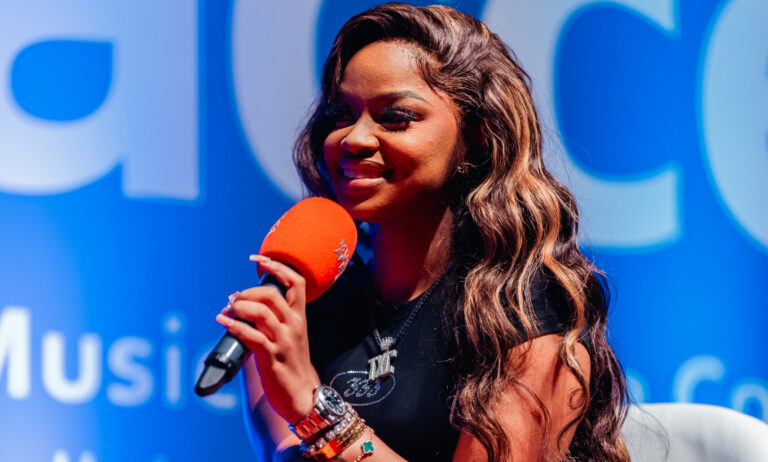
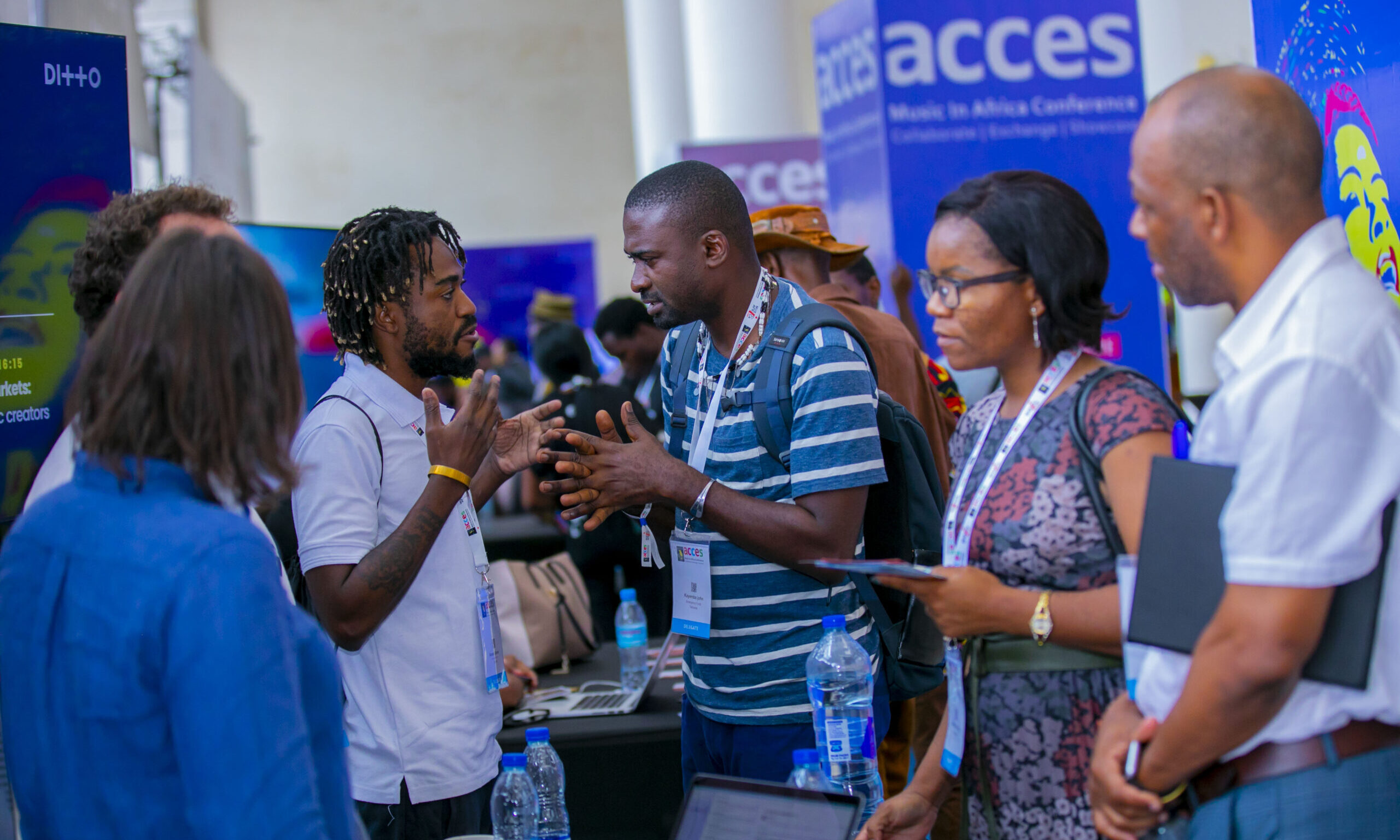
ACCES Conference and Showcase Festival is Africa's leading music industry gathering, bringing together the people shaping the future of the continent's music business. Artists, entrepreneurs, executives, investors, policymakers and cultural leaders from across Africa and around the world come to ACCES to build partnerships, exchange ideas, discover talent and create new business opportunities. Since its launch in 2017, ACCES has become the continent's premier platform for professional exchange and music market development. Combining a high-level conference with a curated showcase festival, networking, exhibitions and industry programmes, ACCES offers a unique space where creativity meets business and where African music connects with the global industry.

Gender@Work
Gender@Work

Music In Africa Gender @ Work is a three-year training programme aimed at upskilling and increasing the participation of female professionals in the African music sector. Launched by the Music In Africa Foundation (MIAF) in April 2019, the programme is connected to the MIAF’s ACCES music conference – a pan-African event held in a different African country every year. This connection enables the programme to reach new participants in a different African country every year. The programme marks the beginning of a more concerted effort by the Foundation to support the participation and inclusion of women in all facets of its programmes and the music sector in Africa as a whole. Over the three years, the programme will aim to address gender imbalances in the sector through training, lobbying, facilitating knowledge exchange and dialogues that foster the interest of women. The broader objectives of the programme are to: Provide industry training for women on critical music industry skills, focusing on: Stage management Electronic music production and recording Music business management Technical knowledge Provide an opportunity for both professional and aspiring women to benefit from the Music In Africa network and its broad range of activities in 2019, 2020 and 2021. Provide a solution-based platform in the form of a round table at ACCES with a view to identify challenges, discuss opportunities and lobby for the interests of female practitioners. Offer participants the opportunity to benefit from programmes offered by MIAF’s partners. Increase access to educational materials. Integrate participants in the broader ACCES programme to maximise experience and exposure to the industry. Record and present training materials on the www.musicinafrica.net, including but not limited to tutorials, templates and other best-practice materials. Communicate women-based themes that support the initiatives and messages of the programme. MAIN TRAINING ACTIVITIES Training in first country (Ghana): In the first year, participants will be trained on all aspects of stage management by a team of experienced stage managers from 10 to 17 November 2019. The programme will offer robust classroom training as well as practical, hands-on training in which participants will also be given the opportunity to manage various aspects of the ACCES performance programme. Training in second country: The second training iteration will take place at ACCES 2020 when the programme will diversify its course to include music production lessons and training on other music business topics. A round-table platform will also be introduced to coincide with the ACCES programme. Training in third country: The third training iteration will take place at ACCES 2021 in a different country, offering an advanced course. HOW DO YOU GET INVOLVED?  As a participant, facilitator or trainer: The programme enrolls up to 12 trainees every year. All opportunities are advertised publicly on this website, and will be added to this page. Please keep checking this page for new calls (below under UPDATES & CURRENT OPPORTUNITIES). As a partner Please contact Claire Metais at [email protected]. APPLY The call for applications for 2020 will be announced soon. The Music In Africa Gender @ Work programme is made possible with the support of the Prince Claus Fund, Siemens Stiftung and Goethe-Institut.

Sound Connects Fund
Sound Connects Fund

For cultural and creative practitioners and organisations operating in southern Africa, access to funding remains a major challenge. The COVID-19 pandemic has also had a massive impact on government policy, spending and the economy in general, and has seen spending on culture being moved further down the list of priorities. Further, the cultural and creative industries repeatedly cite four main areas where investment is needed for growth, which are increased visibility, mobility including access to new markets, finance and support structures.

Instrument Building And Repair Project

Experience the Vibrations African Instruments Exhibition online in 3D

Features

Wizkid: Sounds from what other side?

03 Aug 2017 - 12:36

cc-img flag-img

Ask God and he’ll tell you how one needs an overdose of self-belief to become a successful creator of anything. But not even “Let there be light” amounts of self-belief could forewarn Wizkid of the coming galactic trajectory of his career as late as, let’s be frank, 2014.
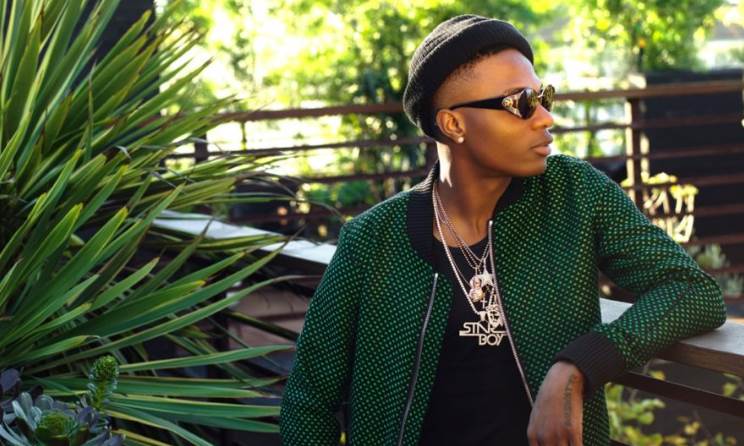
Sounds from the Other Side...is a blatant statement of Wizkid’s new internationality. Photo: Billboard

But here we are. If Wizkid was Nigeria’s biggest act—no mean feat in itself—in 2015, he is the biggest Nigerian act in the world right now, competing favourably with, gasp, Fela, in name recognition. This traces back to the release of Ojuelegba. With that song, Wizkid achieved lift-off. One small step for Skepta; a giant leap for Wizkid.

Sounds from the Other Side, by conception, is a blatant statement of Wizkid’s new internationality. If we are to take “other side” symbolically, we might as well accept its suggestions of novelty, of difference. It’s a setup, because listening is anticlimactic. In 2017, what can count as an “other side” to a Nigerian listenership? What, in this album, have we not heard before?

The internet in its many manifestations, Wizkid concedes to Ebro Darden, has made this a moment like no other for African music. The bar for entry is rather low. Discovery on the other side is not necessarily the dedicated art or rigorous pursuit it once was. The time lapse between production here to consumption anywhere else is as short as the travel of a click or two. One Dance, for instance, emerged from a Drake encounter with Wizkid’s Instagram page. Compare that to, say, Paul McCartney, having to travel down to Lagos to experience and attempt to incorporate Fela’s sound.

The other side of that positivity is what counts as novel has shrunk. Mainstream music in the USA is largely mainstream music in Nigeria, when you correct for Nigerian music. Listen to Nigerian radio, or examine the charts on Playdata. Drake, Chris Brown, Major Lazer, Diplo, Trey Songz, Ty Dolla $ign are, to varying degrees, very much pieces of the mosaic of music in Nigeria, as are reggaeton, EDM, dancehall or even House.

There are overt intimations of Major Lazer’s Watch Out for This in African Bad Gyal. In orientation, Come Closer is not much different from Rihanna’s Work, Caribbean patois, minimalism and all. (Is that Drake in there too?) That Caribbean vibe, the backbone running through SFTOS, has seen quite a bit of action from Drake too, the magpie who is one of English North America’s foremost tastemakers.

Sweet Love takes its place in a new Afrobeat tradition inaugurated by Ojuelegba (Wizkid’s magnum opus), a tradition that blunts the sonic and political edge of Fela’s music. With its subtle Caribbean vibe and its interesting take on House via Latin funk, All for Love, featuring the dulcet-voiced Bucie, is perhaps the most accomplished musical achievement on the Sounds from the Other Side project. But haven’t we heard this before—and better—on Seyi Shay’s Yolo Yolo? And the prize for Purest Nigerian Take on House must go to Wande Coal, for Iskaba.

Examples abound if Wizkid had been putting an ear or two out for just what a sound from the other side might sound like. Wale’s My Love, is a particularly ironic example, given that on the chorus is Wizkid, appropriating his chorus on Sweet Love on the song’s smooth blend of highlife and electronic music. Ed Sheeran’s Highlife-inspired Bibia Be Ye Ye, written in Ghana with Fuse ODG, is another. Further afield is Justin Timberlake’s Let the Groove Get In, which channels Alhamdulillai, the first track off Burkina Faso: Rhythms of the Grassland, an obscure 2002 folk album originally released in 1983 as Rhythms of the Grassland: Music of Upper Volta Vol II.

SFTOS will not set the world alight here or on the other side—that much has become apparent: the hoopla surrounding its release has quietened considerably. And we’re barely out of July. The tracks that will do well on this project were released before July. The rest is pretty much deadweight, Nothing here pushes the envelope, a prerequisite if you're engaging on someone else's terms. Lutherize Christianity, pentecostalize it. But don’t struggle over Catholicism. Because that thing they say about the Pope is true: No se debe ser mas papista que el Papa.

There’s a sense, a narrow sense, in which to read SFTOS as something novel. Much of it is uncharted territory for Wizkid, a learning curve on the international stage, and it is heartening to hear him speak—to Ebro Darden—of finally finding a sound (that thing writers would call a voice). It’s heartening precisely because it is currently near impossible to distil a uniquely Wizkid sound in the same way, for example, a Mr. Eazi sound can be pinned down. What, really, is Wizkid and what qualities—graft and Providence aside—stand him apart from his peers? Individual talent is acknowledged and accounted for, but too much of the whimsical Divine seems to be implicated in his success.

Unpindownability is not to be mistaken for uniqueness. Wizkid's sound is attractive but not distinctive. If rumours of an imminent album or two are to be believed, perhaps Wizkid might then begin to bridge the chasm between attractiveness and distinctiveness. The kid, who knows, may well become a man.

Please log in to post a comment.

Most popular

Disclaimer: Music In Africa provides a platform for musicians and contributors to embed music and videos solely for promotional purposes. If any track or video embedded on this platform violates any copyrights please inform us immediately and we will take it down. Please read our Terms of Use for more.

newsletter banner

Subscribe to our monthly Newsletter

Follow us on social media