




























































Women’s Day playlist: Celebrating Africa’s queens, warriors, visionaries
08 Mar 2024 - 09:49

The theme for this year’s International Women’s Day is Invest in Women: Accelerate Progress, while its campaign tagline is Inspire Inclusion. While progress has been made in tackling the disenfranchisement facing women around the world, there is a long way to go with the power systems still tilted in favour of men. As such, there is more to be done to drive home the message of the importance of diversity and empowerment in all aspects of society.
With calls for inclusion and gender equality at the heart of the struggle, women have long learnt that no one can drive this agenda home better than themselves.
As the world marks this special occasion, Music In Africa presents a list of women musician-activists who have acted as core drivers of change in their societies. The list celebrates warriors, firebrands, misfits, queens and visionaries – past and present – leading the charge for social, political and economic equality by example – by singing it and acting upon it. They are advocates for human rights speaking truth to power. Mavericks who dared to dream big and venture into male-dominated spheres uninvited.
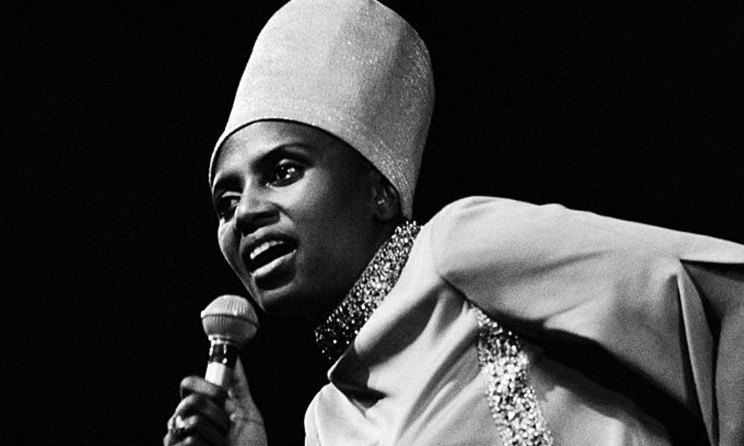
Miriam Makeba (South Africa)
The ‘Queen of African Music’ was a trailblazing pioneer, unstoppable in life and death. The singer and actress took the fight for equality to international stages where she railed against the injustices faced by South Africans under the yoke of apartheid. After her exile to Guinea in 1969, she became the symbol of the fight for black liberation globally, a militant pan-African laying waste to oppressors lyrically. Her 9 March 1964 speech to the UN General Assembly captured Mama Africa’s ideals: “I ask you and all the leaders of the world: would you act differently? Would you keep silent and do nothing if you were in our place? Would you not resist if you were allowed no rights in your own country because the colour of your skin is different to that of the rulers and if you were punished for even asking for equality? I appeal to you and to you, to all the countries of the world, to do everything you can to stop the coming tragedy. I appeal to you to save the lives of our leaders, to empty the prisons of all those who should never have been there.”
Hawi Tezera (Ethiopia)
At the height of Oromo repression in Ethiopia in 2015, Hawi Tezera dared to voice the concerns of her people against the state’s violent response to protests that had led to the killings of thousands of people. But just days after releasing a song viewed as critical of the government, the famous singer found herself in a police cell where she was tortured for days before being released. Photos of the singer’s injuries galvanised the protests and served as evidence of the state-sanctioned atrocities committed against those speaking out about the injustices meted out on the people of Oromia.
Muthoni Drummer Queen (Kenya)
In the cut-throat Kenyan entertainment business space, men have always had their way, imposing their ideas and dictating the terms of engagement. This is until 2008 when a new voice swept through the East African live music scene when the inaugural Blankets and Wine festival took place. The event, which still exists today, is the brainchild of Kenyan musician and entrepreneur Muthoni Drummer Queen. Although it’s now the standard for other live music and lifestyle platforms, Blankets and Wine has fought its fair share of battles coming from individuals and organisations aiming to kill it in order to start similar ventures. Muthoni’s ability to weather these storms is a testament to her unfailing will and fighting power.
MC Yallah (Uganda)
MC Yallah has been active in Uganda male-dominated hip hop scene since 1999. Her energetic, unrestrained performances serving up hip hop laced with grime, punk and trap can be matched by a few artists in the genre – a joy to experience and a true measure of what it means to be a live artist. Her pointed lyrics delivered rapidly in Swahili, Luganda, English and Luo hold up a mirror to society, telling girls that it’s possible to stand out as long as you remain true to your identity. The lyrics drawn from real-life experiences often address women’s issues and spread a powerful message of self-determination.
Efya (Ghana)
Ghana’s Efya is among the country's most important and innovative pop voices. Since hitting the mainstream in 2008 via the Stars of the Future singing contest, she has also positioned herself as a champion of girl power through bold anthems and high-profile collaborations with everyone from Sarkodie to Tiwa Savage.
Yemi Alade (Nigeria)
Yemi Alade is nothing if not the voice of empowerment. She is the heir of pioneering African female singer-activists like Miriam Makeba and Angélique Kidjo. Her hits are too many to count at this point, and she is the first African female Afropop star to surpass 100 million views on YouTube with her hit ‘Johnny’. In 2020, she became a UN Development Programme goodwill ambassador, adding to her long list of philanthropic responsibilities, including her own James and Helen PathWay Foundation.
Angélique Kidjo (Benin)
Beninese songstress, who is sometimes referred to as the ‘Golden Voice of Africa’ is revered for her many contributions, both musical and humanitarian. The commitment of the 2023 Polar Music Prize laureate and five-time Grammy winner to serving others is evident through her involvement in a long list of campaigns. Since 2002, Angélique Kidjo has been a UNICEF goodwill ambassador, advocating for children’s rights. She also supports the International Federation of Human Rights’ Africa for Women’s Rights campaign and is the co-founder of the Batonga Foundation, which empowers and educates adolescent girls in sub-Saharan Africa.
Viviane Chidid (Senegal)
By exploring the nuances of suffering and resilience, Viviane Chidid’s work speaks supports the essential fight for equality and respect in the home. Her songs denounce domestic violence, pointing out that women are often the main victims. Through sincere and touching lyrics, she highlights the injustices hidden in homes where love should prevail. In this way, music becomes a reflection of a difficult reality, encouraging people to break the silence surrounding such harmful behaviour.
Oumou Sangaré (Mali)
Oumou Sangaré is famous for her blend of traditional music and jazz. Born in Bamako, the ‘Queen of Wassoulou’ is also known for her committed lyrics addressing themes such as women’s rights, polygamy and social injustices. She has received numerous awards for her talent and commitment.
Queen Rima (Guinea)
The ‘Queen of Guinean Dancehall’ is known for paying tribute to the brave women who fight for their families. The artist encourages women to invest themselves fully in their activities and not to delegate all roles entirely to men. She was nominated for the prestigious Prix Découvertes RFI in 2022, a testament to her growing influence in the music world. With her catchy style and powerful lyrics, Queen Rima defies convention and has established herself as a powerful voice in the Guinean music industry.
Les Mamans du Congo (Congo-Brazzaville)
Les Mamans du Congo (Congolese Mamas) is a Congolese music group made up exclusively of women. They are known for their fight for the emancipation of women.


Most popular

Top Naija songs of 2026
31 Mar 2026

Top Afrobeats songs of 2026
19 Mar 2026

Top amapiano songs of 2026
16 Feb 2026

Open call: CANEX Music Business Lab and Songwriting Camp
15 Oct 2026

Ghana: Mr Eazi and MOLIY’s ‘Comfort’ earns Urban Music Awards nomination
21 Oct 2026
Nigeria: CANEX WKND unveils 2026 programme
21 Oct 2026
Disclaimer: Music In Africa provides a platform for musicians and contributors to embed music and videos solely for promotional purposes. If any track or video embedded on this platform violates any copyrights please inform us immediately and we will take it down. Please read our Terms of Use for more.

Subscribe to our monthly Newsletter
Follow us on social media


Please log in to post a comment.