NEFCISA
NEFCISA

The Music In Africa Foundation (MIAF) is proud of its partnership with the Industrial Development Corporation (IDC) as a Strategic Implementing Partner (SIP) for its Social Employment Fund (SEF). Through this collaboration, MIAF is running a national programme that is creating jobs, addressing skills gaps, and strengthening South Africa's creative industries — in line with the SEF's overarching goal to generate work for the common good and build community value through employment, social contribution, and inclusive economic participation. Operating under the banner NEFCISA (National Employment Facility for Creative Industries in South Africa), the initiative is recruiting and training participants, matching them with host organisations, and has already placed 1 500 workers across the country — surpassing its original target of 1 000. NEFCISA is delivered through a network of 20 host organisations spanning five provinces, who are actively hosting participants and contributing to work for the common good across South Africa's creative and cultural industries. Key Objectives: Support employment and entrepreneurship in the creative industries. Offer skills development and training programmes. Foster partnerships between public and private creative sectors. Promote South African creativity at both provincial and national levels Foster community development through social contribution.

ACCES
ACCES

ACCES Conference and Showcase Festival is Africa's leading music industry gathering, bringing together the people shaping the future of the continent's music business. Artists, entrepreneurs, executives, investors, policymakers and cultural leaders from across Africa and around the world come to ACCES to build partnerships, exchange ideas, discover talent and create new business opportunities. Since its launch in 2017, ACCES has become the continent's premier platform for professional exchange and music market development. Combining a high-level conference with a curated showcase festival, networking, exhibitions and industry programmes, ACCES offers a unique space where creativity meets business and where African music connects with the global industry.

Gender@Work
Gender@Work

Music In Africa Gender @ Work is a three-year training programme aimed at upskilling and increasing the participation of female professionals in the African music sector. Launched by the Music In Africa Foundation (MIAF) in April 2019, the programme is connected to the MIAF’s ACCES music conference – a pan-African event held in a different African country every year. This connection enables the programme to reach new participants in a different African country every year. The programme marks the beginning of a more concerted effort by the Foundation to support the participation and inclusion of women in all facets of its programmes and the music sector in Africa as a whole. Over the three years, the programme will aim to address gender imbalances in the sector through training, lobbying, facilitating knowledge exchange and dialogues that foster the interest of women. The broader objectives of the programme are to: Provide industry training for women on critical music industry skills, focusing on: Stage management Electronic music production and recording Music business management Technical knowledge Provide an opportunity for both professional and aspiring women to benefit from the Music In Africa network and its broad range of activities in 2019, 2020 and 2021. Provide a solution-based platform in the form of a round table at ACCES with a view to identify challenges, discuss opportunities and lobby for the interests of female practitioners. Offer participants the opportunity to benefit from programmes offered by MIAF’s partners. Increase access to educational materials. Integrate participants in the broader ACCES programme to maximise experience and exposure to the industry. Record and present training materials on the www.musicinafrica.net, including but not limited to tutorials, templates and other best-practice materials. Communicate women-based themes that support the initiatives and messages of the programme. MAIN TRAINING ACTIVITIES Training in first country (Ghana): In the first year, participants will be trained on all aspects of stage management by a team of experienced stage managers from 10 to 17 November 2019. The programme will offer robust classroom training as well as practical, hands-on training in which participants will also be given the opportunity to manage various aspects of the ACCES performance programme. Training in second country: The second training iteration will take place at ACCES 2020 when the programme will diversify its course to include music production lessons and training on other music business topics. A round-table platform will also be introduced to coincide with the ACCES programme. Training in third country: The third training iteration will take place at ACCES 2021 in a different country, offering an advanced course. HOW DO YOU GET INVOLVED?  As a participant, facilitator or trainer: The programme enrolls up to 12 trainees every year. All opportunities are advertised publicly on this website, and will be added to this page. Please keep checking this page for new calls (below under UPDATES & CURRENT OPPORTUNITIES). As a partner Please contact Claire Metais at [email protected]. APPLY The call for applications for 2020 will be announced soon. The Music In Africa Gender @ Work programme is made possible with the support of the Prince Claus Fund, Siemens Stiftung and Goethe-Institut.

Sound Connects Fund
Sound Connects Fund

For cultural and creative practitioners and organisations operating in southern Africa, access to funding remains a major challenge. The COVID-19 pandemic has also had a massive impact on government policy, spending and the economy in general, and has seen spending on culture being moved further down the list of priorities. Further, the cultural and creative industries repeatedly cite four main areas where investment is needed for growth, which are increased visibility, mobility including access to new markets, finance and support structures.

Instrument Building And Repair Project

Experience the Vibrations African Instruments Exhibition online in 3D

Features

Zanzibar: Despite uncertainties, Sauti za Busara pulls off another successful fest
14 Feb 2022 - 17:26

cc-img flag-img

By Paul Owere

The 19th edition of Sauti za Busara music festival reached a climax on Sunday night at the Old Fort in Stone Town, Zanzibar, where an exciting array of artists thrilled revellers.
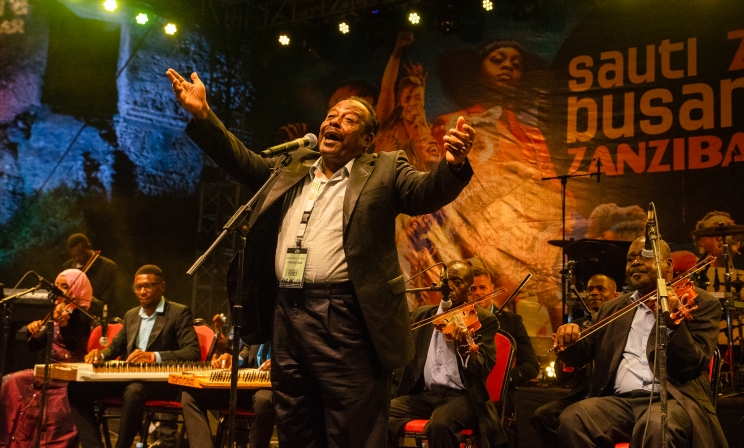
Prof Mohamed Ilyas and his taarab ensemble Nadi Ikhwan Safaa. Photo: Sauti za Busara

This year’s festival was held under the theme, Paza Sauti: Amplifying Women’s Voices. In his opening remarks, festival director Yusuf Mahmoud noted that in the hands of the right people, microphones are “our weapon to fight injustice, to build peace and unity across borders.”

Sauti za Busara, which is traditionally held in February, brought the usually calm and quiet Stone Town to life as thousands filled the iconic Old Fort. Over three nights, some 20 acts thrilled music lovers who had travelled from around the world to catch a glimpse of Africa’s musical diversity and talent.

For many of the performers and fans in attendance, this was their first outing in almost two years after the onset of the global pandemic, which had brought international travel and economies to a standstill.

The artists were mainly drawn from the Eastern and Southern Africa regions, given the stifling travel restrictions that certain parts of the world still face due to the pandemic.

The rich line-up of artists featured Tanzania’s Siti & The Band, Sholo Mwamba, Vitali Maembe, Ben Pol, Zan Ubuntu, Wamwiduka Band, Nadi Ikhwan Safaa, Upendo Manase, Bahati Female Band and surprise act G-Nako.

Artists from the rest of Africa were Suzan Kerunen (Uganda), Sampa the Great (Zambia/Australia), Msaki (South Africa), Sjava (South Africa), Nomfusi (South Africa), Evans ‘Pfumela’ Mapfumo (Zimbabwe), Sylent Nqo (Zimbabwe), Fanie Fayar (Congo-Brazzaville), Aleksand Saya (Reunion) and iamsiwas (South Africa/Australia).

Speaking after her performance on Sunday, Msaki said Sauti za Busara was not only advocating for gender parity in the music industry but also taking positive action behind the scene to ensure that women are included in the technical aspects of organising and staging a festival. The popular South African singer performed two sets at Sauti za Busara 2022 – one with a full band on Saturday and another with a DJ on Sunday, showing the audience her wide scope of musical influences and output.

“I enjoyed the two nights that I performed here,” Msaki said. “It was thrilling to be out here with appreciative audiences after two difficult years when many countries were under lockdown.”

There were two main takeaways from Sauti za Busara: Music fans are starved for live performances and Prof Mohamed Ilyas of classic taarab ensemble Nadi Ikhwan Safaa continues to blossom as a national treasure of the traditional genre.

The last dance?

But as festivalgoers left the Old Fort in the early hours of Monday morning, they wondered whether this was their last dance at the iconic venue. This was after Mahmoud announced that the organisers were doubtful whether they would be able to hold a 20th edition of the festival in 2023.

“Usually on a day like this we announce the dates for the next festival, but today we won’t because we are not sure whether we will be able raise the funds,” he said, adding that the core funding that Sauti za Busara had been receiving from the Norwegian embassy in Dar es Salaam would come to an end in March 2022.

“Busara’s income from ticket sales covers less than 30% of the total cost, which runs into hundreds of thousands of dollars. We would probably get in twice as much if it just corresponded to the commercial purpose. However, this would exclude many Tanzanians from participating. The festival is about engaging Zanzibaris and Tanzanians by significantly subsidising entry fees,” Mahmoud said.

Speaking during an earlier interview, Sauti za Busara board of trustees chairperson Simai Mohammed Said expressed similar views and said the festival constituted an important economic resource for Zanzibar and its people, given the fact that February had now become a high season for tourism.

“With a little support from the tourism support institutions, Sauti za Busara has become one of the most valuable experiential products that Zanzibar has to offer,” he said.

Apart from the music programme, the festival hosted fringe activities meant to foster unique networking opportunities for artists, promoters and professionals; each afternoon during the festival, the Movers & Shakers forum provided a friendly and informal space for local and visiting music professionals to meet, connect and exchange ideas.

In the past, Sauti za Busara would feature a carnival parade on the streets of Stone Town, the Swahili Encounters music collaborations and an additional two stages. Sadly, these had to be cancelled this year due to funding shortages.

Please log in to post a comment.

Most popular

Disclaimer: Music In Africa provides a platform for musicians and contributors to embed music and videos solely for promotional purposes. If any track or video embedded on this platform violates any copyrights please inform us immediately and we will take it down. Please read our Terms of Use for more.

newsletter banner

Subscribe to our monthly Newsletter

Follow us on social media