














































By Innocent Tinashe Mutero
A layman’s understanding of a national culture policy suggests that it is the area of public policy-making that governs activities related to the arts and culture. In essence it is a roadmap, which documents the government’s readiness to implement a set of articulate principles, objectives and ways to protect and promote its country’s cultural expression. As such, development of the arts and culture in general and the music industry in Zimbabwe is hinged upon the dictates of the policy.
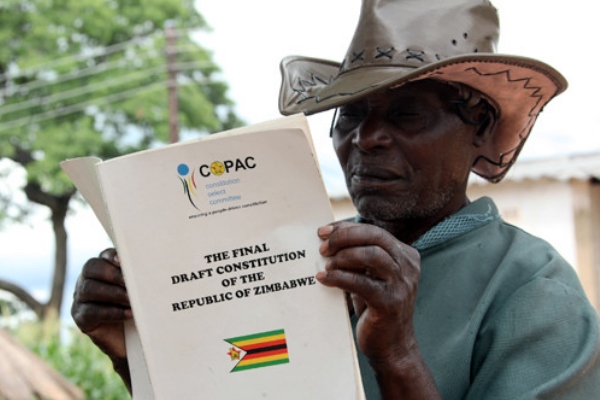
The National Culture Policy[i] is consistent with the Constitution of Zimbabwe and aspirations of the people. It also strives to be consistent with the Africa Union Cultural Charter for Africa and other international Conventions and Agreements that the Zimbabwe Government is party to. The National Culture Policy of Zimbabwe has seven priorities which are listed and briefly explained below.
The aim here is to promote and ensure respect for cultural identity as an important ingredient for nation-building. Musicians can actively take part in festivals, national days and important ceremonies that include musical galas. To date, every province in Zimbabwe plays host to at least one festival, where musicians from across the breadth of the country can meet, perform and share experiences. Major research efforts in the arts and culture sector are currently being championed by Nhimbe Trust. However, the festival guidelines and regulations imposed by the government through the National Arts Council of Zimbabwe still make it difficult for communities to host festivals. For instance, the guidelines do not consider asset-based approaches in holding community events, thereby defeating the whole purpose of bringing together through festivals.
In addition, the policy also champions the learning and utilisation of indigenous dances, folklore and games for children and youth in the country from early childhood to tertiary education. The policy document also promotes and ensures respect for indigenous cultural identities and cultural diversity as major enablers for sustainable socio-economic development.
The Government of Zimbabwe commits to support the development and promotion of creative and cultural industries as tangible and exploitable economic asset through various ways, which include harnessing technologies and effectively addressing piracy. In the policy document, the Zimbabwean government intends “to develop computer tools that deal with copyrights, and promote the development of a dense web of public and private organisations that encourage and protect artistic creation”. However, this has its own challenges in a country where the majority of the citizens are vendors who openly sell pirated music. Musicians also worsen the situation as they have embraced piracy as a way to expand the reach of their brands.
The biggest challenge that musicians in Zimbabwe face is a lack of funding. As a result, the government directs its efforts towards funding and resource mobilisation in the arts and culture sector. The document states that to support the implementation of the policy, the government will source funding and resources from internal and external partners - including the national treasury and private sector (internally) and relevant local and international NGOs and multilateral and bilateral co-operating partners (externally). Though there is commitment, the country’s falling economy and bad relations with wealthy nations make the trade-off between arts funding and national resource allocation almost impossible. It is highly likely that the policy will be another academically well-written document which fails to deliver.
Media Institutions[ii]
Though Zimbabwe failed to meet the International Telecoms Union (ITU) deadline to cross over from analogue to digital, significant strides have been made in opening up the airwaves. Currently, the Zimbabwe Broadcasting Corporation runs four radio stations and one television station. There are also two private commercial radio stations which are ZifM and Star FM,which began broadcasting in 2012. The emergence of these private stations coincided with the rise of the Zim-Dancehall genre.
At the beginning of 2015, the Broadcasting Authority of Zimbabwe awarded eight more licences to new and old players. It is expected that with this development, musicians from all over the country who often complain that the media favours Harare artists will now have somewhere where their music will be played. The new stations are AB Communications’ FAYA FM (Gweru) and Gogogoi FM (Masvingo); Fairtalk Communications’ Breeze FM (Victoria Falls) and Skyz Metro FM (Bulawayo); Kingstons’ KE100.4 FM (Harare) and Nyaminyami FM (Kariba); Ray of Hope’s YA FM (Zvishavane) and Zimpapers’s Diamond FM (Mutare).
Zimbabwe’s print and online media platforms also play an important role in making the public aware of a musician’s work. Zimbabwe has numerous newspapers, magazines and tabloids. Most of them are state run. However, it is unfortunate that media organisations with a national reach almost always cover Harare-based artists. While regional papers do make efforts to cover artists from the regions, their reach is usually restricted to their region only. It is thus imperative that media houses follow arts events outside Harare. In addition, relatively unknown Harare artists also complain that media houses cover only the big-name artists, even when they offer little that is newsworthy.
Key legislation
Zimbabwe adopted a new constitution[iii] in 2013, which recognises of the important role that culture and heritage play in national development. The constitution of Zimbabwe contains a raft of provisions that speak to this end. For instance, in Section 3(d), the nation’s cultural, religious and traditional values are recognized among the supreme law’s founding values and principles. While Section 6 speaks on the role of languages, Section 16 speaks to the role of the state and institutions in the promotion and preservation of culture and Section 63 enshrines the right to language and culture.
There are also numerous Acts of Parliament that speak directly to the work of artists and artists. It is important that musicians and music promoters familiarise with the following Acts, among others:
- Broadcasting Services Act (chapter 12:06)
- Censorship and Entertainment Control Act
- Copyright and Neighbouring Rights Act (chapter 26:05)
- Immigration Act (chapter 4:02)
- National Arts Council of Zimbabwe (General) Regulations, 2006
Censorship
Zimbabwe is constitutionally a republic and a sovereign state where the constitution is the supreme law of the land. However, events on the political front have suggested otherwise. Zimbabwe has oppressive instruments of censorship, which throttle the creativity of artists as well as put artists in perpetual fear of being arraigned before courts[iv]. The Censorship and Entertainments Control Act (chapter 10:04) is incongruous - not only with the tenets of Constitution of Zimbabwe but also with the African Charter on Human and People’s Rights.
Zimbabwean artists live in perpetual fear of the state and its security apparatus, which is used to quell dissenting voices, hence they exercise self-censorship. Very few artists have the guts to openly sing about the government’s malpractices, be they real or imagined. The political implementation of the Censorship Act has provided an avalanche of loopholes so that young artists, especially Zim-Dancehall artists using profanity or singing about violence, risk being cautioned by the State. It is important to note that organisations and individuals have organised workshops to sensitise these artists on songwriting.


Most popular

Top Naija songs of 2026
31 Mar 2026

Top Afrobeats songs of 2026
19 Mar 2026
Ghana: Mr Eazi and MOLIY’s ‘Comfort’ earns Urban Music Awards nomination
21 Oct 2026

Top amapiano songs of 2026
16 Feb 2026
Open call: CANEX Music Business Lab and Songwriting Camp
15 Oct 2026
Nigeria: CANEX WKND unveils 2026 programme
21 Oct 2026
Disclaimer: Music In Africa provides a platform for musicians and contributors to embed music and videos solely for promotional purposes. If any track or video embedded on this platform violates any copyrights please inform us immediately and we will take it down. Please read our Terms of Use for more.

Subscribe to our monthly Newsletter
Follow us on social media


Please log in to post a comment.