














































The Namibian music industry: its history and institutions
17 Jul 2015 - 07:02


By Shishani Vranckx
Namibia has had 25 years of independence yet stands at the beginning of a formalized music industry. The legacy of colonial rule has left a great socio-economic and political discrepancy within the population affecting the development of a Namibian music industry. The scarcity of technological knowledge, organizational expertise and funding have challenged the industry thus far. Although the past 10 years have seen legislative support and the birth of institutions set out to support artists, mismanagement has disturbed the proper working and development of the industry. However, Namibian artists stand at the forefront of cultivating the industry themselves whilst promoting their music nationally and internationally. Slowly but surely, government institutions, corporate and the private sector have been investing in Namibian arts as seen by the immense developments that have taken place over the past five years.
Namibian music during colonialism and apartheid
Europe’s colonial presence has influenced the diverse musical cultures of Namibia. Missionaries brought church hymns, German colonizers brought brass and western classical music, and the Afrikaner ‘Boers’ introduced “langarm” (a popular dance style) and “humpa” music. Most of these influences have been appropriated and modified by Namibians in different ways to make it their own. Today we find various musical styles in Namibia, both modern (international) and traditional (indigenous). During the time of Christianization (from 1870 onwards) and under South Africa’s apartheid rule (1948-1990), the cultural expressions of the various ethno-linguistic groups in Namibia – Nama, Damara, San (Bushmen), Coloured, Basters, Herero, Aawambo, Himba, Tswana, Caprivian/Zambezian and Kavango - were undermined and oppressed. Many of these groups’ traditional musical practices have therefore disappeared or are on the verge of extinction. However, Namibian musicologist Dr. Minette Mans states that very few musical traditions have disappeared completely, and instead may have transformed into other new styles through processes of adaption and appropriation (Mans 2003: 115).
Migration played a major role in the historical processes around Namibian music. German colonialism (1890-1918) catalyzed the genocide on the Herero and Namaqua (1904-1908). Under South African rule (1918-1990), the institutionalized contract labour system, comparable to slavery, completely dismantled the societal structures of the Namibian people. Men were forced to work far away from home, leaving women and children behind in the villages. Through the forced labour system and the processes of urbanization linked to it, new forms of life and artistic expression developed. Different population groups began interacting in this new context, allowing new forms of creative expressions, often influenced by popular music from the USA and South Africa.
How music was disseminated and what types of music were spread throughout Namibia was highly controlled during the apartheid era. Broadcasting reached Namibian fairly late, with radio starting in 1956 and television in 1981. Only in 1969 did radio start broadcasting in native languages, having since 1956 catered for “whites only” in English and Afrikaans. All music with critical messages that attempted to undermine authorities was banned. Reggae, for example, was forbidden. Only gospel, romantic and dance (‘party’) music from the USA and South Africa were broadcast and distributed in the country. Due to this censorship, Namibian people for a long time were isolated from other African and globally popular music styles, such as reggae.
The Namibian music industry after independence
Since independence in 1990, the Namibian music industry has gradually developed into what we see today. Currently there are about 20 music labels in Namibia[i]. Most of these labels have been established by artists themselves, due to the lack of adequate labels as well as management. Competent music promoters and managers in Namibia are scarce and often lack experience in the field when it comes to global standards. This has been identified as one of the major problems Namibian artists have been facing, and still face today.
The distribution of Namibian music is very limited on a global scale. Currently one can buy Namibian music through the artists themselves (at shows) as well as at local supermarkets, some lodges, bars, shops and shebeens. However, finding and buying Namibian music is as easy as it should be, and many people - especially tourists – criticize this. Since the rise of the internet most CD stores have closed, leading to the sale of CDs as a side product next to music instruments, books and other sorts of merchandise. Until 2014, South African music retail shop Musica (based in Namibia) refused to sell Namibian music, allegedly due to the perceived poor standards of Namibian productions. Lize Ehlers was the first Namibian artist to enter Musica’s shelves through pioneering the establishment of Desert Digital Distribution[ii], a company devoted to digital and physical distribution of Namibian music. Namibian artists are venturing into online music sales, although online purchases are still relatively scarce.
The capital city of Windhoek is the musical centre of the country, offering most possibilities regarding performances, major events, recording, promotion and networking. Almost all arts institutions, broadcasters, arts-related activities and arts education opportunities are centered in Windhoek. Unfortunately there is a lack of de-centralization and rural areas still suffer from a lack of investment, which will hopefully change in future.
Legislation and Institutions
In 2005, the National Arts Council Namibia (NACN)[iii] was founded through the National Arts Fund Act No. 1 of 2005 to support Namibian music, crafts and other art forms. The main function of the NACN is to distribute funding to Namibian artists and art organizations on a representative basis while adhering to principles of access, equity, quality and democracy. Although the NACN has supported various projects and events, its work has been hampered by mismanagement since its inception. However, the past five years have seen a rise in investments in the arts through financial support from government-funded institutions such as the NACN and the National Theatre of Namibia (NTN)[iv], as well as corporate and private sectors. For example, NTN’s live band competition Last Band Standing has provided major exposure and encouragement for live bands since 2011. Song Night[v], founded by Lize Ehlers in 2010, is a platform committed to developing upcoming Namibian musicians. Trustco Star Performer, a talent show on television, started in 2013 and has also offered valuable exposure for artists.
Since Namibia’s independence in 1990, several artist unions have been founded to tackle the challenges that Namibian artists face. However, most have failed or have become dormant due to problems of misconduct. In 2013, the Artist Revolution Trust Namibia (ARTNAM)[vi], a grassroots, artist-driven organization, emerged from the need to address issues in the arts industries. Challenges in structural and financial support have led artists to build the industry through their own initiatives. In 2014, the Namibian Music Industrial Union (NAMIU)[vii] was resurrected after being dormant for many years following its establishment in 2000. Their aim is to promote and protect Namibian artists.
In terms of music industry awards, the first Music Makers' Competition, a bi-annual event, was held in 1984. In 2003, the first Sanlam Music Awards took place. This was succeeded by the Sanlam-NBC Music Award following the merging of the NBC Music Makers Competition and the Sanlam Namibia Music Awards. The Sanlam-NBC Music Awards took place in 2004, 2005, 2006, 2009 and 2010. In 2011, the Namibian Annual Music Awards (NAMA) was initiated to replace the Sanlam-NBC awards. Currently the NAMAs is the biggest annual music event in the country.
The Namibian Society of Composers and Authors of Music (NASCAM)[viii] is tasked with regulating copyrights and the royalty payments to artists, although it has also been plagued by mismanagement, which has hampered its work.
The Namibian music industry enjoys a relatively vibrant live scene. There are various annual music festivals, of which the Windhoek Jazz Festival[ix] is the biggest one hosting international headliners. Others include Namrock, Hart van Windhoek, World Music Day and the /Ai //Gams festival. Annual trade fairs also offer performance opportunities, including in smaller towns. Unfortunately the perceived discrepancy between local and international artists regarding promotion and payment during these events has caused resentment from Namibian artists and remains a topic of debate.
Outside the conventional model of selling music and performaning at venues and festivals, some Namibian artists are also able to earn an income from private, corporate and political functions. For example, the SWAPO government reportedly paid 2.5 million N$ (US$210 000) each to Gazza and The Dogg - Namibia’s most famous kwaito artists - to rally in their campaigns in 2014 under the notion of ‘politainment’. This controversial move has led to further frustration among artists, although no real action has been taking regarding the matter.
Besides the numerous challenges, recent steps by the music industry institutions outlined above, amid Namibia’s current cultural explosion, offers hope of a brighter future for Namibian music.
References
Mans, M. 2003. Re-examining Liberation in Namibia: Political Culture since Independence. Edited by Henning Melber. Stockholm: Nordiska Afrikainstitutet, p.115.


Most popular

Top amapiano songs of 2026
16 Feb 2026

Top Naija songs of 2026
31 Mar 2026
Call for applications: ACCES 2026 Emerging Artist Spotlight Competition
01 Oct 2026

Top Afrobeats songs of 2026
19 Mar 2026
AFRIMA 2026: All the winners
12 Jan 2026
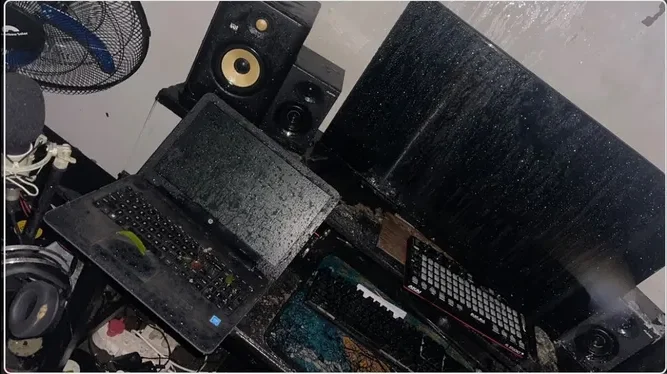
Plea for support: Zim music studio damaged by hailstorm
07 Oct 2026
Disclaimer: Music In Africa provides a platform for musicians and contributors to embed music and videos solely for promotional purposes. If any track or video embedded on this platform violates any copyrights please inform us immediately and we will take it down. Please read our Terms of Use for more.

Subscribe to our monthly Newsletter
Follow us on social media


Please log in to post a comment.