






























































This is part 2 of The Big Loui Lvndn Interview. Read part 1 here.
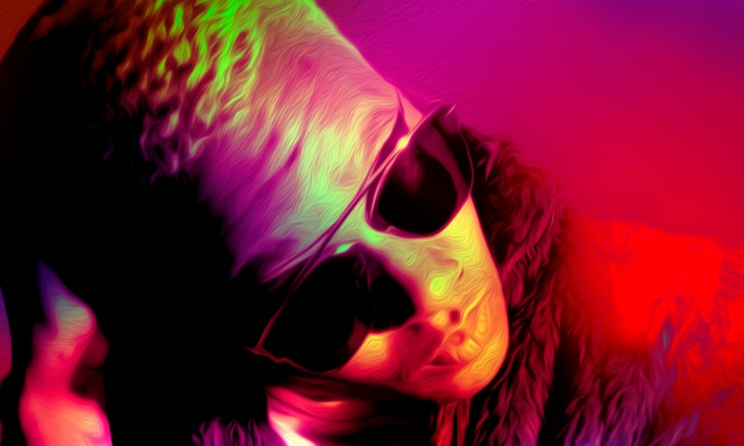
You're also involved in advertising, which is your full-time job. Is advertising 'real' art compared to music?
I could never not do it. I mean, it makes money, but what is really dope is that it fulfills my need to create on a daily basis. I'm an art director and a copywriter. What's cool is that I've gotten to a place in my advertising career where I don't do things that I don't want to do. I get to work on the coolest brands and I get to do the coolest work. Really hilarious, funny stuff, where you get to see the silly side of me; very quirky stuff, just trying to create some of South Africa's most loved work in terms of radio and TV. You can never take one of my babies away from me. I have to write, I must art direct, I must make music.
So would you get bored without one of those three?
No, I would become depressed and I would definitely feel unfulfilled. Even if I went music full-time, I would take it upon myself to direct my own music videos and make cover art for other artists.
You've made some covers for other artists. What's your best work so far?
Tough question. I did a CD cover for Moneoa. I did preliminary drawings, which were actually full-on illustrations that I thought were amazing. But the artist didn’t go with that and I ended up doing the simple version, which I did very quickly, and they loved it. So I would say that the version that is unreleased is my favourite.
Well, you can hang it on your wall.
[Laughs] It's definitely in the portfolio. That job was fun, and I'm looking to do really cool ones. One – I can't say who it's for 'cause it's so fresh – is for my favourite South African musician.
Don't let me guess now. Genre?
Contemporary jazz, and that's all I'm saying!
Do you feel like South Africans more readily consume mass media like radio and TV than alternative art, like your music for example?
You've got a certain task to do here, right? And it's super important for culture. I see it as a job to do, a responsibility. So I kinda have a duty to do what I do and to do it honestly. I couldn’t just make any track for commercial sake. I couldn’t bring myself to do it. I could do it very easily but I feel like we have a responsibility to grow the scene. Look at what hip hop as an industry has done. Initially it was like 'fake Americans'. There was so much pushback for that genre and now it's one of the biggest, if not the biggest, in South Africa. I feel it's the same with alternative musicians. As few as we are, we're doing something amazing for South Africa and South African culture. I mean, some of our colleagues are bringing it to the world, exposing the music and the fashion to the US and Europe. This is important to do. It's right there, slap bang in the middle of black renaissance. I don't want to say Afrofuturism...
Where do you stand on the concept of Afrofuturism? Because it can be quite a confusing, anything-goes concept?
It is a huge concept and people can dissect it and single it out as an aesthetic movement, which is kind of what it has become. You can branch it into music and fashion. It's a sense of being and identity. It's kind of like not dwelling on the parameters and social constraints that have been set on us as Africans. It asks questions like, what's the perception on an African musician? And I'm sure you can draw that picture immediately. For me Afrofuturism is to take things way past there [the stereotypes]. The problem is that everyone starts believing perceptions, even the musicians and artists, and we start living in all kinds of boxes. And then it becomes a matter of 'this is us'. But then there are people who are in the box and go like, 'What if we were fuck-off spaceship futurist and we do heavy metal on top? What if we went there?' Then it becomes interesting to the rest in that box and they start questioning what they're doing inside there, and that's when that box breaks. That's what we're trying to accomplish.
What about your secret fantasy with serial killers?
Ha! I have no secret fantasy with serial killers [laughs], beyond the fact that me and my girlfriend watch true crime a lot. She's really into that stuff.
Well, your video for 'Kill Her Killer'... I would say that there is a popular-culture fascination with Ted Bundy or someone like that within you.
[Laughs] Well, you know, I'm not gonna advocate Ted Bundy...
Nobody would, but there's an aesthetic that you went for in that video that you must find at least somewhat alluring.
Definitely, but what I was going for there was a graphic novel type of visual: the heavily saturated colours, the way the frames switch and the dramatic scenes. But there is a real drama happening there. It's actually about me killing myself. And we have received a lot of criticism about the video being too edgy, so you have to reiterate the concept and narrative. It's about me killing the version of myself that is potentially going to harm the girl. It could lend itself to the current conversation of women abuse, but I'm essentially trying to step away from that and trying to love this girl better. In order to do that I have to kill that primordial side of me.
Or at least make it dormant...
Yes, make it dormant or heavily sedate that part of myself [laughs].
What is it like working with Spoek Mathambo?
We're both kind of mad. It's like madmen in a studio hopping around a lot. I'm going like, 'Woaaaah!' and he's going like 'Waaaaa!' We're both bouncing ideas, tensions are high, the energy is palpable. We're trying out different mics: 'Oh no, this one is from the 1960s, maybe it'll make your voice so brittle. James Brown uses a similar one!' You know, we really go deep in terms of crafting and creating. It's a beautiful thing because, for example, he'll send me a demo and the demo is really confusing. I don't think anyone else could comprehend what the hell he just sent me, but I'd be like, 'Ok, this is where we can take it.' Then I'll get back to him and he's also startled that that was possible.
I know he had been sitting on a track for like six years and trying to make it into something, but it never happened. Then he sent it to me, as part of the four tracks we were working on, and I immediately started writing to it. That night I was dancing to it in my apartment and the following day I sent him back a note saying, 'This is it!' And boom, that was 'Nothing's Ever Perfect' which is on my album and his album.
It's interesting that you used the same track on both albums. How does copyright and royalties work around that?
Spoek and I had to agree on the splits first and the labels signed the contract. I don't think neither Spoek nor myself often put ourselves into the typical soul-eating, record-label scenario. I made it very clear from the beginning that this is about the art first. I mean, I love marketing and I'm in advertising, which is the duality of it all, but you definitely have to make it 100% honest. Business, you take care of it later. I'll never fall into a dispute with another artist over money reasons.
Is there money in the alternative scene?
Yes, there's money. But you make money everywhere. In this day and age, being a multidisciplinarian, you can't just say, 'No, that's not important.' It's important because it's money at the end of the day. But my compass is making good-ass, motherfucking kick-ass, rockstar righteous, kung fu art!
There isn’t much information about you in terms of who you were before music. It's like you fell from space.
I didn’t exist. I landed on a rocket ship. It's weird, man. Me and the past have a weird relationship, because it's so blurry to me.
You have been mentioning suicide and depression during this interview.
At some stage I want to have a public conversation about this. At some stage. But yes, I do suffer from anxiety and depression. At some point I want to be a part of this conversation and help change the way it's perceived and the way people feel about it and deal with it, which is unfortunate because of miseducation. I think I'm going to have that conversation on my next album in a very new and fresh way. I don't think anyone is going to be expecting anything remotely like that. I think people are going to be dancing to my songs in clubs having no idea what's actually happening to them [laughs].
But in terms of my past, it's just a lot of grind and a lot of coming into oneself. I don't think I had the most awesome childhood. I was being switched around all over the country, just moving, moving, moving, moving. Dad and mum not together, just being uprooted really. There was never one place I could call home.
I suppose like an American kid, whose mum or dad move with the job.
Yeah, but not to this extreme. We're talking about a few months, move, new school, a few months, move, new school, and so on.
But wasn’t it exactly this that made you understand South Africa and its people?
Sure, to a large extent it's made me who I am at the moment in my level of empathy. One thing I really take pride in is the ability to tap into different people, cultures and moods, and that's super important for a creative. That's cool about it, and it happened, but I don't have childhood friends, for example. I can't say at this point whether it's a good or a bad thing.


Most popular

Top Naija songs of 2026
31 Mar 2026

Top Afrobeats songs of 2026
19 Mar 2026

Top amapiano songs of 2026
16 Feb 2026
Open call: CANEX Music Business Lab and Songwriting Camp
15 Oct 2026
Open call: National Arts Festival artistic director in SA
15 Oct 2026
Ghana: Mr Eazi and MOLIY’s ‘Comfort’ earns Urban Music Awards nomination
21 Oct 2026
Disclaimer: Music In Africa provides a platform for musicians and contributors to embed music and videos solely for promotional purposes. If any track or video embedded on this platform violates any copyrights please inform us immediately and we will take it down. Please read our Terms of Use for more.

Subscribe to our monthly Newsletter
Follow us on social media


Please log in to post a comment.