




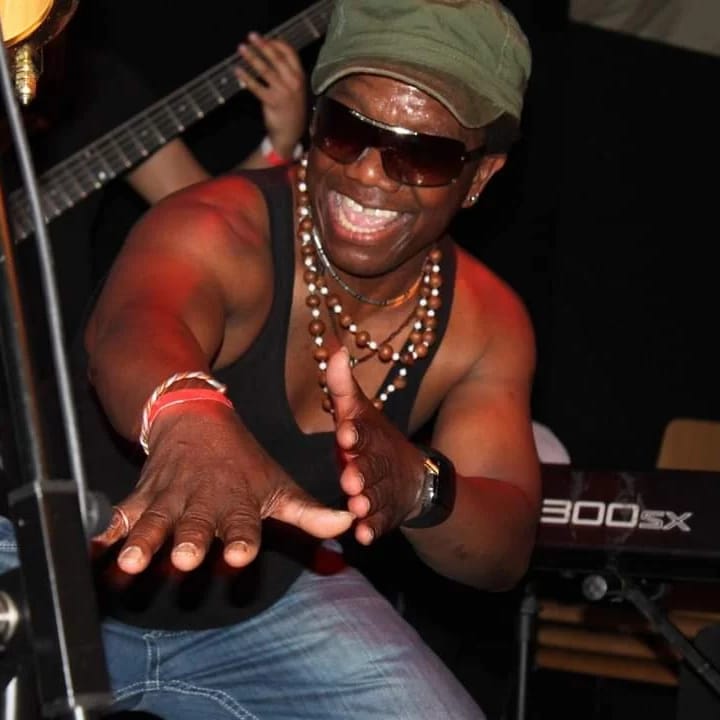

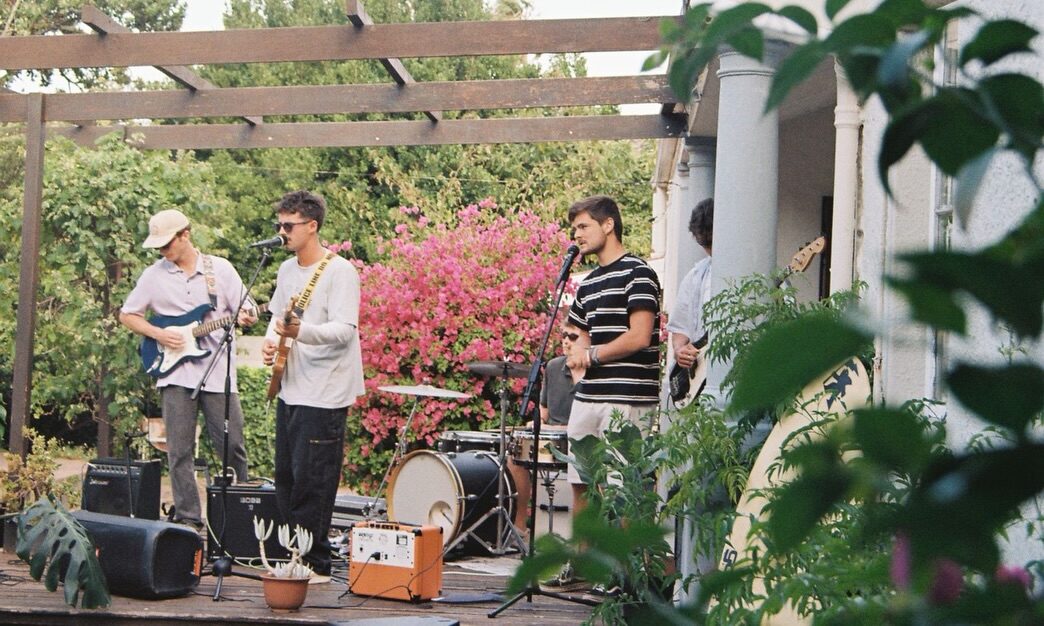
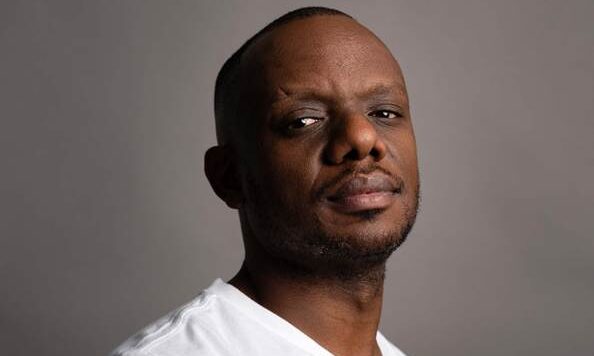


















































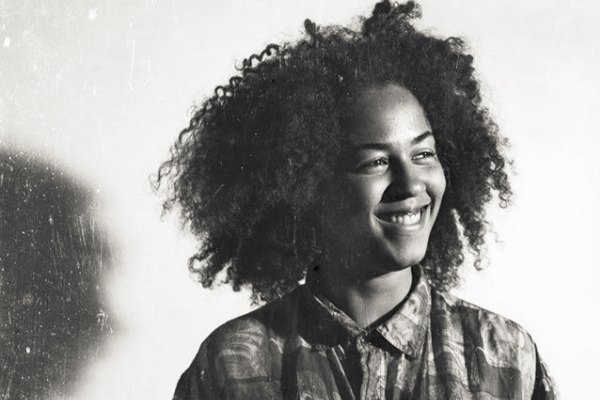


In Sierra Leone, traditional music and its many forms are transferred from master teachers to students. One of the most important traditional music genres native to Sierra Leone is bubu. This article will elaborate on three aspects of this music. Its musical composition, its origin and its cultural importance.

Musical composition
Bubu is played by a live band consisting of around ten people. This ‘bubu band’ uses self-made instruments to create a unique sound. These instruments are a mixture of bamboo flutes of varying lengths, carburettor pipes, drums, shakers, cowbells and timber. The flutes, all producing a single sound, create a polyphonic melody when played simultaneously. This melody is then looped and accommodated by drums.
The drums vary in size and playing style. An example is the bass, a large wooden box which is played by wrapping a cloth around the fist and slamming the drum with force.
When brought together bubu sounds like an up-beat monotonous brass band, with little variety in tones. Normally, bubu is played for a longer stretch of time. It can last from fifteen minutes to as long as five hours.
Origin and function
Bubu is native to the Temne, one of the indigenous tribes of Sierra Leone that are located mainly in the western and northern part of the country. The specifics of when it came to use is a source of speculation. “Some say bubu originated in the village of Mange Bureh, claims Janka Nabay, frontrunner and main ambassador of bubu music. According to legend, a young “bubu boy” took it from witches 500 years ago and brought it to the public at large, sacrificing his own life in the process. The function of the music was to announce to the devils that “they were ready for something.” Similar to ringing a bell Bubu is thus played to call upon the ancestral spirits.
This practice altered slightly when the Fulani of Fouta Djallon (Guinea) converted the Temne to Islam. Bubu, retaining its spiritual function, then became part of Muslim 36-hour processions during Ramadan.
The popularisation of bubu and the civil war
From 1991 to 2002, Sierra Leone was in the binds of a brutal civil war which affected the lives of all inhabitants. Once again, the function of bubu changed. This time in a negative and unforeseen manner.
It began when Janka Nabay went to Freetown in the early 1990s and signed up with Super Sounds, a local talent contest. When all other artists were playing reggae, the jury asked Janka to perform “something Sierra Leonean”. Bubu music had remained within the Temne villages for centuries and Janka Nabay, being Temne, decided to play bubu. He won the contest, after which his music was recorded and sold on cassette tapes. Part of his success was that he had modernised the genre. Even as the traditional usage of the many different instruments makes it complex to record, Janka Nabay found a way to digitally reconstruct the bubu rhythms with synthesizers and drum machines.
As Janka Nabay's music got increasingly popular, it rose in popularity with the rebels of the Revolutionary United Front. The RUF rebels realised the popularity of his music and used it to create a stronghold over civilians.
One method was setting up speakers or ghettoblasters in villages to play recorded bubu. Civilians, thinking some festivity was ongoing, would come and join the ‘party’, and become trapped. The reason for choosing bubu was not only because of the response of the citizens; the songs also carried an implicit message of embracing Sierra Leonean heritage. As bubu music was the core example of popular music of local origin, the rebels used it to enforce a sense of patriotism and unity.
As response to this unexpected use of his music, Janka Nabay recorded several songs in which he criticised the civil war and the practices of the rebels. This unfortunately had an unforeseen effect: the rebels changed the lyrics of these songs to such an extent that it empowered them. Finally, Janka Nabay left Sierra Leone and migrated to the USA. There he formed a bubu band in New York. Janka Nabay and the Bubu Gang has been commercially successful internationally. The album “En Jay Say” was released on the Luaka Bop record label.
Modern bubu practices
After Janka Nabay’s departure, bubu remained an important part of the musical landscape. But where Janka Nabay’s alteration of bubu remained rather traditional, popular artists have modernised bubu music to a greater extent. Bubu rhythms are mixed with hip-hop beats and rapping. Drizilik’s hit song ‘Ah dae go dae gbet’ is one recent success.
Bubu is popular still during cultural activities. Many practicing bubu bands both in the Sierra Leone capital and in villages perform during festivals, carnivals, the independence celebration and private parties.
Conclusion
Bubu has travelled from its localised tribal religious music that had remained in obscurity for centuries into an internationally and nationally acclaimed music genre. The genre has served several functions, from trance-enhancer to dangerous trap. Nowadays, bubu is a genre that is highly praised in the country and considering its past, bubu music can be expected to evolve to an greater extent.
- Eyre, Banning. Mystic in it: Janka Nabay and the Bubu Life. Afropop. Webpage. December 2016
Link to page: http://www.afropop.org/5897/mystic/ - Eh Mane Ah, Janka Nabay. Luaka Bop. Release date: August 7th, 2012
Link to page: https://www.youtube.com/watch?v=VPh-d16zqiY. - Glasspiegel, Wills and Alt, Drew. Photo-essay: Bubu Witchcraft and Pop Music in Sierra Leone. Afropop. Webpage. December 2016
Link to page: http://www.afropop.org/19127/photo-essay-bubu-witchcraft-and-pop-music-in-sierra-leone/ - Janka Nabay and the Bubu Gang. Luaka Bop. Webpage. December 2016
Link to page: http://www.luakabop.com/photobio/jankanabay/ - Nuxoll, Cornelia. “We Listened to it Because of the Message” Juvenile RUF Combatants and the Role of Music in the Sierra Leone Civil War.” Music & Politics, Winter 2015. Volumi IX, Issue 1
Link to page: https://quod.lib.umich.edu/m/mp/9460447.0009.104/--we-listened-to-it-because-of-the-message-juvenile-ruf?rgn=main;view=fulltext


Most popular

Top amapiano songs of 2026
16 Feb 2026

Top Afrobeats songs of 2026
19 Mar 2026

AFRIMA 2026: All the winners
12 Jan 2026

Open call: Goethe-Institut grants for Southern African creatives
08 Sep 2026

Call For Applications : ACCES seeks a UK-based performer
10 Sep 2026

Top Naija songs of 2026
31 Mar 2026

Sun-El Musician confirmed for ACCES 2026 in Joburg
15 Sep 2026
Disclaimer: Music In Africa provides a platform for musicians and contributors to embed music and videos solely for promotional purposes. If any track or video embedded on this platform violates any copyrights please inform us immediately and we will take it down. Please read our Terms of Use for more.

Subscribe to our monthly Newsletter
Follow us on social media


Please log in to post a comment.