










































NEFCISA
NEFCISA

The Music In Africa Foundation (MIAF) is proud of its partnership with the Industrial Development Corporation (IDC) as a Strategic Implementing Partner (SIP) for its Social Employment Fund (SEF). Through this collaboration, MIAF is running a national programme that is creating jobs, addressing skills gaps, and strengthening South Africa's creative industries — in line with the SEF's overarching goal to generate work for the common good and build community value through employment, social contribution, and inclusive economic participation. Operating under the banner NEFCISA (National Employment Facility for Creative Industries in South Africa), the initiative is recruiting and training participants, matching them with host organisations, and has already placed 1 500 workers across the country — surpassing its original target of 1 000. NEFCISA is delivered through a network of 20 host organisations spanning five provinces, who are actively hosting participants and contributing to work for the common good across South Africa's creative and cultural industries. Key Objectives: Support employment and entrepreneurship in the creative industries. Offer skills development and training programmes. Foster partnerships between public and private creative sectors. Promote South African creativity at both provincial and national levels Foster community development through social contribution.

ACCES
ACCES

ACCES Conference and Showcase Festival is Africa's leading music industry gathering, bringing together the people shaping the future of the continent's music business. Artists, entrepreneurs, executives, investors, policymakers and cultural leaders from across Africa and around the world come to ACCES to build partnerships, exchange ideas, discover talent and create new business opportunities. Since its launch in 2017, ACCES has become the continent's premier platform for professional exchange and music market development. Combining a high-level conference with a curated showcase festival, networking, exhibitions and industry programmes, ACCES offers a unique space where creativity meets business and where African music connects with the global industry.

Gender@Work
Gender@Work

Music In Africa Gender @ Work is a three-year training programme aimed at upskilling and increasing the participation of female professionals in the African music sector. Launched by the Music In Africa Foundation (MIAF) in April 2019, the programme is connected to the MIAF’s ACCES music conference – a pan-African event held in a different African country every year. This connection enables the programme to reach new participants in a different African country every year. The programme marks the beginning of a more concerted effort by the Foundation to support the participation and inclusion of women in all facets of its programmes and the music sector in Africa as a whole. Over the three years, the programme will aim to address gender imbalances in the sector through training, lobbying, facilitating knowledge exchange and dialogues that foster the interest of women. The broader objectives of the programme are to: Provide industry training for women on critical music industry skills, focusing on: Stage management Electronic music production and recording Music business management Technical knowledge Provide an opportunity for both professional and aspiring women to benefit from the Music In Africa network and its broad range of activities in 2019, 2020 and 2021. Provide a solution-based platform in the form of a round table at ACCES with a view to identify challenges, discuss opportunities and lobby for the interests of female practitioners. Offer participants the opportunity to benefit from programmes offered by MIAF’s partners. Increase access to educational materials. Integrate participants in the broader ACCES programme to maximise experience and exposure to the industry. Record and present training materials on the www.musicinafrica.net, including but not limited to tutorials, templates and other best-practice materials. Communicate women-based themes that support the initiatives and messages of the programme. MAIN TRAINING ACTIVITIES Training in first country (Ghana): In the first year, participants will be trained on all aspects of stage management by a team of experienced stage managers from 10 to 17 November 2019. The programme will offer robust classroom training as well as practical, hands-on training in which participants will also be given the opportunity to manage various aspects of the ACCES performance programme. Training in second country: The second training iteration will take place at ACCES 2020 when the programme will diversify its course to include music production lessons and training on other music business topics. A round-table platform will also be introduced to coincide with the ACCES programme. Training in third country: The third training iteration will take place at ACCES 2021 in a different country, offering an advanced course. HOW DO YOU GET INVOLVED?  As a participant, facilitator or trainer: The programme enrolls up to 12 trainees every year. All opportunities are advertised publicly on this website, and will be added to this page. Please keep checking this page for new calls (below under UPDATES & CURRENT OPPORTUNITIES). As a partner Please contact Claire Metais at [email protected]. APPLY The call for applications for 2020 will be announced soon. The Music In Africa Gender @ Work programme is made possible with the support of the Prince Claus Fund, Siemens Stiftung and Goethe-Institut.

Sound Connects Fund
Sound Connects Fund

For cultural and creative practitioners and organisations operating in southern Africa, access to funding remains a major challenge. The COVID-19 pandemic has also had a massive impact on government policy, spending and the economy in general, and has seen spending on culture being moved further down the list of priorities. Further, the cultural and creative industries repeatedly cite four main areas where investment is needed for growth, which are increased visibility, mobility including access to new markets, finance and support structures.

Instrument Building And Repair Project

Experience the Vibrations African Instruments Exhibition online in 3D

Features

Cardi B’s dramatic 24 hours in Ghana

14 Dec 2019 - 11:13

cc-img flag-img

After Cardi B’s memorable visit to Lagos, expectations were high for her performance in Accra. However, already before her show, some local music lovers doubted her capacity to fill a stadium in Ghana.
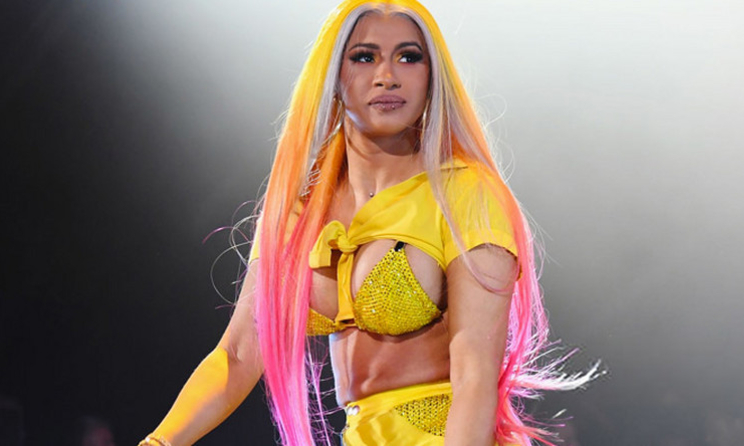
Cardi B.

In fact, Livespot X Festival’s choice of the American rapper was met with instant scepticism and a barrage of questions: had she accrued sufficient notoriety in the Shatta Wale-governed music state to merit a show in a 40 000-capacity arena? Did the Grammy winner have the songs within her catalogue – the Gangsta Bitch Music mixtape series and her 2018 debut Invasion of Privacy – to pull off a headline gig in an Afropop-loving town such as Accra? Was the Ghana leg of the festival to be a mere addendum to her successful Lagos appearance, which had taken place days earlier?

By the time the Livespot X Festival closed abruptly on Monday morning, December 9, the pessimists were vindicated. By all accounts, the Cardi B Ghana showcase, which was propagated by the organisers as the official grand starter to December revelries and the climax of the Year of Return activities, had floundered in key areas. The musician, born Belcalis Marlenis Almánzar, has since said on social media that her visit to Ghana did not go according to plan, but she “still had fun”.

The trouble started when she was accused by some local celebrities for snubbing a scheduled private, one-on-one meet-and-greet session, to instead sunbathe and sample kebab. This promptly resulted in social media coverage and even a song by singer Prince Bright. Cardi B addressed the claims, condemning her accusers and warning that they had picked the wrong person to mess with. She explained in a viral clip, and at the eventual meet-and-greet hours before the concert, that there was no such clause in her contract, and that she had honoured it out of goodwill, after having atteneded to her diarrhoea.

The event itself was hugely under-booked, entangled in prolonged technical hiccups and witnessed a late start. It is often customary for events in Accra to be characterised by a bit of delay, which sometimes extend longer than 'just a bit'. On the night, about 1am, the pelting of empty and half-empty water bottles towards the stage was a clear sign of the public’s unanimous dissatisfaction. By that time, patrons had been standing for hours on end, frustrated by a combination of aching joints and generally uninspiring opening performances from Kweku Smoke, Ms Forson, DJ Spinall, Vyrusky and Seyi Shay, and decided that it was time to let the organisers know – with forceful language – that they had had it.

Left with no choice, the organisers complied. The ‘Bodak Yellow’ star emerged, wearing a seductive leather ensemble themed around the colours of Ghana’s national flag, and put her fabled tattooed contours on full display. She was met with excited squeals by the VIPs huddled in front of the stage. Before diving into her set, Cardi B apologised for the technical challenges and assured that she would “shut this bitch down” nonetheless.

Assisted by an MC and a gang of scantily clad back-up dancers, the singer delivered brief renditions of her best-known songs, her set running for about 30 minutes. ‘Be Careful’, her aching address to an unfaithful lover, was introduced by the statement that whatever their geographical station, “men ain’t sh*t”. At this stage she was venting passionately while draped in a Ghana flag and managed to draw approving cheers from the same men.

Her magnetism stems from her pop-forwardness and courage to embrace risk. She is a proponent of a specific brand of feminism, one that celebrates a woman’s sexuality. Cardi B’s music is dedicated mainly to pleasures of the flesh – and that’s an indubitable winning formula in this era. No doubt, she is a bona fide hitmaker; ‘Bodak Yellow’ remains among the biggest songs of the past decade. It was released in 2017 in support of her top-charting 2018 debut album, which was named Best Rap Album at the Grammys back in February, making her the only solo female act to win the prize. On YouTube alone, the song has been viewed over 800 million times.

She is also the author of global fixtures ‘Press’, ‘Clout’ and ‘Bartier Cardi’, all of which featured in her Ghana medley, and the winner of a deluge of trophies that include multiple BET Awards, Billboard Music Awards, American Music Awards, MTV Video Music Awards, iHeartRadio Music Awards, and two Guinness World Records.

The crowd dispersed wearily following Cardi B’s exit, and did not reconvene fully for performances by Kofi Mole, or 'Omo Ada' star Medikal. Unfortunately, locals Sarkodie and Shatta Wale (who flamboyantly flew in for his soundcheck in a helicopter), and Nigeria’s Tiwa Savage and Patoranking – all high-profile acts on the roster – did not perform as planned.

Cardi B’s Ghana stop, which completes her maiden African tour, did not fully deliver on its promise, but she transcended the Ghana situation in one piece like only she can. An accomplished songwriter, actress and TV personality, Cardi B is likely among the most influential names in pop. Her sophomore album is due for a 2020 release and should take over the charts, as expected.

Please log in to post a comment.

Most popular

Disclaimer: Music In Africa provides a platform for musicians and contributors to embed music and videos solely for promotional purposes. If any track or video embedded on this platform violates any copyrights please inform us immediately and we will take it down. Please read our Terms of Use for more.

newsletter banner

Subscribe to our monthly Newsletter

Follow us on social media