





























































By Senai W. Andemariam
Even as Asmara, Eritrea’s capital, sets its eyes on attaining the World Heritage status, the arts and culture sectors in the country continue to operate without a clear cultural policy. Since 1991, Eritrea has been on a quest to establish a cultural policy to govern the arts and culture in the country. This text highlights Eritrea’s quest for a conclusive cultural policy.
Legal developments
Cultural heritage has been and still is not a priority for funding in Eritrea, domestic or otherwise. Nevertheless, there have been some efforts to attain a conclusive policy to govern the arts and culture. Lack of logical planning and implementation has bogged the process and, to date, other than numerous departments and volumes of propositions, the country lacks a concise policy on culture.
On 22 May 1992, Proclamation 23/1992 was issued outlining the powers of the Transitional Government of Eritrea (TGE). Recognizing that culture was of importance to the nation’s economic development, the proclamation established the Department of Information and Culture (DIC). Among the DIC mandates detailed in Article 20 of the Proclamation were: developing Eritrean art and literature, preserving, studying and restoring Eritrea’s historical and cultural heritages, encouraging the study of Eritrea’s languages and traditions; developing sports and monitoring trainings thereon; establishing national theatre, art and literature schools, museums and other cultural institutions; and engaging in informational, cultural and sports exchange and cooperation activities.
A year later, Legal Notice No. 11/1993 of 7 June 1993 elevated all Departments of the TGE into ministries and the DIC become the Ministry of Information and Culture (MIC). A follow-up legislation, Legal Notice 14/1993 of 1 July 1993, which detailed the mandates of the Ministries, retained, through its Article 6, for the MIC all the previous mandates of the DIC. A few years later, the MIC changed its name to the Ministry of Information. This name holds to date. It is, therefore, not clear whether the “culture” part of the MIC has been cut off from the Ministry of Information. The practice of establishing other institutions that work on culture seems to affirm this.
Institutions
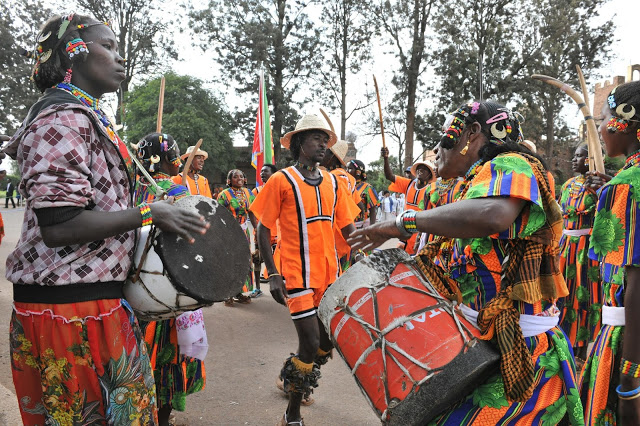
Eritrea has over the years witnessed the creation of various institutions that are mandated to promote culture. The Popular Front for Democracy and Justice (PFDJ), the ruling party, has a Cultural Affairs unit which oversees cultural dances, creation of dramas and musical shows presented during the Independence Day as well as training and monitoring of cultural troupes that travel around the world to entertain people during Eritrean festivals.
The Ministry of Education on the other hand had a Cultural Affairs Bureau, which is now merged into the recently constituted Commission of Culture and Sports (CSC). Initially the bureau worked on establishing cultural units in schools and, later, on researching Eritrean oral literature and intangible heritage. The CSC is yet to ascertain its place on the highly trodden field of institutional development of culture in Eritrea.
Other institutions include the National Holidays Coordinating Committee (NHCC). During the annual summer festival in Asmara the NHCC supervises cultural competitions and grants awards, among them the Best Music Album and the Best Singles of the year.
Over the years, more research and proposals have been made but the situation hasn’t improved and it remains to be seen whether the country will make any strides in implementing a cultural policy. In September 2015 the government issued the Cultural and Natural Heritage Proclamation (No. 177/2015). The Proclamation, drafted into enactment by this author, essentially entrusts the management of Eritrea’s heritage to the Ministry of Education which shall establish a board of sixteen members coming from a number of institutions whose activities have bearings on cultural and natural heritage. Article 22 of the Proclamation states that “The Ministry shall, with the advice of the Board and in consultation with relevant bodies, adopt, oversee the implementation of, revise and update, as necessary, a National Cultural and Natural Heritage Policy for Eritrea.” This provision adds into the legal and institutional confusion on coordinated preservation and development of culture in Eritrea.
Besides the government, international organizations such as UNESCO have made efforts to see that culture gets proper recognition. In 2009, through UNESCO’s support, a national workshop on the safeguarding of the intangible cultural heritage was organized in Eritrea. Among other things the workshop discussed the establishment of a legal framework for the protection of heritage in Eritrea. As a result of this workshop, and other forums, Eritrea ratified the 2003 Convention in 2010 and translated the Convention into Tigrinya, one of the national languages. Proclamation 177/2015 has as one of its aims the implementation at domestic levels of Eritrea’s commitments under the 2003 Convention.
The national capacity to spearhead the implementation of the 2003 Convention however has been limited both in terms of the numbers of personnel and their expertise in the field of intangible cultural heritage.
Impact
Lack of a national cultural policy has hindered the growth of arts and culture in Eritrea in many aspects. Firstly, people active in arts and culture continue to participate without knowledge of the government’s focus and vision – hence institutional and related support – in the realm of art and culture.
Secondly, the different fields of culture and arts continue to develop without the synergy amongst each other that could otherwise have been established by a cultural policy.
Thirdly, institutions which intend to develop specific policies, guidelines and work plans for specific fields of culture or arts (for instance libraries, music associations, indigenous handicraft innovators etc.) can do so without the guidance of a higher objective defined by the national cultural policy.
Finally, awards and other incentives that may have hitherto been granted to encourage people working on culture and arts cannot continue on a permanent basis in the absence of a cultural policy for the country.


Most popular

Top Naija songs of 2026
31 Mar 2026

Top Afrobeats songs of 2026
19 Mar 2026

Top amapiano songs of 2026
16 Feb 2026

Open call: CANEX Music Business Lab and Songwriting Camp
15 Oct 2026
Open call: National Arts Festival artistic director in SA
15 Oct 2026

Ghana: Mr Eazi and MOLIY’s ‘Comfort’ earns Urban Music Awards nomination
21 Oct 2026
Disclaimer: Music In Africa provides a platform for musicians and contributors to embed music and videos solely for promotional purposes. If any track or video embedded on this platform violates any copyrights please inform us immediately and we will take it down. Please read our Terms of Use for more.

Subscribe to our monthly Newsletter
Follow us on social media


Please log in to post a comment.