






















































Encyclopedia Nipponica Commentary on “African Music”

15 Sep 2021 - 17:46


There is no single, clearly identifiable sound phenomenon of African music . For example, there has been a long interaction between North African music and Ethiopian Christian liturgical music, largely influenced by Islamic music culture, and the so-called "black African" music tradition south of the Sahara Desert.There are significant differences in some aspects of musical practice, even though they have influenced each other.
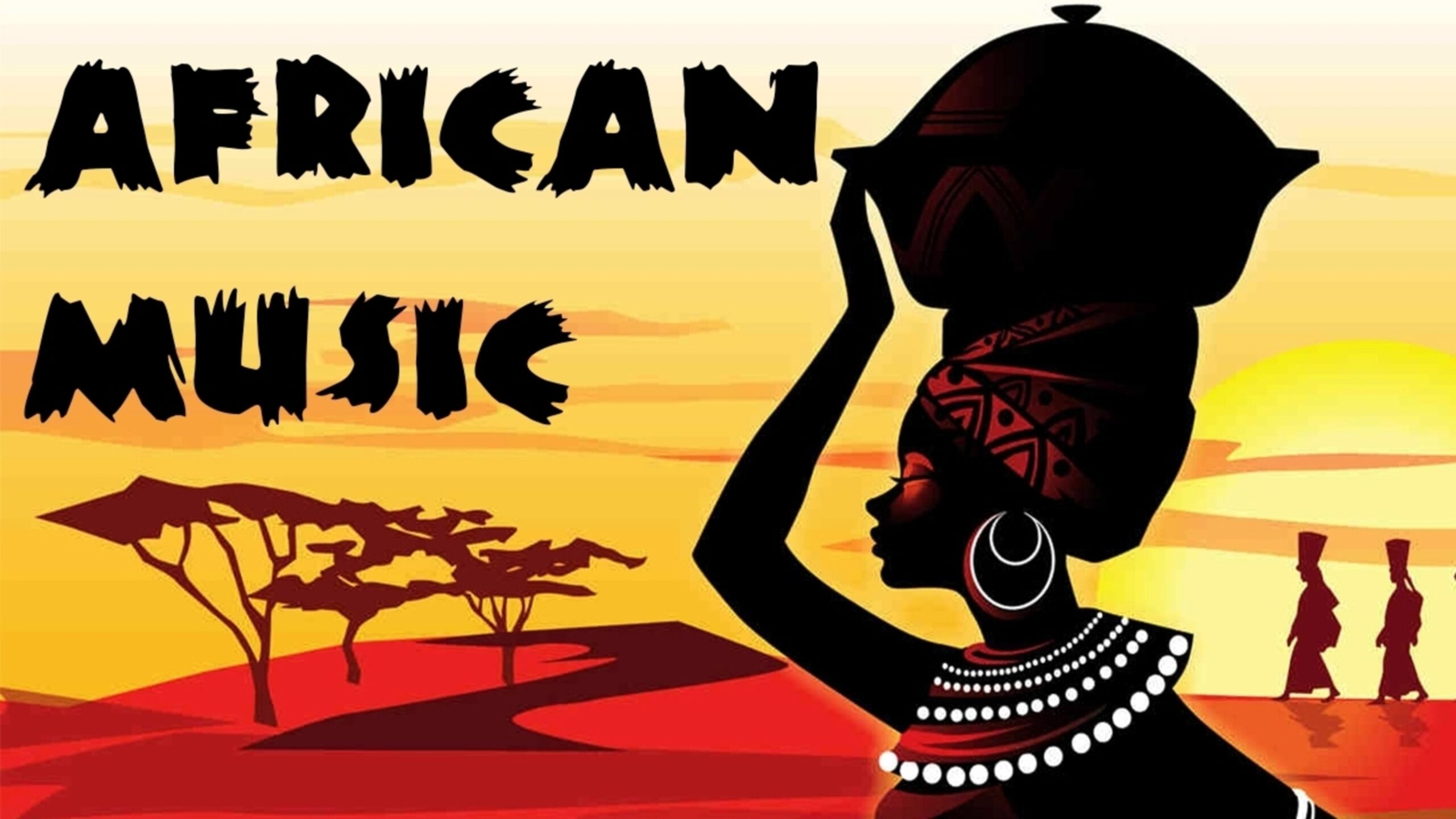
We will limit ourselves to the sub-Saharan musical traditions here, but they are also unique because they have been carried by many tribal societies that have functioned as individual political and cultural units in the past. It shows various musical styles based on the musical norms of. For example, with regard to music materials, the diatonic heptatonic scale is relatively conspicuous, and although most vocal music is generally close to the equal temperament pitch, it is not possible to generalize any of the number of notes, range, and pitch. In addition, there are various opportunities for music operation, such as rituals, rituals, banquets, labor, entertainment, etc., under close ties to life, and their functions are also the transmission of myths, legends, lessons, and current topics. There are various things such as satire and praise of powerful people, proceedings, treatments, and rain-making. Therefore, while taking such musical diversity into consideration, we will extract and summarize the prominent features in the technique, structure, function, and playing style of "Black Africa" music that can be grouped as one musical culture. I will decide.
There are a wide variety of musical instruments in Africa, but many of them prioritize the percussion effect in their usage. This includes not only body-sounding instruments such as xylophones and sanza ( mbira ) , and aerophones such as drums, but also aerophones such as horns and flutes, and string-sounding instruments such as bows, fiddles, lutes, chiters, and harps. Also applies to. For example, in aerophones, one player is in charge of each note, and a hocket technique that expresses one melody in a group of two or three people has been developed. Rather, it is a manifestation of the fact that there are many hits and plucks. Percussion effects are also often associated with complex rhythmic structures. The tendency to strictly maintain the same tempo and regular beats, called the "metronome-like sensation," is the basis for creating diverse rhythms and syncopations, with several players and singers expressing different rhythms and accents. While putting out, the tempo is constant as a whole, and polyrhythm and polymetric are caused. The overlap of two and three beats, for example the hemiola rhythm, is a fundamental element of many polyrhythms in West Africa and Central Africa.
Polyphonicity is important as a technical feature related to this in terms of musical structure. This appears as a structure called polyphony (in a broad sense) in the case of multiple singing and instrumental music, and combinations thereof. Especially in the case of singing, parallel pitches (often 3 to 5 degrees) and drones are often used, and when musical instruments are used, counterpoint methods and ostinato are often used. It is considered that what is emphasized in this polyphony is not the vertical pitch relationship, but rather the horizontal independence in which the expressed sounds of each performer flow simultaneously with equal value. Polyphonism is also manifested in the simultaneous reverberation of sounds with different sound qualities, and the ability of a single instrument to have different sound qualities and pitches. For example, singing is often accompanied by clapping , which is interpreted not only as a time marker, but also as enjoying the collision of sounds by providing a sound quality that contrasts with the real voice. When it comes to musical instruments, many types of rattles and bells that are ubiquitous in Africa are often used in pairs with different sound qualities, and crack drums (slit drums) have different pitches depending on where they are played. Can be expressed. Furthermore, japamala balls and resonance tubes that generate "noise" are often attached to Sanza and xylophone. By playing these instruments, various sounds are expressed at the same time, creating a complex polyphonic world.
The functional feature of music is the transmission of messages by drums, cracked drums, horns, flutes, ocarinas, xylophones, etc. Of these, the method of combining the expression sounds of cracked drums and horns in a Morse signal is also found in regions other than Africa, but the pitch and market value of words (tone languages in which pitch relations are important for distinguishing meanings) are used. The method of imitating an instrument as it is (for example, talking drum) can be said to be peculiar to Africa. The stylistic features that support such performances include improvisational performances, and alternating calls and responses such as singing (leader vs. group) and antiphony (group vs. group) in group singing. Both are based on the fact that many African musical forms consist of repetitions and variations of short motifs or phrases .
Many of the characteristics of African music mentioned above are also retained by African slaves who have been forced to relocate to the new continent, and through mixing with European music, they are showing various developments as Afro-American music. Also in Africa, new creative activities based on the style of traditional music have become active.


Most popular

Call for applications: ACCES 2026 Emerging Artist Spotlight Competition
01 Oct 2026

Top amapiano songs of 2026
16 Feb 2026

Top Naija songs of 2026
31 Mar 2026
Open call: 2026 Gender@Work music industry training in Johannesburg
03 Oct 2026

Top Afrobeats songs of 2026
19 Mar 2026

AFRIMA 2026: All the winners
12 Jan 2026
Disclaimer: Music In Africa provides a platform for musicians and contributors to embed music and videos solely for promotional purposes. If any track or video embedded on this platform violates any copyrights please inform us immediately and we will take it down. Please read our Terms of Use for more.

Subscribe to our monthly Newsletter
Follow us on social media


Please log in to post a comment.