














































SanDance! is billed as a journey to the heart of Africa’s original dance culture, but it’s much more than that. It opens a door into a segment of African culture that is in danger of dying out.
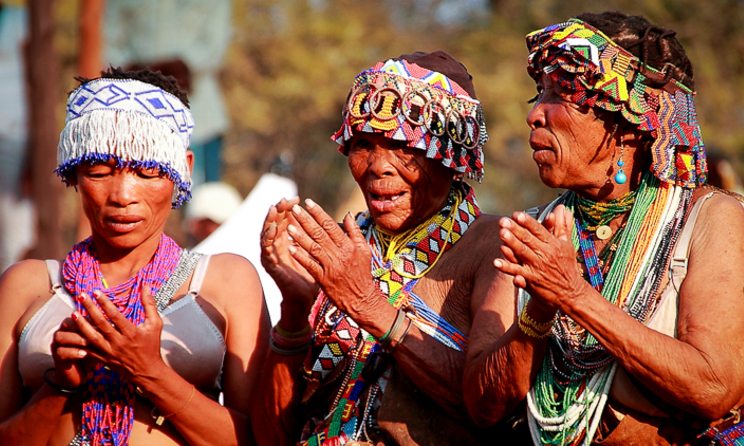
Some 130 000 San people live in tiny communities scattered across six vast southern African countries. They speak about 12 different click languages and keep themselves culturally strong through one of humanities oldest and most universal passions – dancing.
You meet some of the San dancers and healers in a few of these scattered communities as they prepare for the annual Kuru Dance Festival, which is always held at the time of the August full moon, at Dqae Qare San Lodge, outside Ghanzi in Botswana. San groups from Botswana, Namibia and South Africa come together here to celebrate and share their cultural heritage of storytelling, song and dance.
Adding to the overall level of enjoyment of this film is the wonderfully subtle and sensitive soundtrack composed and performed by Pops Mohamed and Dave Reynolds. These are two of South Africa’s most versatile musicians and between them they play an array of instruments, from ancient African to functionally contemporary. I mention the soundtrack because it is too beautiful to ignore, but very easy to overlook when you get caught up in the stories.
The journey that SanDance! takes you on touches briefly on tragedy and injustice, and hints at past genocide in doing so. The hunting parties of the colonialists, both in the Cape and in then German South West Africa, where the hunted were the San, remain a festering sore in colonial history.
In the 1970s, the South African military forces, operating in Namibia and Angola, needed trackers in their war against the liberation movements. Thousands of Namibian and Angolan San were forced to leave their hunting grounds and settle in military bases. The men were conscripted as trackers and forced to fight, and sometimes die, under white officers. That the San and their culture have survived, and still survive despite families and communities being torn apart by forced removals and war, is testimony to their resilience.
The writer and director of SanDance! Richard Wicksteed has spent decades filming and working with the San, making at least 10 films of varying length. The level of acceptance and their trust in him is clear from this sensitive and well-paced portrayal of an important culture under threat. Wicksteed makes no political judgement, points no fingers, but it is obvious that successive governments of SADC states have dismally failed the first people, and failed the historical and cultural heritage of the region as a whole.
The future and importance of the dancing is what lies at the heart of this beautiful film. While spending time with the Buka-Khwe dance group as they prepare for the dance festival, Richard asks, “What happens if the dancing goes?”
Letshogo Ikaegeng, an elder and dancer, replies, “Our history will be over. If our children don’t learn … if we don’t maintain the culture in our life, we may as well be dead. If we don’t continue to dance, our spirits will not travel to the spirit world and we will be condemned for denying our ancestors.”
It’s widely accepted that knowledge, wisdom and the ancient truths know no boundaries. So it didn’t surprise me to find that a technique shown to me decades ago by a Buddhist Qi Gong instructor, how to scoop handfuls of energy into my eyes to refresh and energise them, is echoed in San culture. In SanDance! a San healer says, “The spirits, they come and they tell you, 'There is a light coming!' You must catch it, pour it into your eyes, you must catch it, pour it into your eyes, because you can start seeing everything.” And as he says this, he scoops a handful of air first into one eye, then into the other eye, in much the way I learnt in that Qi Gong lesson.
But it’s the dance, first and foremost, that is the focus of the film. And particularly the trance healing dances. “It’s important to dance these songs and make the sound in the village,” says one of the elders. “You must dance these songs. If you don’t, then people in your village may get sick. If you do the healing dance, the village will be good.”
With only three days to the full moon, we move to Mababe village. The Xuu-Khwe-II dance group is building their rehearsal intensity. Later that night, for the most important and powerful dance, the lion healing dance, they decide to rehearse deep in the wilderness, close to the wildlife, close to their ancestral spirits.
“This song is for the lion, we repeat its lion name because we worship lions for our ancestors,” says Boemo Vivian Pekenene. “As San, we live in the bush with lions. When I start to sing, my body temperature rises, I can feel shocks and vibrations in my body, and I will connect with the spiritual world. When I start dancing, I will be filled with happiness”.
The next morning, the dancers discover they were not alone the night before. A pride of lions had been watching the lion dance from the shadows. Seven lions had left their paw prints all over the dance area. Did they hear the call of the dancers?
When I interviewed Wicksteed after seeing the film, I asked him about the highlights of the years spent making the film. He spoke about the power of the trance healing dances, before adding, “After the Mababe group had done the lion healing dance, I left a couple of the guys at the fire and went to a small clearing close by. I always do a bit of yoga to help me sleep. As I finished, I heard a sound, like something jumping down to the ground. I didn’t know what it was, but I had a powerful torch, so shone it around. And there was a lioness. Not quite between me and the camp, but I’d have to pass uncomfortably close to her.”
Which he did, shining the torch on her the entire time. The next day, an elder told him, “The lion was not there to eat you. She was there to thank you, for bringing us together to dance.”
The stories don’t stop. The film is a rich source of powerful insights, often told with a playful or mischievous smile. But most of all, it enlightens those with the heart to hear, and uplifts those with the soul to see. Like this: “Inside our eyes, we have two spirit eyes. And then two on our nose. The eyes on the nose communicate with the upper eyes, then we travel with the spirit wind.”
I watched SanDance! more than once, and still want to watch it again. For the dance. For the music. For the story. For the pleasure.
SanDance! is available online until Sunday 30 August from the Encounters South African International Documentary Festival.


Most popular
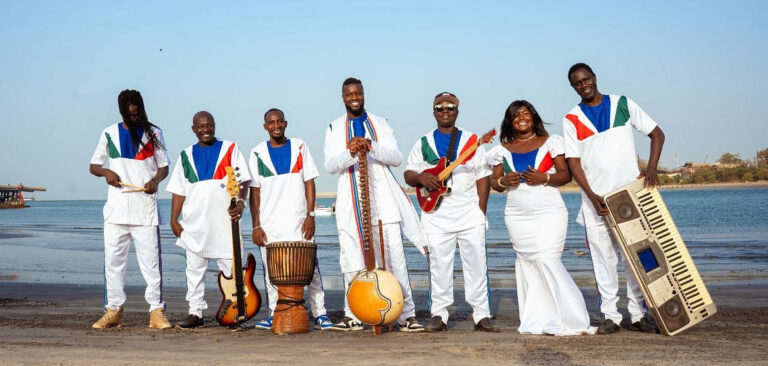
Gambia: Suntou Susso announce UK tour for ‘The Path of a Griot’
09 Oct 2026

Top amapiano songs of 2026
16 Feb 2026
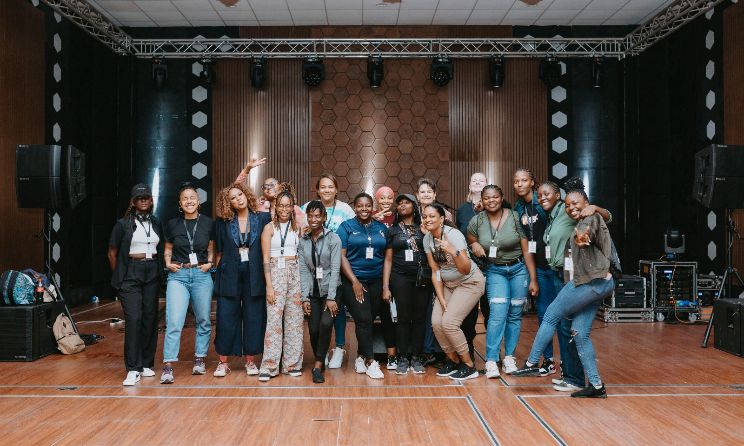
Open call: 2026 Gender@Work music industry training in Johannesburg
09 Oct 2026

Top Afrobeats songs of 2026
19 Mar 2026

Top Naija songs of 2026
31 Mar 2026

Call for applications: ACCES 2026 Emerging Artist Spotlight Competition
01 Oct 2026
Disclaimer: Music In Africa provides a platform for musicians and contributors to embed music and videos solely for promotional purposes. If any track or video embedded on this platform violates any copyrights please inform us immediately and we will take it down. Please read our Terms of Use for more.

Subscribe to our monthly Newsletter
Follow us on social media


Please log in to post a comment.