





























































IFPI Africa conference calls for stronger copyright enforcement, licensing reform

07 Apr 2026 - 14:22


The International Federation of the Phonographic Industry (IFPI) Africa Performance Rights Conference (PRC) 2026 was held in Lagos, Nigeria, on 31 March and 1 April, bringing together senior executives from across the continent’s recorded music sector.
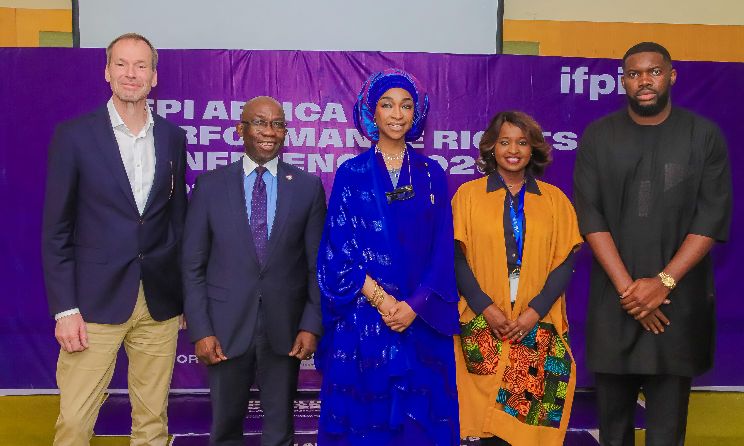
The two-day conference convened record label executives, collective management organisations (CMOs), music licensing companies (MLCs), and representatives of industry bodies to assess progress on performance rights and revenue growth in Africa’s music economy.
The opening session was led by Nigeria’s Minister of Art, Culture, Tourism and the Creative Economy, Hannatu Musawa, who said Africa’s music sector was expanding rapidly within the global industry.
“Africa is no longer at the margins of the global music industry — we are its fastest-growing frontier,” she said. She added that recorded music revenues in Sub-Saharan Africa grew by 15.2% in 2025 to USD 120 million, while digital revenues rose by more than 20%.
“These are not abstract numbers — they represent the creative labour and artistic brilliance of African musicians reaching audiences they have never reached before,” she said.
The conference theme, Addressing Challenges and Leveraging Opportunities to Drive the Sustainable Growth of Recorded Music in Africa, focused on regulatory frameworks, licensing systems, and the expansion of performance rights income across the region.
IFPI chief legal officer Lauri Rechardt said collective management organisations remained central to the recorded music value chain.
“Collective management organisations play an important role in the recorded music value chain and have the vital duty to effectively and efficiently license broadcasters and public performance users of recorded music as well as distributing the royalties in line with standard practice,” he said.
Discussions also reviewed progress made since the 2025 PRC held in Cape Town, with participants assessing implementation of commitments aimed at improving licensing systems and addressing gaps in collective management across Africa.
Industry leaders at the opening panel included executives from major record companies such as Sean Watson, Manusha Sarawan, Marc Latilla, Aibee Abidoye and Elvis Adidiema.
The session, moderated by IFPI Sub-Saharan Africa regional director Angela Ndambuki, examined challenges affecting industry growth, including piracy, licensing inefficiencies and regulatory gaps.
A key area of discussion was the need for governments to strengthen copyright enforcement and improve anti-piracy measures. Participants called for updates to intellectual property legislation and more coordinated enforcement actions against illegal distribution platforms.
“The gap between cultural influence and economic return is the defining challenge for this generation of African music leaders,” Musawa said. “Closing that gap requires action on three fronts: a robust intellectual property framework, transparent and effective collective management, and the physical and digital infrastructure to support a modern music ecosystem.”
Ndambuki also referenced recent enforcement activity in Nigeria and urged continued cooperation between government and industry stakeholders to support site-blocking measures against piracy platforms.
Speaking at the conference, John O. Asein said the music industry was becoming a key driver of economic activity across the continent.
“The music industry is fast becoming a critical pillar of Africa’s creative economy, creating jobs, attracting investment, driving digital innovation, and contributing meaningfully to GDP,” he said.
He added that long-term sustainability would depend on coordinated responses to ongoing structural challenges affecting the sector.
Delegates also discussed the growing role of artificial intelligence in music production and licensing, with participants noting that agreements for AI companies using copyrighted material were becoming increasingly common. Calls were made for clearer policy frameworks to govern AI use in creative industries.
The conference concluded with commitments from MLCs to strengthen licensing frameworks, review broadcast agreements and develop long-term strategies aimed at expanding performance rights revenue.
IFPI said the outcomes would focus on improving licensing efficiency and increasing public performance income across the region.


Most popular

Top amapiano songs of 2026
16 Feb 2026

Top Afrobeats songs of 2026
19 Mar 2026

Top Naija songs of 2026
31 Mar 2026
Open call: 2026 Gender@Work music industry training in Johannesburg
09 Oct 2026

Open call: AFRIMA 2027 in Nigeria
12 Oct 2026

ACCES unveils stellar programme for 2026 edition
17 Oct 2026
Disclaimer: Music In Africa provides a platform for musicians and contributors to embed music and videos solely for promotional purposes. If any track or video embedded on this platform violates any copyrights please inform us immediately and we will take it down. Please read our Terms of Use for more.

Subscribe to our monthly Newsletter
Follow us on social media


Please log in to post a comment.