
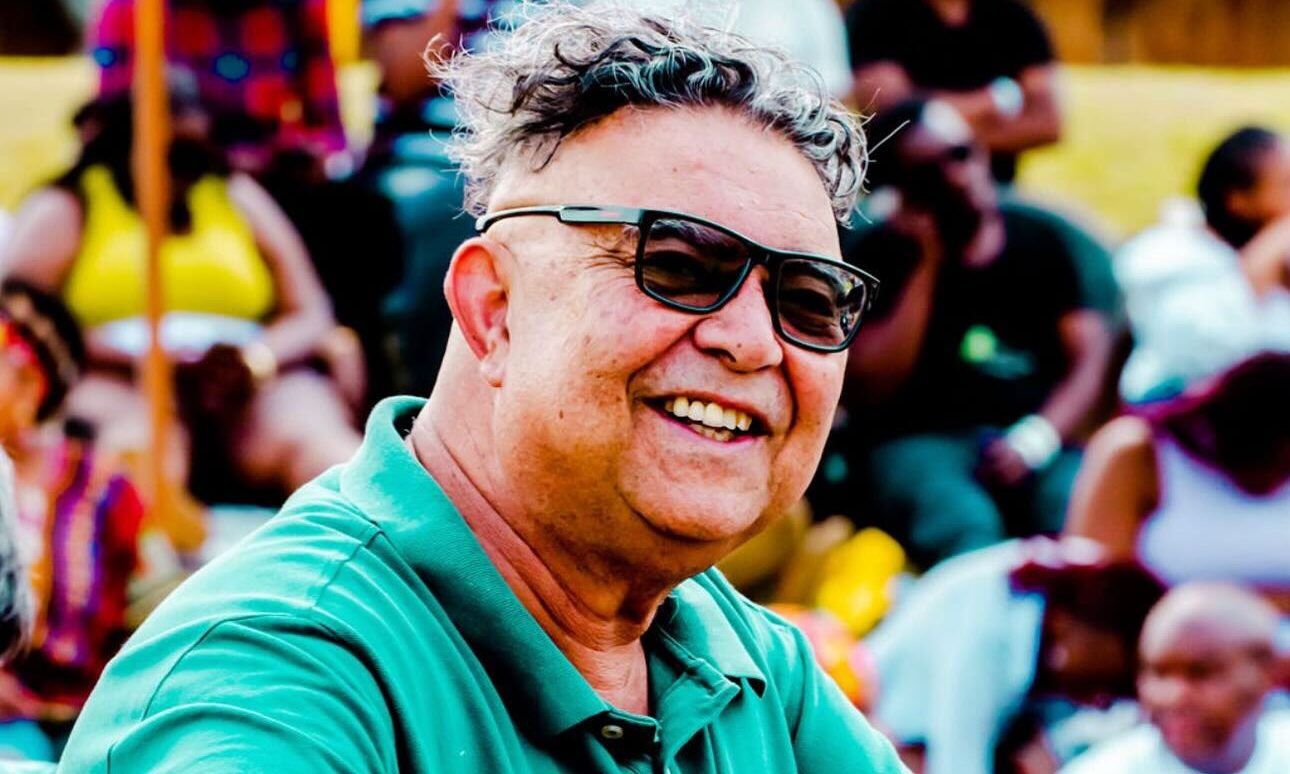

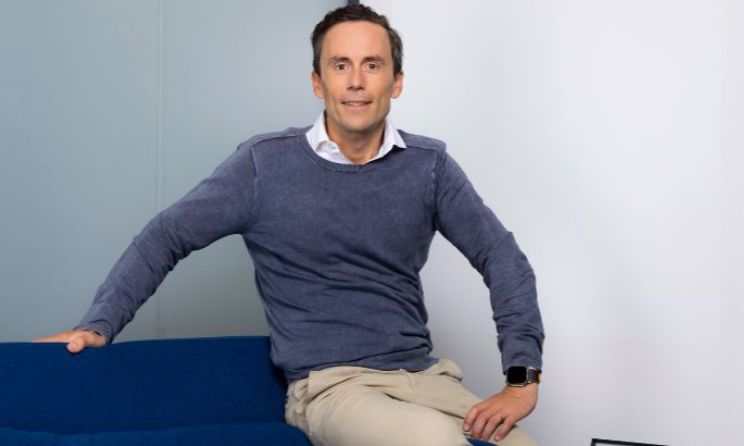













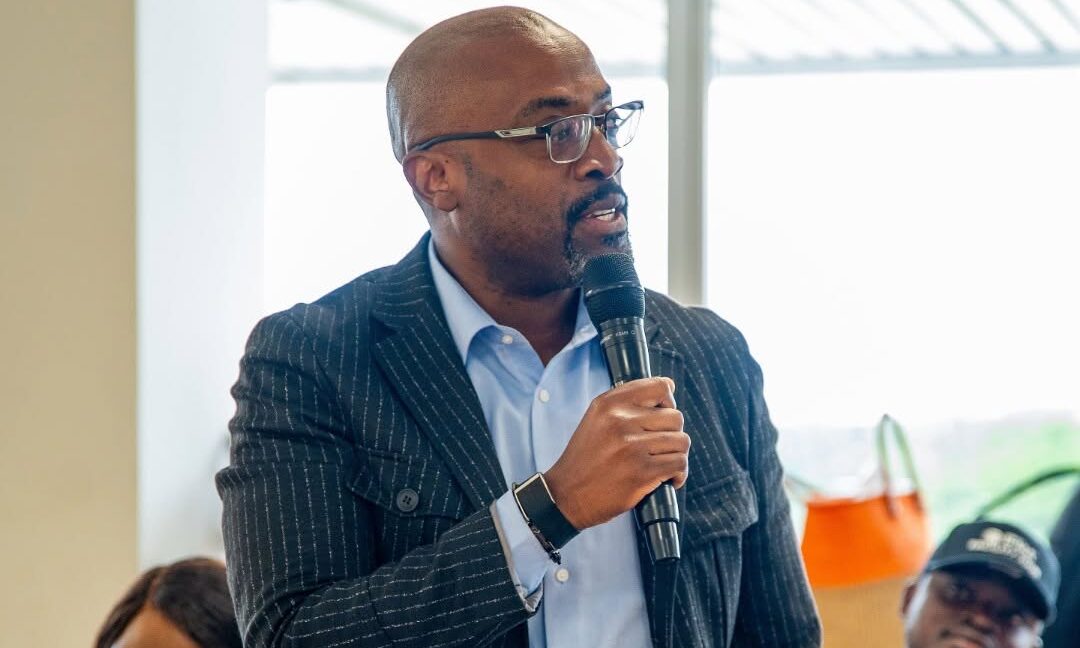
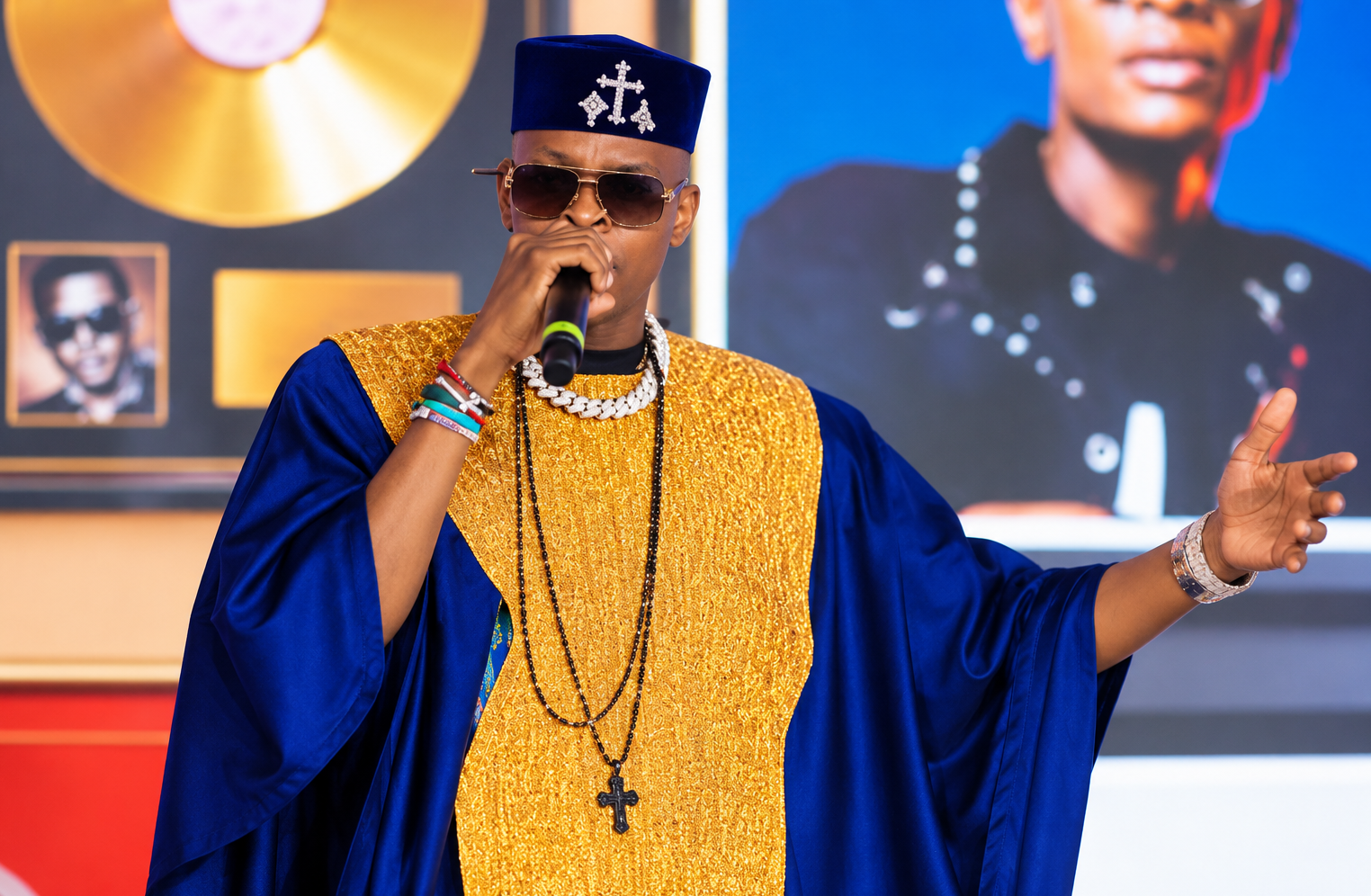



































Sipho Dlamini is arguably one of Africa’s best known music executives. He was the CEO of the Southern African Music Rights Organisation (SAMRO) from 2013 to 2016, after which he assumed the managing director position at Universal Music South Africa. As managing director, he oversaw the signing of a number of prominent artists to the label. He also facilitated the launch of Def Jam Africa with a view to grow and promote the hip hop scene on the continent.
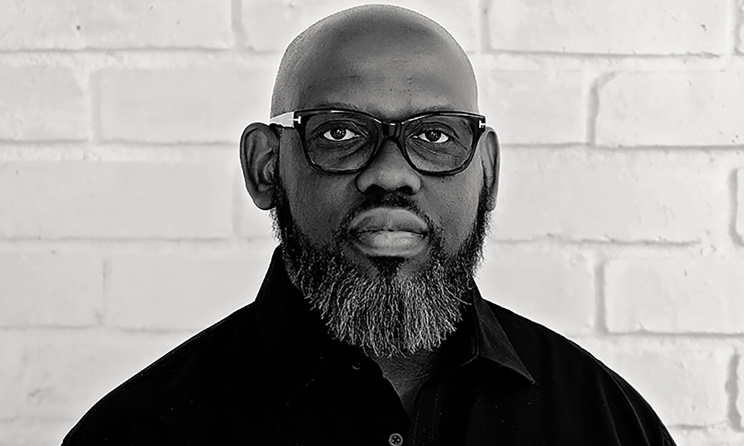
In early January, Universal Music Group shook up its leadership team in Africa and promoted Dlamini to the position of CEO of Universal Music South Africa and sub-Saharan Africa. Additionally, the company announced the appointment of COO Elouise Kelly and managing director for Nigeria Chinedu Okeke.
Music In Africa caught up with Dlamini to chat about his work, achievements, challenges, the streaming business and the effects of COVID-19 pandemic on the music industry.
MUSIC IN AFRICA: In 2016, you were named as the managing director of Universal Music South Africa. What have been your achievements since landing this big job?
SIPHO DLAMINI: One of the things that was a goal for Universal Music was to expand into other markets and to increase our footprint and presence in Africa. We were able to establish an office in Nigeria. It‘s fully operational and we just announced an MD appointment to that office [Chinedu Okeke] and a big team of people. For the market in Kenya, we acquired AI Records, which is an established, iconic label that we know has the ability to maximise engagement around their catalogue with rich East African content.
We are also focusing on continuing our expansion of having a fully fledged Universal Music office operating in Kenya by the end of 2021. We have been able to improve how we work in other markets. As you know, Diamond Platnumz is one of the artists that we work with in Tanzania. We also have artists like Cina Soul in Ghana and artists that we signed in Zimbabwe like Jah Prayzah, and so forth.
I think that has been an achievement and it has also been hard. Anybody who understands Africa will know that there are multiple barriers that we have to overcome. For example, we don’t have the presence of all the streaming services in different countries. It means that from country to country, you have to have a different strategy on how to market and distribute local music, and it’s our priority to always make sure we give local artists an opportunity to be discovered, and to record and distribute their music.
What does your new position of CEO entail?
What it allows me to do is focus more on strategic objectives across the continent and allow the teams in the different markets to have a more elevated role that allows them to handle more of the senior management on a day-to-day basis. As you know, from a commercial perspective, there is a lot of work to do when expanding in Africa. Compliance of different levels is something that we have to focus on very carefully. We try to find new ways of doing deals that are relevant for each market.
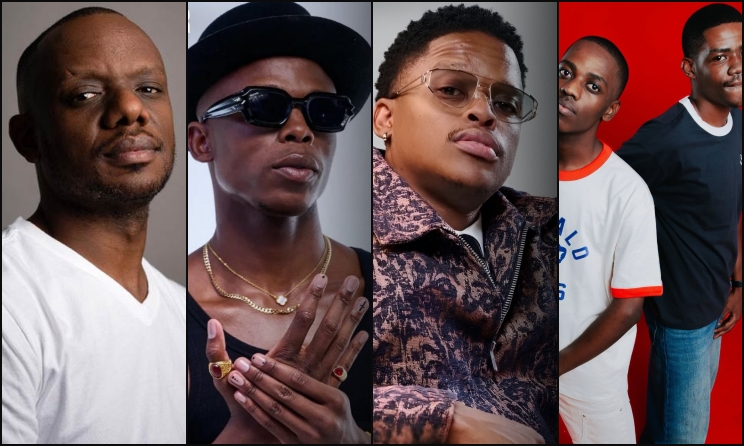
Also, the appointment from MD to CEO allows me to operate more strategically internationally by representing our African content. I can now allocate more of my time working with markets like the UK, Germany, France, the US and Canada – in terms of content from Africa. And I must say, working internationally has been an ongoing objective for us. Last year, we managed to do a few things. We had billboards in Times Square with Tiwa Savage, Nasty C, Tekno and Cassper Nyovest. I think it’s important that our artists in Africa see that we are pushing their music and brand beyond these borders. It should be the norm that we see billboards from our African artists around the world.
Last year Def Jam Africa signed a number of artists like Nasty C and Boity. What do you consider before signing an artist?
For us talent is still the first thing that we look at. We obviously want to sign artists that are talented. There is passion about their talent, they are passionate about performing, and they are passionate about being good. We invest a lot of time, effort and money into helping develop talent, and if that talent is not passionate and serious about what they are doing, then it’s something we would rather not embark on. We also want to work with artists that are committed to the business perspective of their craft. There are things that we need people to be professional about – in how they prepare and how they engage with their fan base on social media, TV, radio, and so on.
How has the COVID-19 pandemic affected Universal Music’s operations?
As soon as the coronavirus established itself as a global pandemic, we were quick as a business to pivot and look at how we could continue to support and assist our artists. There are various initiatives that we took across the global market including the formation of a task force for meaningful change. This task force has been able to support organisations that nurture artists. An example of that, in South Africa, is a significant donation that we made to the National School of Arts, because their music department was under threat of closing down. That was an instance of financially participating in ensuring that we help the arts.
Also, in many instances, some of our artists suffered from a lack of income from performances. We have directly assisted our artists financially to ensure that they can survive during this period. But more importantly, we have looked for business opportunities for them to be able to generate revenue. So we were able to facilitate for online performances where artists were paid. We also have a brands team called Universal Music Group and Brands [UMGB], which is able to find sponsors that pay artists for their online performances. We’ve placed artists’ music in TV ads and made them part of campaigns where they use their brands and social media presence to help tourism or local tourism.
You have a rich background in strategic brand marketing. What is your advice for artists who need to sustain their brands during the pandemic?
I think it’s important to adapt to the market and what the market is doing. It’s important to always understand your consumer and your fan base and make sure that you connect with them in their space. During COVID, people were going out less and stayed at home, either watching more TV or watching YouTube or the programmes that are there. It’s about finding ways of being relevant in that space an in those conversations. I think COVID, as harmful as it has been, has provided a lesson to remind us that we should never get too comfortable in what has been historically successful. We need to keep reinventing ourselves, and that’s the same for every brand and company that is active in the music business. We have many artists who were very successful by touring and getting paid on a regular basis. When that stopped, those artists had to reinvent themselves. The ability to remain agile is very important for brands.
The British Parliament has been conducting an inquiry into the economics of streaming. What is your take on the inquiry?
It would be wrong for me to comment on something that I am not fully informed on, but there are some glaring things that have come out. It seems like there is a fundamental misunderstanding of the streaming world. While some would criticise streaming, I like to look at it from a different perspective. I've had the fortune of being in the business while we were still selling cassettes, vinyl, CDs and MP3s. One of the major constraints for us in Africa and on the export of our music and products to other markets was that there was a physical process that was required for people to consume music. If you wanted people in the UK to listen to a CD from an artist in Kenya, you had to physically send a CD to somebody in the UK. Even if you sent a CD to one person, how do you get that music to the right channels for it to be consumed by more than that one person.
Also, you had gatekeepers to the audience. Radio was essentially how people discovered music and you relied on a format where in an hour a radio station chose what to play based on its ability to attract advertisers. Their initial approach was to ask what songs were the most popular to attract the largest audience so that they could attract the highest advertising revenue. We understood that it didn’t work for the African continent; it didn’t work for content from other markets outside of mainstream pop in the UK and US. What streaming has done is that when we release a song on a Friday afternoon in South Africa, Kenya, Nigeria, Uganda, wherever it is, that song is available immediately worldwide. You don’t need to send a CD to somebody and hope that they tell people or that it goes on radio or TV. So that’s number one: the barriers to our music being able to travel have been removed.
Secondly, because of the streaming model where you pay a subscription and you have access to all the music, it means that discovery has been enabled hundredfold. If you look at the old model, you buy a CD and all you can listen to is the music on the CD that you have purchased. With the streaming model, you pay one fee per month and you listen to all the music that is available on a particular platform.
I think part of what the UK parliamentary enquiry process overlooks is that while there is an ongoing conversation about how to have higher stream rates or a higher royalty paid per stream, the flipside is that there are more artists whose music is being discovered, whose music is being streamed. Yes, there are some artists who make a lot of money via streaming and others who don’t make as much, but there is also a space where there are artists sitting in Malawi getting streamed in the US. They aren't funding the course of being discovered in different markets and they can use free tools like social media to market themselves, to have an impact on the streaming platforms. You don’t have gatekeepers who are saying, ‘No, no, no, you can’t talk to people in Germany about your music or you can’t market without going through us.’ You can now market yourself wherever you want to market yourself. So I think that the UK parliamentary process maybe didn’t quite understand the full value chain of streaming and how it has opened up markets like ours in Africa to exist, participate and compete in other foreign markets. Again, the example of billboards in Times Square shows how people in New York can stream Tekno, Nasty C, Sauti Soul and Diamond Platnumz. It’s part of a relationship that we as record labels have with streaming services in order to profile our artists in different markets.
As someone who was SAMRO CEO and is knowledgeable in collective management, what are the current challenges of the copyright and royalties space in Africa?
I think technology is probably the biggest threat to collective management because there are different companies developing different systems that are now based on real-time reporting and allocation of royalties for usage. If you take for example YouTube, it has backend mechanism where someone can upload a music video and on a monthly basis get a report about how much ad revenue has been generated by that music video. That allocation of revenue sent by YouTube is done automatically on the backend without the involvement of copyright organisations.
If you look at businesses like Shazam, when a song is played, you simply press Shazam and you know the artist and the song title, and you have options of where you can get that music. It means that in the background, allocations are done instantaneously. I think some collective organisations are probably looking at how to modernise their business model to keep up with working in real time and not delaying the collection and distribution of royalties. So it’s a challenging space and I think as digital disruption continues, a lot of companies will revisit what they have done historically and modify their models in distribution, consumption and revenue generation.
There has been a lot of criticism about collective management organisations [CMOs] in Africa. What needs to happen for artists to be happy?
It is a country-by-country conversation because different countries are at different levels of performance and operation, but transparency is definitely key. If artists feel like they don’t understand what’s happening with their money or earnings, if they don’t understand the statements they’re getting, there will be a huge element of mistrust. Collective management is a very complicated space and it is important for CMOs to explain what they do in a manner that artists can understand and comprehend. Most collective societies interact with organisations globally and collect revenue from different markets. That revenue comes in and gets allocated, and then it needs to be distributed. It’s a complex process. Most people don’t understand what has to happen and that lack of understanding, combined with a lack of transparency and communication, creates this negative sentiment and lack of trust, which is what needs to be worked on.


Most popular

Top Naija songs of 2026
31 Mar 2026

Top Afrobeats songs of 2026
19 Mar 2026

Top amapiano songs of 2026
16 Feb 2026
Ghana: Mr Eazi and MOLIY’s ‘Comfort’ earns Urban Music Awards nomination
21 Oct 2026
Open call: CANEX Music Business Lab and Songwriting Camp
15 Oct 2026
Nigeria: CANEX WKND unveils 2026 programme
21 Oct 2026
Disclaimer: Music In Africa provides a platform for musicians and contributors to embed music and videos solely for promotional purposes. If any track or video embedded on this platform violates any copyrights please inform us immediately and we will take it down. Please read our Terms of Use for more.

Subscribe to our monthly Newsletter
Follow us on social media


Please log in to post a comment.