



















































By Benson Idonije
This text provides an overview of jazz in Nigeria, covering its origins, history, development and present status in the Nigerian music scene.
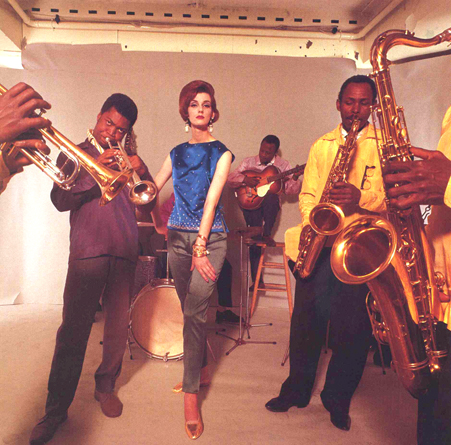
It will probably be unnecessary to overstate that jazz has seen better days in the popular consciousness of Nigerians. While there is currently a concerted effort by jazz promoters like Ayo Shadare’s Inspiro Productions and Oti Bazunu's Lagos Jazz Series to promote and develop jazz in Nigeria through mini-festivals and special gigs, patronage has continued to be considerably low, based on what is perceived as its essentially 'specialized' audience.
Origins
Nigeria’s romance with jazz music probably began as far back as the 1940s, specifically after the Second World War (1939-1945) with the return of expatriate Nigerian stars like as Bobby Benson, Tunde Amuwo, Bob Edwards, Willy Payne and Soji Lijadu, among others, from Europe. These pioneers started out mimicking the big band sounds of Glen Miller and Benny Goodman, the guitar style of Charlie Christian and the saxophone sounds of Coleman Hawkins and Earl Bostic.
They played a mixed bag that included calypso, Latin–American stuff, jive, dance and ballroom styles such as waltz, quickstep, tango, foxtrot and even highlife. However, to underscore the fascination they had for jazz, almost all these early bands adopted jazz tunes for self-identification. The Bobby Benson Jam Session had Benny Goodman’s standard 'Soft Winds' as its signature tune, while Tunde Amuwo adopted the Charlie Christian classic 'Seven Eleven'. Even E.T.Mensah’s Tempos Band of Ghana, which was the model for many Nigerian jazz bands, adopted the Original Dixieland Jazz Band's 'Tiger Rag' as its signature tune.
Growth
In the 1950s, the Nigerian Broadcasting Corporation (NBC) Dance Orchestra, emerged as the leading big band orchestra. It was directed at various times by the legendary musicologists Fela Sowande and Steve Rhodes and became the rallying point for serious jazz musicians. Aside from jazz,the band played dance music of different types and featured such individualists and soloists as trumpeters Mike Falana and E.C. Arinze, upright bassist Ayo Vaughan, tenor saxophonist Chris Ajilo and guitarist Stan Plange, among others.
It was however in 1963 that jazz became established in Lagos – in its purity and total essence - by the Fela Ransome-Kuti Quintet, led at the time by Fela Ransome-Kuti (later Fela Anikulapo Kuti). Although he had recorded a jazz album in London by the time he came back to Nigeria in 1963, the impetus to form a jazz quintet arose from an interview in which he featured on the Radio Nigeria weekly jazz programme (anchored by the writer) upon his arrival from the UK. The quintet found him doubling on trumpet and piano, with Don Amaechi on guitar, Emmanuel Ngomalio on bass, John Bull on drums and Sid Moss on piano (with the writer as manager). The band played regularly on Monday nights at the iconic Cool Cats Inn in Ebute Meta, Lagos, a magnet for jazz enthusiasts. The band attracted guest stars like trumpeter Zeal Onyia, saxophonist Taiwo Okupe, Steve Rhodes and pianist Art Alade, among others.
This successful launch of modern jazz in Lagos led to the formation of the Jazz Preachers, another jazz outfit, led by pianist and singer Art Alade. It started out as an all-star group, featuring Zeal Onyia once again on trumpet, Bayo Martins on drums, Ayo Vaughan on bass and Chris Ajilo on tenor saxophone.
The two groups created an ideal atmosphere for jazz in Lagos, on account of the alternative they provided jazz aficionados. While the Fela Ransome-Kuti Quintet, in its modern jazz setting, played such tunes as 'Bags groove', 'Billy’ Bounce', 'But not for me' and Errol Garner’s 'Misty', which were identified with contemporary times, the Preachers, a ‘mainstream’ outfit, entertained its audience with such tunes of the swing era as 'Pedido'' and 'C.Jam Bues'. The Fela Ransome-Kuti Quintet later transformed to the Koola Lobitos in April 1965 (and later completed its metamorphosis into Fela’s legendary Afrobeat Empire), while the reformed Preachers carried on actively under the leadership of Art Alade well into the 1970s.
1970s till present
The 1970s saw the emergence of the specialist venue Jazz 38 in Lagos, with The Extended Family Jazz Band of Fran and Tunde Kuboye on duty. This venue became the most important jazz hub in the country. The Extended Family was fronted by vocalist Fran Kuboye, who demonstrated a vocal range comparable to Ella Fitzgerald, Sarah Vaughan or Billy Holiday. The rest of the band consisted of Tunde Kuboye on bass and Emmanuel Ngomalio and Duro Ikujenyo alternating on piano. Fela and his son Femi Anikulapo-Kuti occasionally appearing as guest artists in the early 1980s to give the club a boost. It is also important to mention the Port Harcourt Jazz Club, which apart from fronting it’s own quintet, hosted the successful Port Harcourt Jazz Festival in 1988, with Dizzy Gillespie as headline act.
The 1990s saw a lot of jazz activity, albeit lacking in the commitment and cohesion that characterized previous years. Venues like Muyiwa Majekodunmi’s JazzVille in Lagos became the hub for young, upcoming jazz musicians like Laitan Adeniji and Funso Ogundipe (Ayetoro). Also Jazz et al featuring tenor saxophonists Kayode Olajide and Bisade Ologunde (Lagbaja), who went on to form their own successful bands. Other notable young stars emerged in this decade, such as guitarists Kunle Odutayo (Kunle Ayo) and Agboola Shadare, bassist Bright Gain and saxophonists Mike Aremu and Ayo Solanke
Divas
A write-up on Nigerian Jazz would be incomplete without a roll call of female jazz singers in Nigeria, such as the pioneering Maud Meyer, who as far back as the 1950s sold herself on the club circuit, performing in the style of Billie Holiday, as well as operetta and jazz singer Mary Afi-Usua during the 1960s. In the 1970’s emerged Gloria Rhodes and Fran Kuboye, while the 1980s saw the rise of the talented Ayinke Martins, Yinka Davies, Mayen, Ego and many other prodigious talents, who kept the flames of Nigerian jazz alive.
The future
There is a great future for jazz in Nigeria. What is required is a regular festival - of the scale and dimension of the now renowned Cape Town International Jazz Festival in South Africa - to create awareness of the genre.


Most popular

Top Naija songs of 2026
31 Mar 2026

Top Afrobeats songs of 2026
19 Mar 2026
Ghana: Mr Eazi and MOLIY’s ‘Comfort’ earns Urban Music Awards nomination
21 Oct 2026

Top amapiano songs of 2026
16 Feb 2026
Open call: CANEX Music Business Lab and Songwriting Camp
15 Oct 2026
Nigeria: CANEX WKND unveils 2026 programme
21 Oct 2026
Disclaimer: Music In Africa provides a platform for musicians and contributors to embed music and videos solely for promotional purposes. If any track or video embedded on this platform violates any copyrights please inform us immediately and we will take it down. Please read our Terms of Use for more.

Subscribe to our monthly Newsletter
Follow us on social media


Please log in to post a comment.