























































Julian Bahula: ‘The music tells the story of where we come from’
15 Mar 2016 - 13:03


Illustrious South African drummer Julian Bahula is in the country to put the finishing touches to his latest recording.
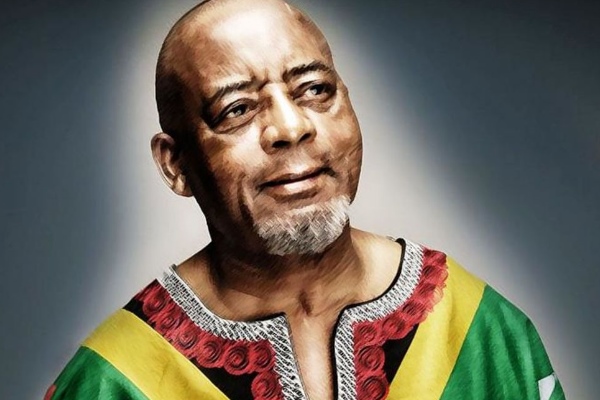
The London-based band leader, composer and concert organiser says it has been his lifelong dream to produce an album based on the music of the original Malombo Jazzmen. The release date in August will coincide with the staging of the inaugural South Africa Jazz Festival, a flagship event organised under the aegis of his record label, Jabula Music.
“The South Africa Jazz Festival is an event that we have been planning since the dawn of our country’s democracy,” he reveals. “The festival will be a series of tours around the country. Jabula Music would like to work with jazz club organisers in all the provinces to facilitate this. I’m thrilled that, as a South African jazz musician, I’m involved in organising this historic event. It has been on my mind for many years,” he continues. The festival will feature jazz acts from several countries including the UK, Sweden, the US, Germany and Finland.
A veteran of four decades on international stages, Bahula is not new to organising music concerts. In the 1970s, he and his wife Liza were responsible for bookings at London’s Club 100, where his band Jabula had enjoyed a long-running Friday night residency. The iconic jazz venue became a home away from home for exiled South African artists – including his bosom friend, Dumile Feni, the late painter, known among the art cognoscenti as “the Goya of the townships”.
The high point of Bahula’s involvement with live events was when he organised the first concert for Nelson Mandela’s birthday in 1983. Three years earlier, the AntiApartheid Movement had initiated the 'Release Mandela and all Political Prisoners' campaign, to promote awareness of Mandela’s incarceration on Robben Island.
On 18 July 1983, Mandela turned 65 and Bahula saw his birthday as an opportunity to organise a concert to promote the anti-apartheid cause. Head of the Anti-Apartheid Movement, Mike Terry, was convinced that it was a great idea. The result was the African Sound concert, which took place at the Alexandra Palace, London, on 17 July 1983. The line-up included Hugh Masekela, who was performing for the first time on British soil; Ghanaian afro rock band Osibisa and South African saxophonist Dudu Pukwana with his band Zila
“We needed at least 5 000 people to cover the costs,” Liza Bahula later recalled. “It was a nerve-racking experience!”
However, the concert became a big success. The event’s legacy was an album, African Sounds! For Mandela. It was released under the Bahula’s Tsafrica Productions. But the concert’s biggest legacy was its successor, the Nelson Mandela Birthday Concert in 1988 at Wembley Stadium. It was attended by over 90 000 revellers and was beamed live on TV to billions of viewers across the world.
An impromptu listening session at Bahula’s hotel room in Sandton, Joburg, reveals that years of hard work in the studio has yielded remarkably positive results.
“We have come a long way as Malombo Jazzmen,” says Bahula. “Since we started performing and recording together in the sixties, Philip Tabane, Abbey Cindi and I have written a lot of material which we never recorded. This album is about the original music of the Malombo Jazzmen recorded in a modern context,” he explains.
The album includes compositions by Tabane and Cindi, who he says have played an important role in his musical development. “Working with them again also means that I treasure my roots as a musician because I believe it is important to remember where you started your career,” he says. “Producing such an exciting album of the original Malombo Jazzmen is a great experience. The music tells the story of where we come from and where we started. Personally, it also shows where I’m heading.”
The bulk of the recording took place in the UK and features some of the musicians Bahula has worked with over the years since he went there as an exile in 1973. The as-yet-untitled album also features a younger generation of South Africans – upright bass player Mlungisi Gegana and guitarist George Georgiades. Their virtuosity takes the signature Malombo sound to another level.
The Malombo Jazzmen’s finest hour was in September 1964 at Orlando Stadium, Soweto. The event was the annual Castle Lager Jazz Festival. They astounded the crowd and walked away with first prize in the group category. It was a magical and defining moment in the history of South African jazz; an event that underscored Malombo as the best and most innovative jazz combo in the country.
“We were just three lads from Mamelodi who gave a lot of our time and talent to the South African music scene. We worked very hard to produce new and exciting sounds, so I think success was no coincidence,” he recalls. “We were very confident because our music was unique, not an imitation, and the three of us were like branches of the same tree. We had a similar sense of the sound we wanted to produce and there was chemistry on stage. The atmosphere was electrifying. Those who were there felt like it was the country’s freedom day!”
Unfortunately, Malombo Jazzmen’s success was shortlived. The following year they went their separate ways. Bahula and Cindi recruited guitarist Lucky Ranku and formed the Malombo Jazz Makers. They performed together until 1973, when Bahula went into exile in England, joining the ANC and the Anti-Apartheid Movement as a cultural activist
In exile, Bahula formed Jabula, with a lineup including Australian, British and Afro-Caribbean musicians, as well as fellow South African expatriates Ranku, Pinise Saul and the late bassist Ernest Mothle.
“I chose to work in exile to contribute my talent, time and energy to the freedom of our country,” he says. “I wanted to use music as a weapon of struggle and I wanted to continue where I had left off when I was working with Abbey Cindi and Tekon Players, a Durban-based theatre and poetry group led by (Black Consciousness activists) Saths Cooper and Strini Moodley. “Working with Tekon Players was very exciting and scary but we were brave, especially because of our passion and commitment to the struggle. This experience taught me that it was possible to use the arts to fight against apartheid.”
On April 27, 2012 the South African government honoured Julian Sebothane Bahula with the Order of Ikhamanga. “I felt like the chapter of that long journey of our struggle for freedom was closing in an exciting and amazing way. It was so special to be recognised during the historic centenary year of the ANC and it was also appropriate that I was honoured in my hometown, the home of jazz, where it all started.”
* Originally published on 11 March 2016 in the African Independent.


Most popular
Open call: 2026 Gender@Work music industry training in Johannesburg
09 Oct 2026

Top amapiano songs of 2026
16 Feb 2026

Top Naija songs of 2026
31 Mar 2026

Top Afrobeats songs of 2026
19 Mar 2026
Gambia: Suntou Susso announce UK tour for ‘The Path of a Griot’
09 Oct 2026

Call for applications: ACCES 2026 Emerging Artist Spotlight Competition
01 Oct 2026
Disclaimer: Music In Africa provides a platform for musicians and contributors to embed music and videos solely for promotional purposes. If any track or video embedded on this platform violates any copyrights please inform us immediately and we will take it down. Please read our Terms of Use for more.

Subscribe to our monthly Newsletter
Follow us on social media


Please log in to post a comment.