









































NEFCISA
NEFCISA

The Music In Africa Foundation (MIAF) is proud of its partnership with the Industrial Development Corporation (IDC) as a Strategic Implementing Partner (SIP) for its Social Employment Fund (SEF). Through this collaboration, MIAF is running a national programme that is creating jobs, addressing skills gaps, and strengthening South Africa's creative industries — in line with the SEF's overarching goal to generate work for the common good and build community value through employment, social contribution, and inclusive economic participation. Operating under the banner NEFCISA (National Employment Facility for Creative Industries in South Africa), the initiative is recruiting and training participants, matching them with host organisations, and has already placed 1 500 workers across the country — surpassing its original target of 1 000. NEFCISA is delivered through a network of 20 host organisations spanning five provinces, who are actively hosting participants and contributing to work for the common good across South Africa's creative and cultural industries. Key Objectives: Support employment and entrepreneurship in the creative industries. Offer skills development and training programmes. Foster partnerships between public and private creative sectors. Promote South African creativity at both provincial and national levels Foster community development through social contribution.

ACCES
ACCES

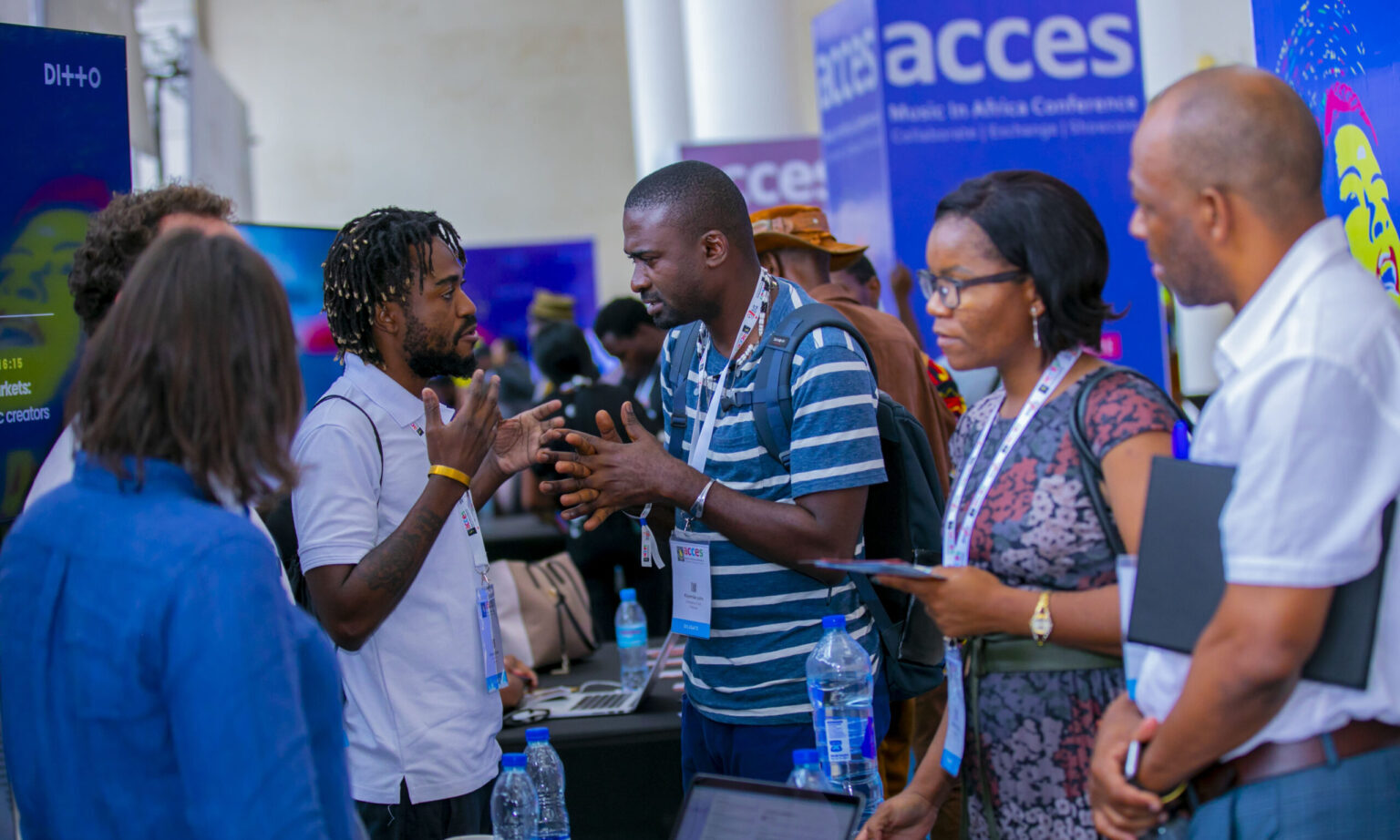
ACCES Conference and Showcase Festival is Africa's leading music industry gathering, bringing together the people shaping the future of the continent's music business. Artists, entrepreneurs, executives, investors, policymakers and cultural leaders from across Africa and around the world come to ACCES to build partnerships, exchange ideas, discover talent and create new business opportunities. Since its launch in 2017, ACCES has become the continent's premier platform for professional exchange and music market development. Combining a high-level conference with a curated showcase festival, networking, exhibitions and industry programmes, ACCES offers a unique space where creativity meets business and where African music connects with the global industry.

Gender@Work
Gender@Work

Music In Africa Gender @ Work is a three-year training programme aimed at upskilling and increasing the participation of female professionals in the African music sector. Launched by the Music In Africa Foundation (MIAF) in April 2019, the programme is connected to the MIAF’s ACCES music conference – a pan-African event held in a different African country every year. This connection enables the programme to reach new participants in a different African country every year. The programme marks the beginning of a more concerted effort by the Foundation to support the participation and inclusion of women in all facets of its programmes and the music sector in Africa as a whole. Over the three years, the programme will aim to address gender imbalances in the sector through training, lobbying, facilitating knowledge exchange and dialogues that foster the interest of women. The broader objectives of the programme are to: Provide industry training for women on critical music industry skills, focusing on: Stage management Electronic music production and recording Music business management Technical knowledge Provide an opportunity for both professional and aspiring women to benefit from the Music In Africa network and its broad range of activities in 2019, 2020 and 2021. Provide a solution-based platform in the form of a round table at ACCES with a view to identify challenges, discuss opportunities and lobby for the interests of female practitioners. Offer participants the opportunity to benefit from programmes offered by MIAF’s partners. Increase access to educational materials. Integrate participants in the broader ACCES programme to maximise experience and exposure to the industry. Record and present training materials on the www.musicinafrica.net, including but not limited to tutorials, templates and other best-practice materials. Communicate women-based themes that support the initiatives and messages of the programme. MAIN TRAINING ACTIVITIES Training in first country (Ghana): In the first year, participants will be trained on all aspects of stage management by a team of experienced stage managers from 10 to 17 November 2019. The programme will offer robust classroom training as well as practical, hands-on training in which participants will also be given the opportunity to manage various aspects of the ACCES performance programme. Training in second country: The second training iteration will take place at ACCES 2020 when the programme will diversify its course to include music production lessons and training on other music business topics. A round-table platform will also be introduced to coincide with the ACCES programme. Training in third country: The third training iteration will take place at ACCES 2021 in a different country, offering an advanced course. HOW DO YOU GET INVOLVED?  As a participant, facilitator or trainer: The programme enrolls up to 12 trainees every year. All opportunities are advertised publicly on this website, and will be added to this page. Please keep checking this page for new calls (below under UPDATES & CURRENT OPPORTUNITIES). As a partner Please contact Claire Metais at [email protected]. APPLY The call for applications for 2020 will be announced soon. The Music In Africa Gender @ Work programme is made possible with the support of the Prince Claus Fund, Siemens Stiftung and Goethe-Institut.

Sound Connects Fund
Sound Connects Fund

For cultural and creative practitioners and organisations operating in southern Africa, access to funding remains a major challenge. The COVID-19 pandemic has also had a massive impact on government policy, spending and the economy in general, and has seen spending on culture being moved further down the list of priorities. Further, the cultural and creative industries repeatedly cite four main areas where investment is needed for growth, which are increased visibility, mobility including access to new markets, finance and support structures.

Instrument Building And Repair Project

Experience the Vibrations African Instruments Exhibition online in 3D

Reviews

Lieva Starker – Weerspieëlings

25 Jul 2017 - 09:33

cc-img flag-img

Weerspieëlings by Lieva Starker is a welcomed addition to the growing body of South African contemproray classical music. The album features five works of South African origin for solo violin. 
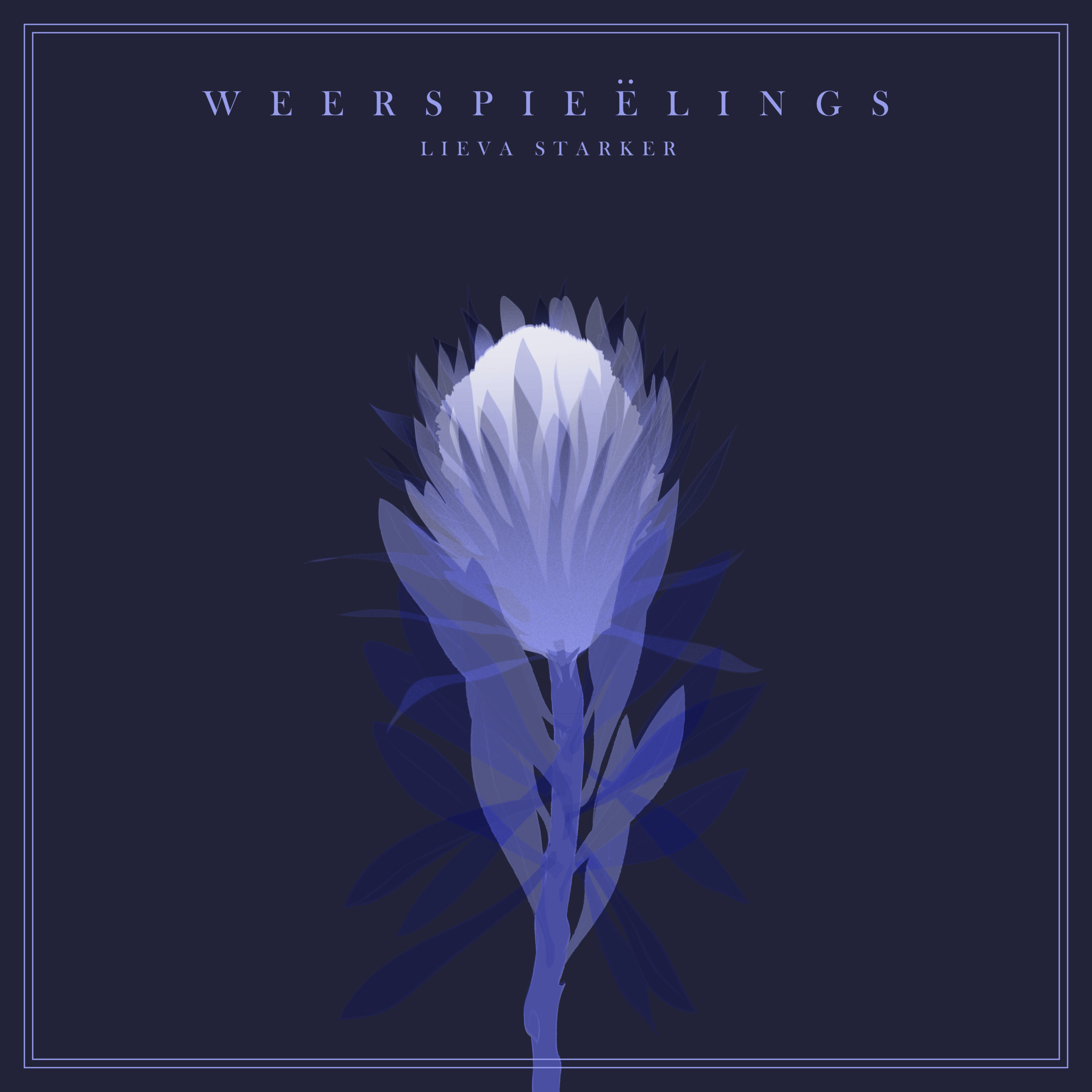
Weerspieëlings cover art.

South Africa boasts a rich history of producing some of the world’s finest violinists. Pieter Schoeman, the concertmaster of the London Philharmonic, David Juritz, the former leader of the London Mozart Players, Zoë Beyers, associate leader of the City of Birmingham Symphony Orchestra, and recently, the young Pendo Masote, who will soon be joining the prestigious Yehudi Menuhin School, are among those who have taken on important roles on the international stage.

Yet, for all the great violinists, South Africa has a comparatively impoverished history of violin recordings. To my knowledge, there does not exist a record solely dedicated to violin works of South African origin, and at most, single compositions for the instrument have featured on albums such as Robert Fokkens’s Tracing Lines (2014) or Kevin Volans’s violin:piano (2015). (Despite the latter’s title, it only features two works for violin.)

It is for this reason, then, that South African violinst Lieva Starker’s album, Weerspieëlings (Reflections), comes as a welcomed addition to the growing body of contemporary classical recordings to emerge from the country. The album, released on 26 April 2017, features five South African works for solo violin performed by Starker. Of these, two—'Mamela Mamela Mamela' by Lise Morrison and 'Spelling and Sounds' by Pierre-Henri Wicomb—were commissioned for the album.

'Variazioni Sopra una Ninnananna Africana' was written for Starker in 2007 by Hendrik Hofmeyr. 'Cycles' by Clare Loveday was composed in 2014 for the Johannesburg International Mozart Festival where it was premiered by Waldo Alexander as part of an installation with sculptor Nandipha Mntambo. 'Passi Leggieri' by Kevin Volans is the only work on the album that has been recorded before, and features on Volans’s violin:piano mentioned above. The album was independently produced and recorded at Flood Studio in Birmingham, UK, where Starker is currently studying violin performance.

"Curated around the ideas of memory, reflection and reiteration," as Starker writes in the liner notes, it may not come as a surprise that the majority of the album suggests a strong minimalist influence. 'Passi Leggieri', for instance, conjures the slowly unfolding sound worlds reminiscent of Morton Feldman’s music, but deviates in the brisk dance-like material that lends the work its title, ‘light steps’.

Opening with a lengthy meditation on frugal flageolets, 'Cycles' is starkly minimal in its material until a more robust—though still fragmented—section emerges toward the end of the work. 'Mamela Mamela Mamela' also employs minimalist techniques in its repetitive, percussive opening and its evocative use of pauses that create a sense of distance and sparseness. Yet, framed in this arid musical landscape are some of the album’s most lyrical melodies, all deeply charged with desire and longing.

Desire, however, returns in a different guise in Pierre-Henri’s composition, 'Spelling and Sounds'. Here, and unlike some of the lusher melodic lines heard before, desire is incessant, if not "obsessive", as the liner notes suggest. The constant—almost aggressive—return to a single idea in this work makes it perhaps one of the most cohesive on the album, but it also recasts the intimate medium of the solo violin as a medium well-suited to searching, or even digging, into its rich sonic palate.

Indeed, Starker manages to draw out an impressive timbral range here, without losing the sense of cohesion that draws the work together. Overall, this work stands out for its rich and probing engagement with the instrument, allowing the performer ample space to meditate on what it means to perform solo violin music.

As such, it stands in stark contrast to the last work on the album, 'Variazioni Sopra una Ninnananna Africana'. As a set of variations on the Zulu lullaby 'Thula Baba', the work somewhat uncritically expounds a 19th century virtuosic approach to solo violin music, a genre which affords the performer little more than an opportunity to show off their chops. Considering that the piece was written for Starker when she was 13 years old, it perhaps does not come as a surprise that she does seize the opportunity to indulge in the virtuosic nature of the work, producing a thrilling performance. But she also brings a degree of subtly to the work in her intricate, fragile interpretation of the original lullaby theme, maintaining the atmospheric tension it offers.

As a whole, Weerspieëlings does not only constitute a valuable addition to South Africa’s corpus of classical music recordings. It is also a wonderful achievement in the fine, delicate, and intimate artistry offered by the solo violin medium. Perhaps, if this album finds traction, it will inspire more recordings of contemporary classical South African music. If not, it will still stand as a highly ambitious and incredibly brave recording.

The album is available on iTunes, Amazon, and Spotify and is distributed by CD Baby.

Artist: Lieva Starker
Album: Weerspieëlings
Label, Year: Independent, 2017

Please log in to post a comment.

Most popular

Disclaimer: Music In Africa provides a platform for musicians and contributors to embed music and videos solely for promotional purposes. If any track or video embedded on this platform violates any copyrights please inform us immediately and we will take it down. Please read our Terms of Use for more.

newsletter banner

Subscribe to our monthly Newsletter

Follow us on social media