




















































Live performance opportunities in South Africa
24 May 2022 - 07:22


A 2018 mapping study conducted by the South African Cultural Observatory (SACO) stated that the cultural domain classified as Performance and Celebration accounted for 20% of South Africa’s Creative and Cultural Industries (CCIs). This same study placed the contribution of CCIs to the country’s overall GDP at R74.39 billion for that year, and all relevant reports predicted a continued upward growth trajectory for the sector.[1]
Yet this projected growth was abruptly halted by the COVID-19 pandemic. As in other areas of the world, the pandemic and its associated social restrictions have had a devastating effect on South Africa’s live performance industry, with SACO reporting that the CCIs’ contribution to the GDP in the year 2020 shrank by nearly 45% to R42.2 billion.[2]
However, nearly two years after the first round of lockdown measures were introduced, South Africa’s live performance sector is gradually regaining its stride, displaying the type of resilience that the industry is renowned for.
This article provides an overview of live performance opportunities for South African music creators.
The context of South Africa’s creative economy
The United Nations Development Programme’s (UNDP’s) 2013 Creative Economy Report states: “...the creative economy has always been located and nurtured in urban settings, generally large metropolitan areas.”[3] This intersectionality is particularly relevant to the example of South Africa, where a third of the country’s population is located in rural areas.[4]
Hence, to a large degree, success in the live performance industry in South Africa is dependent on being able to access its (wealthier) urban and peri-urban centres. This insight is backed up by data included in Music In Africa’s Revenue Streams for Music Creators in South Africa 2022 report, which shows that urban and peri-urban centres account for nearly 80% of total live performance revenue across the country.
[video:https://www.youtube.com/embed/Jp-ya8WggLI width:744 height:446 autoplay:0]
Video: Amy Shelver, marketing manager and researcher at the South African Cultural Observatory, discusses the role of the creative economy in South Africa.
Therefore, for the purposes of this article, interviews were conducted with three artists who not only live and work within the country’s three biggest metros, but have each toured the country extensively, gracing stages ranging from informal eateries to government and brand-sponsored concerts. The musicians in question – Nhoza Sitsholwana (a vocalist based in Cape Town), Matthew ‘Matt Vend’ Wilson (a singer-songwriter from Durban) and Sandile Mbatha (a bassist from Johannesburg) – have been performing live music professionally for 14, 17 and eight years, respectively.
Based on interviews with these individuals, three key themes emerged for musicians looking to make the most of revenue prospects in the live performance sphere:
- The size and nature of live music spaces in South Africa.
- Methods of securing payment and how to maximise earnings from live performances.
- ‘Working smart’ in the South African context.
Live music spaces in South Africa
I’ve come to realise that I’m in the hospitality industry rather than the music industry. – Matt Vend[5]
Live music venues are an integral part of South Africa’s musical landscape. Not only are they the vehicles through which the delivery mechanism of live music is made available to the audience, but they also provide an invaluable point of entry to emerging talents.[6]
In an effort to help keep the live music scene going in these trying times, Purity Mkhize from Root Spring Music has created this Google Sheet tracking live music venues that are still operating across the country. Please utilise this database to make contact with venues in your area.
A useful way of categorising live music spaces in South Africa comes from a February 2020 SACO research report on the role that venues play in the development of the country’s artists. This report classified venues as falling into one of three categories: theatres (for audiences from 300 to1 500 people), multipurpose centres (100 to 480 people) and hospitality establishments and jazz clubs (100 to 250 people).[7]
- Theatres are spaces designed specifically for live performances, with the appropriate infrastructure and technical requirements (i.e. sound and lighting systems) permanently in place.
- Multipurpose centres are usually found in either rural areas or peri-urban settings like townships. They’re funded by the government – and are therefore often free or inexpensive to rent – but their function is usually catered more towards sports than the performing arts. This means that, usually, there is no fixed technical infrastructure in place for putting on a live music show.
- Hospitality establishments, like restaurants, clubs and bars, tend to be the spaces that host more live music performances than other venues in the country. It is in these venues that many musicians hone their skills and possibly graduate to larger audiences. Since the bottom line for these establishments (even the jazz clubs) depends on the sale of food and beverages, the level of investment in permanent technical infrastructure will vary greatly between venues.
Methods of securing payment
You need to make sure you’re constantly booked out for shows to survive. – Sandile Mbatha[8]
Music In Africa’s Revenue Streams for Music Creators in South Africa 2022 report reveals that the average income for music creators from live performances is R11 076 per month. However, even a casual glance at the live performance scene will reveal a vastly unequal income distribution, with the lion’s share of revenue going to a handful of big names, while the rest struggle to get their foot in the door.[9]
According to a recent article by Saint Chinedu, “Top artists, singers, musicians and rappers in South Africa are paid between R17 000 and R300 000 per performance. But new artists should expect to earn roughly R1 500 to R5 000 per show” – while R599 per hour is given as an ‘average rate’ for DJs in South Africa.[10]
This disparity can be partly attributed to gatekeeping by big media, particularly radio stations, who are still under fire concerning the lack of local representation on the medium.
An artist’s ability to draw numbers for live performances is directly correlated with the amount of airplay they receive, as this not only exposes audiences to the artist’s work but also grants the artist a structural form of authentication that can propel them into the professional sphere. According to Nhoza Sitsholwana, “It’s hard to say there are standard rates. This industry judges that by your status … how popular or famous you are and what type of music you do.”[11]
Some common forms of payment from venues to artists include the following:
- A set fee for the performance that is agreed upon between the artist and the venue. This form of payment represents the highest average monthly income for music creators (R12 389), according to the Revenue Streams for Music Creators in South Africa 2022 report.
- A door deal, where the artist takes some portion (generally between 50 and 100%) of ticket sales.
- In his interview, Matt Vend mentioned several alternative payment methods, such as taking a percentage of drink sales on the night and the ‘passing the hat’ model after allowing free admission to the crowd, which can often lead to the artist earning more than a standard door deal would yield. When negotiating a percentage of drink sales, aim for 5 to 10% of the bar receipts, depending on the size of the venue.[12]
- Busking is another option for musicians looking to take advantage of high-traffic pedestrian areas (such as events, markets, tourism spots, etc.). However, the average monthly income from busking in South Africa is only R2 649, according Revenue Streams for Music Creators in South Africa 2022
The interviewees also pointed out that the largely informal nature of the industry means that agreements between the artist and the venue are often verbal in nature. This can lead to all kinds of complications, including payment disputes or sudden cancellations from the venue, leaving the artist in a precarious position if they are surviving from gig to gig. Wherever possible, try to get clear confirmation of the terms and conditions of your performance from the venue in writing (e.g. email or text message) before the date of your performance.
Finally, don’t forget that live music shows generate performance royalties. You can log these via the SAMRO online portal once you have successfully registered with the organisation.
‘Working smart’ in the South African context
South Africa’s current state of vast social inequality springs from the adverse role that apartheid-era policies and segregation still play in the country’s spatial and racial politics. It is this legacy that has, in part, created a ‘feast or famine’ fibre that appears to thread itself through the very fabric of South African life. In the sense that the live music industry is also characterised by ‘boom and bust’ earning periods, it is reflective of broader problems inherent in society.[13]
- All interviewees stressed the ability to network as being one of the primary skills one needs to possess to survive in this industry.
- The artists also mentioned being disciplined in terms of learning your craft, and of always being punctual, polite and professional when engaging with venues.
- South Africa’s unreliable public transport system means that having your own transport is an enormous advantage.
- Recent research from the International Labour Office has also expressed the need for skills development within the industry, to allow emerging artists to engage with venues on more egalitarian terms.[14] This is something that must be considered to create a more inclusive industry that is truly African.
It is also important to always be on the lookout for new spaces to play your music – and this extends to online gigs, which proliferated during South Africa’s first lockdown period. These online performances can be organised and advertised through social media channels such as Facebook and Instagram, or emerging apps such as Serenade, which allows users to book personalised performances from their favourite artists.[15]
Finally, the musicians interviewed for this article mentioned the importance of taking care of one’s mental health, as the very nature of regular live performance, and especially touring, can lead to feelings of isolation and exhaustion.[16]
Conclusion
Historically, live music has been a key source of livelihood for musicians in South Africa.[17] As lockdown restrictions continue to ease, the live performance industry is sure to re-establish itself as a major revenue stream and a vital platform for artistic development for South African musicians.
Resources and citations
- [1] South African Cultural Observatory. (2018). Mapping Study - Performance and Celebration. Accessed on January 6, 2022: https://www.southafricanculturalobservatory.org.za/download/734
- [2] South African Cultural Observatory. (2021). Measuring the impact of the COVID-19 Crisis on the Cultural and Creative Industries in South Africa: One year on. Accessed on January 6, 2022: https://www.southafricanculturalobservatory.org.za/download/800
- [3] UNESCO. (2013). Creative Economy Report. Accessed on January 6, 2022: http://www.unesco.org/culture/pdf/creative-economy-report-2013.pdf
- [4] Manners, B., Saayman, M. & Kruger, M. (2015). “Managing a live music performance: A supply-side analysis.” Acta Commercii. Accessed on January 6, 2022: https://actacommercii.co.za/index.php/acta/article/view/252/374
- [5] Original interview with Matthew ‘Matt Vend’ Wilson for Music In Africa: 21 November, 2021.
- [6] SAMRO Foundation and Concerts South Africa. (2013). Song Lines: Mapping the South African live performance landscape. Accessed on January 6, 2022: http://www.concertssa.co.za/wp-content/uploads/2015/03/song_lines_report.pdf
- [7] South African Cultural Observatory. (2020). The Role of Live Music Venues in Promoting and Developing South African Artists. Accessed on January 6, 2022: https://www.southafricanculturalobservatory.org.za/download/799
- [8] Original interview with Sandile Mbatha for Music In Africa: 23 November, 2021.
- [9] De Villiers, W.M. (2006). Aspects of the South African Music Industry: An analytical perspective. University of Pretoria. Accessed on January 6, 2022: https://repository.up.ac.za/bitstream/handle/2263/27324/dissertation.pdf?sequence=1&isAllowed=y
- [10] Chinedu, S. (2022). “How To Become A Top South African Artist Through The Best Record Labels”. Siwes Beginner. Accessed on February 15, 2022: https://siwesbeginner.com/south-africa-record-labels-contact/
- [11] Original interview with Nhoza Sitsholwana for Music In Africa: 24 November, 2021.
- [12] Interview with Matthew “Matt Vend” Wilson. Ibid.
- [13] De Villiers, W.M. (2006). Ibid.
- [14] Ambert, C. (2003). Promoting the Culture Sector through Job Creation and Small Enterprise Development in SADC Countries: The Music Industry. International Labour Office. Accessed on January 6, 2022: https://www.ilo.org/wcmsp5/groups/public/---ed_emp/---emp_ent/---ifp_seed/documents/publication/wcms_117682.pdf
- [15] Gillezeau, N. (2020). “App lets you buy a serenade from your favourite singer”. Financial Review. Accessed on February 15, 2022: https://www.afr.com/technology/app-lets-you-buy-a-serenade-from-your-favourite-singer-20200825-p55p4s
- [16] Interviews with Matthew Wilson, Sandile Mbatha & Nhoza Sitsholwana. Ibid.
- [17] SAMRO Foundation and Concerts South Africa. (2013). It starts with a heat beat: Crafting a model for live music support in southern Africa. Accessed on January 6, 2022: http://www.concertssa.co.za/wp-content/uploads/2016/11/Concerts-SA-It-Starts-with-a-Heartbeat-Single-Page-Lo-Res-Version3.pdf
This article is part of the Revenue Streams for African Musicians project, supported by UNESCO’s International Fund for Cultural Diversity in the framework of the UNESCO 2005 Convention on the Protection and Promotion of the Diversity of Cultural Expressions, the Siemens Cents4Sense programme, Siemens Stiftung, Goethe-Institut, the National Arts Council of South Africa and Kaya FM.
Editing by David Cornwell and Kalin Pashaliev


Most popular

Top amapiano songs of 2026
16 Feb 2026

Top Afrobeats songs of 2026
19 Mar 2026

Top Naija songs of 2026
31 Mar 2026
Open call: 2026 Gender@Work music industry training in Johannesburg
09 Oct 2026
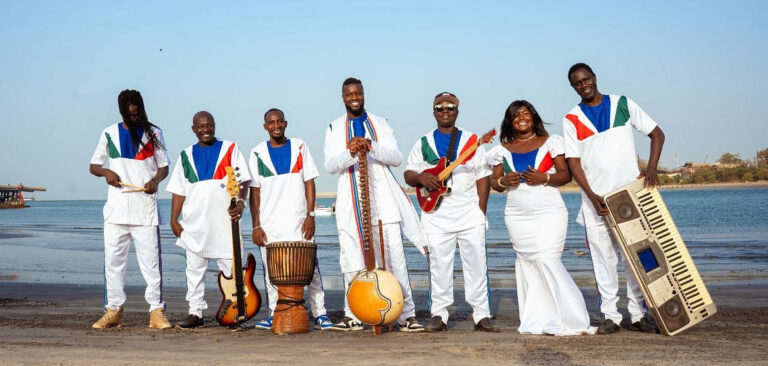
Gambia: Suntou Susso announce UK tour for ‘The Path of a Griot’
09 Oct 2026

ACCES unveils stellar programme for 2026 edition
17 Oct 2026
Disclaimer: Music In Africa provides a platform for musicians and contributors to embed music and videos solely for promotional purposes. If any track or video embedded on this platform violates any copyrights please inform us immediately and we will take it down. Please read our Terms of Use for more.

Subscribe to our monthly Newsletter
Follow us on social media


Please log in to post a comment.