NEFCISA
NEFCISA

The Music In Africa Foundation (MIAF) is proud of its partnership with the Industrial Development Corporation (IDC) as a Strategic Implementing Partner (SIP) for its Social Employment Fund (SEF). Through this collaboration, MIAF is running a national programme that is creating jobs, addressing skills gaps, and strengthening South Africa's creative industries — in line with the SEF's overarching goal to generate work for the common good and build community value through employment, social contribution, and inclusive economic participation. Operating under the banner NEFCISA (National Employment Facility for Creative Industries in South Africa), the initiative is recruiting and training participants, matching them with host organisations, and has already placed 1 500 workers across the country — surpassing its original target of 1 000. NEFCISA is delivered through a network of 20 host organisations spanning five provinces, who are actively hosting participants and contributing to work for the common good across South Africa's creative and cultural industries. Key Objectives: Support employment and entrepreneurship in the creative industries. Offer skills development and training programmes. Foster partnerships between public and private creative sectors. Promote South African creativity at both provincial and national levels Foster community development through social contribution.

ACCES
ACCES

ACCES Conference and Showcase Festival is Africa's leading music industry gathering, bringing together the people shaping the future of the continent's music business. Artists, entrepreneurs, executives, investors, policymakers and cultural leaders from across Africa and around the world come to ACCES to build partnerships, exchange ideas, discover talent and create new business opportunities. Since its launch in 2017, ACCES has become the continent's premier platform for professional exchange and music market development. Combining a high-level conference with a curated showcase festival, networking, exhibitions and industry programmes, ACCES offers a unique space where creativity meets business and where African music connects with the global industry.

Gender@Work
Gender@Work

Music In Africa Gender @ Work is a three-year training programme aimed at upskilling and increasing the participation of female professionals in the African music sector. Launched by the Music In Africa Foundation (MIAF) in April 2019, the programme is connected to the MIAF’s ACCES music conference – a pan-African event held in a different African country every year. This connection enables the programme to reach new participants in a different African country every year. The programme marks the beginning of a more concerted effort by the Foundation to support the participation and inclusion of women in all facets of its programmes and the music sector in Africa as a whole. Over the three years, the programme will aim to address gender imbalances in the sector through training, lobbying, facilitating knowledge exchange and dialogues that foster the interest of women. The broader objectives of the programme are to: Provide industry training for women on critical music industry skills, focusing on: Stage management Electronic music production and recording Music business management Technical knowledge Provide an opportunity for both professional and aspiring women to benefit from the Music In Africa network and its broad range of activities in 2019, 2020 and 2021. Provide a solution-based platform in the form of a round table at ACCES with a view to identify challenges, discuss opportunities and lobby for the interests of female practitioners. Offer participants the opportunity to benefit from programmes offered by MIAF’s partners. Increase access to educational materials. Integrate participants in the broader ACCES programme to maximise experience and exposure to the industry. Record and present training materials on the www.musicinafrica.net, including but not limited to tutorials, templates and other best-practice materials. Communicate women-based themes that support the initiatives and messages of the programme. MAIN TRAINING ACTIVITIES Training in first country (Ghana): In the first year, participants will be trained on all aspects of stage management by a team of experienced stage managers from 10 to 17 November 2019. The programme will offer robust classroom training as well as practical, hands-on training in which participants will also be given the opportunity to manage various aspects of the ACCES performance programme. Training in second country: The second training iteration will take place at ACCES 2020 when the programme will diversify its course to include music production lessons and training on other music business topics. A round-table platform will also be introduced to coincide with the ACCES programme. Training in third country: The third training iteration will take place at ACCES 2021 in a different country, offering an advanced course. HOW DO YOU GET INVOLVED?  As a participant, facilitator or trainer: The programme enrolls up to 12 trainees every year. All opportunities are advertised publicly on this website, and will be added to this page. Please keep checking this page for new calls (below under UPDATES & CURRENT OPPORTUNITIES). As a partner Please contact Claire Metais at [email protected]. APPLY The call for applications for 2020 will be announced soon. The Music In Africa Gender @ Work programme is made possible with the support of the Prince Claus Fund, Siemens Stiftung and Goethe-Institut.

Sound Connects Fund
Sound Connects Fund

For cultural and creative practitioners and organisations operating in southern Africa, access to funding remains a major challenge. The COVID-19 pandemic has also had a massive impact on government policy, spending and the economy in general, and has seen spending on culture being moved further down the list of priorities. Further, the cultural and creative industries repeatedly cite four main areas where investment is needed for growth, which are increased visibility, mobility including access to new markets, finance and support structures.

Instrument Building And Repair Project

Experience the Vibrations African Instruments Exhibition online in 3D

News

Malian documentary to be screened on Music Freedom Day
02 Mar 2016 - 13:48

cc-img flag-img

The AfriDocs series of African documentary films returns this month to DStv and GOtv subscribers across sub-Saharan Africa. Throughout the month of March, AfriDocs will screen various award-winning documentaries every Thursday night on [ED] (DStv channel 190) and GOtv channel 65.
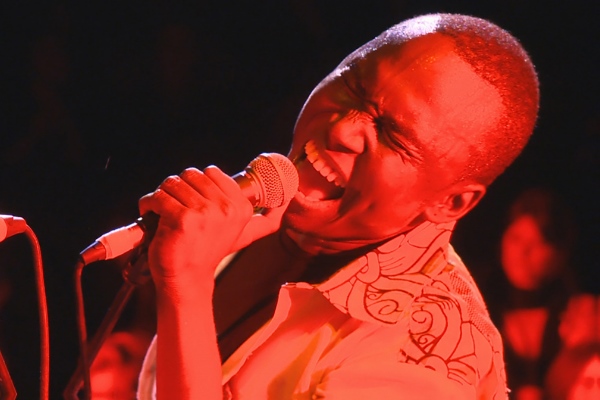
Ali from Songhoy Blues features in the documentary 'They Will Have to Kill Us First'. Photo: www.theywillhavetokillusfirst.com

AfriDocs presents some of the most powerful and important documentaries of the past few years, often with a particular focus on music - particularly in February and June 2015. These films highlight many of the individuals and communities speaking out against oppression and abuse of power in both the personal and political spheres.

The month begins with a celebration of Music Freedom Day, celebrated in numerous countries on 3 March. Music Freedom Day is a powerful and united manifestation that supports persecuted, prosecuted and imprisoned musicians, many of whose only crime has been that they have spoken up against authorities and insisted on the right to express themselves through their music. One of the many recent projects to mark the day include the release of a new version of Fela Kuti’s ‘Zombie’ featuring musicians from throughout the Middle East and Africa.

To commemorate this day, AfriDocs will screen They Will Have to Kill Us First, a documentary that looks at what happened in Mali when music ‘disappeared’ practically overnight in 2012, when Islamic extremists groups rose up to capture an area the size of the UK and France combined. ;usic was literally outlawed overnight, but rather than lay down their instruments, Mali’s musicians fought back.

Directed by Johanna Schwartz, this critically acclaimed feature-length documentary features interviews with musicians like Songhoy Blues (who fled the country to live in exile), guitarist Moussa Sidi, as well as female singer/activists Disco and Kharia Arby (aka ‘The Nightingale of the North’). The film was earlier showcased at WOMEX in Hungary in October 2015. During AfriDocs it will be screened along with Symphony Kinshasa, a short film about live in the capital of DR Congo.

Later in the month, on 17 March, another music-related documentary will be featured on AfriDocs. Francois Verster’s The Dream of Shahrazad is a feature-length film that locates political expression before, during and after the Egyptian revolution (and also within recent times in Turkey and Lebanon) within a broader historical and cultural framework: that of storytelling and music. More particularly, it looks at the legacy of the famous collection of stories known as The 1001 (or ‘Arabian’) Nights.

On 31 March, AfriDocs takes viewers to Burkina Faso with two more documentaries. Christian Carmosino’s A Barefoot Revolution looks at the events of October 2014, when Burkina Faso’s capital Ouagadougou was the theatre of massive demonstrations against the country’s President, Blaise Compaoré, who attempted to change the Constitution in order to keep the power for 15 more years. As a result of his actions, the protest turns into a full revolution, lasting six days and nights and ending with Compaoré’s departure after a dictatorship of 27 years. The film shows how a transitional government took over and prepared the elections planned for October 2015.

While the film does not focus specifically on music, musicians have played a central role in Burkina Faso’s political struggles. Prominent rapper, producer and activist Smockey is the leader of a popular socio-political movement called Balai Citoyen (The Citizens’ Broom), which led the revolt against the dictatorial actions of Compaoré. Following an attempted coup in September 2015, Smockey’s Studio Abazon was destroyed by forces loyal to Compaoré’s former regime in an effort to silence politically active musicians.

A Barefoot Revolution will be screened alongside Capitaine Thomas Sankara, director Christophe Cupelin's portrait of Thomas Sankara, president of Burkina Faso from 1983 until his murder in 1987.

Don’t miss the opportunity to catch these and other award-winning films every Thursday this month at 19h55 Central African Time (GMT+2) on [ED] DStv Channel 190 and GOtv channel 65 across sub-Saharan Africa, with repeats on Sundays. For more details visit the AfriDocs website or Facebook page.

Please log in to post a comment.

Most popular

Disclaimer: Music In Africa provides a platform for musicians and contributors to embed music and videos solely for promotional purposes. If any track or video embedded on this platform violates any copyrights please inform us immediately and we will take it down. Please read our Terms of Use for more.

newsletter banner

Subscribe to our monthly Newsletter

Follow us on social media