































































Cameroonian saxophonist Manu Dibango has urged young African musicians to create new music by using old genres as inspiration.
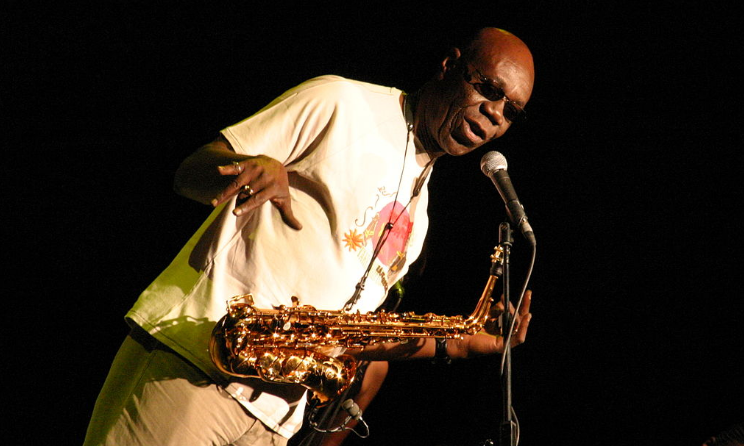
Dibango was speaking to Music In Africa after headlining this year’s Safaricom International Jazz Day at the Carnivore Grounds in Nairobi on 1 May.
“A lot of the young musicians believe that all music that comes from America is the best,” he said.” I have lived in the US for some time and I can tell you that the Americans look for inspiration in Africa. Why else would Michael Jackson and Rihanna borrow a line from my ‘Soul Makossa’?”
“This means that if young musicians use what is our own they can inspire the world into wanting to listen to African music and eventually earn their spot on the global stage.”
Dibango said it was okay for artists to sample Western sounds but they should keep the elements of authentic African genres flowing.
“Over the years, I have explored jazz, funk and soul with ease and still managed to incorporate the African elements,” he said.
“I mostly do jazz, which originated from America, but I am not an American jazz player because I have added the Makossa beat to my music, making it my own African style.”
Dibango said the promotion and continuity of African music did not fall on the artists alone but also on governments, which were not doing a good job of archiving old music.
“Whenever I meet with leaders from Cameroon I always insist on the need to bring back our original music and artefacts from Germany," he said. “I believe that if there are local places where young people can visit to learn and discover their musical heritage, then it will be easier to facilitate the transition from traditional to contemporary sounds.”
Cameroon was first colonised by Germany between 1884 and 1916 before the French and British partitioned the country after World War I. When the Germans they left the country, they took the first recordings made in the Central African country with them, most of which had been recorded by German producers.
Adding to the importance of archiving music in Africa, Kenyan author and Ketebul Music boss Tabu Osusa says young artists are finding inspiration from the West because there is little archival material on the continent.
“Most of the first producers in East Africa came from the UK and set up base in Nairobi, Kenya,” Osusa said. “So when they left, they took all their recordings and media materials, which were then given to universities for research purposes.
“I remember when I was writing my book, Shades of Benga, I had to visit universities and museums in the US and Europe to be able to get old Kenyan music and pictures of most of the pioneers of different Kenyan genres.”
Osusa says musicians from the western and southern parts of Africa manage to stand out because they have mastered the art if blending traditional and modern beats.


Most popular

Gambia: Suntou Susso announce UK tour for ‘The Path of a Griot’
09 Oct 2026

Top amapiano songs of 2026
16 Feb 2026
Open call: 2026 Gender@Work music industry training in Johannesburg
09 Oct 2026

Top Afrobeats songs of 2026
19 Mar 2026

Top Naija songs of 2026
31 Mar 2026

Call for applications: ACCES 2026 Emerging Artist Spotlight Competition
01 Oct 2026
Disclaimer: Music In Africa provides a platform for musicians and contributors to embed music and videos solely for promotional purposes. If any track or video embedded on this platform violates any copyrights please inform us immediately and we will take it down. Please read our Terms of Use for more.

Subscribe to our monthly Newsletter
Follow us on social media


Please log in to post a comment.