
























































In Sierra Leone, music spreads via taxi radios, speakers blasting illegally copied CDs and through the advocacy of popular DJs and TV presenters.
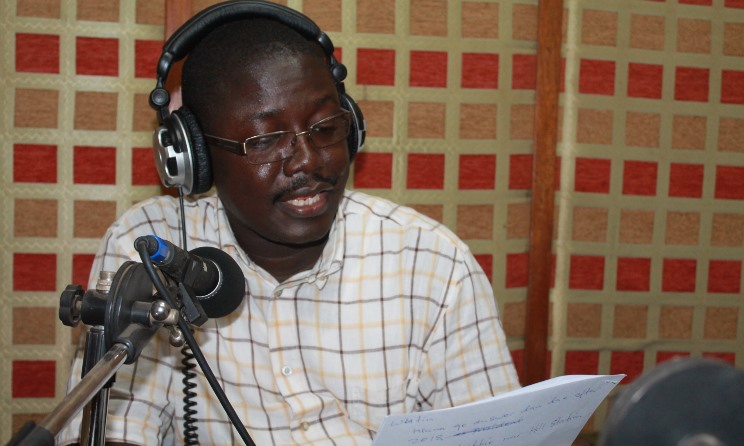
What platforms make or break an artist? Who has the last word when it comes to promoting musicians? This article presents an overview of the media sources in Sierra Leone and how they relate to the spreading and development of music.
Population and accessibility to media
With a population of 6.7 million people, 65% of which live in hard to reach rural areas, Sierra Leone depends largely on radio as most accessible media source. A 2015 survey by BBC Media showed that 81% of Sierra Leoneans have access to radio; 47% of those with that access listen to it daily. This figure makes radio by far the biggest medium in the country, as opposed to the internet (16%), television (45% and only in urban centres) and newspapers (13%). One-fifth of the total population has no access to any sort of media.
Radio
History
The launch of the Sierra Leone Broadcasting Services (SLBS) in 1934 marked the start of a radio-dominated media landscape. Since then, the number of active radio stations has risen to 50. Of these 50 active radio stations, many have a small broadcasting range and are therefore excluded from what follows.
Popularity
There are numerous distinguished radio programs and DJs that have a direct impact on the scene. For example, the Jimmy B show on AiRadio is known for hosting key figures of the music industry, and a feature on Radio Democracy’s Share Ad Day can enhance an artist's career. Because of their impact, most radio stations attract sponsors such as Heineken, Africell (Air Radio and Radio Democracy) and Airtel, who thereby associate their brand with innovation and progress in the industry. This popularity also aids corrupt behaviour, as some DJs need to be bribed by artists to get their music played on air.
The following are the most important radio stations in terms of music content.
Radio Democracy (98.1 FM)
Radio Democracy is the second most popular radio station in the Western Area (including Freetown) and supports the Sierra Leonean music industry through several programs. The first notable contribution it provides is the talent scout ‘the Voice of Democracy’, where young contestants can submit music through Whatsapp and win a record deal and some money. The second is Share Ad Day, a weekly interview program with those active in the music industry. Radio Democracy is sponsored by Africell, one of two major mobile network companies in the country.
AiRadio (105.3 FM in Freetown)
Owned by Africell, AiRadio hosts several key programs that deal with the music industry. It broadcasts to Bo (104.5 FM), Makeni (97.5 FM), Kono (106.9 FM) and Kenema (102.9), and is therefore one of the most widely broadcast stations. These four programs all specialise around Sierra Leonean music, (please see footnotes for times and dates): Shake Ed Dae, presented by Master Jaye, The Jimmy B Show, presented by Jimmy Bangura, What’s Happening breakfast show with Undisputed Reg and Boogie Down with Tamba B.
Capital Radio (104.9 FM)
Capital Radio has been broadcasting since 2005 and is a 100% English-speaking radio station. They spend a substantial amount of air-time playing music. However, they are primarily focused on international music. There is, however, a radio show that deals with Sierra Leonean music: the ‘Come Alive’ show with Uzo Desmond.
Culture Radio (104.5 FM)
Culture Radio is a Rastafarian radio station that concentrates on reggae music. They also host a show that promotes hip hop. They currently produce the television program ‘Rap News’, in which news is presented in rap form.
SLBC (100 FM)
Starting off as SLBS, Sierra Leone Broadcasting Corporation (SLBC) is the first English-speaking broadcasting service in West Africa. It is owned by the Sierra Leonean government. In 2010, SLBS merged with the peacekeeping station of the United Nations and became SLBC. The most notable program dedicated to music is the Salone Top 10 presented by King Millan.
Television
History
Sierra Leone has been broadcasting since 1963 through the state-owned SLBS (now SLBC). Currently, terrestrial television includes five local channels, SLBC, Star TV, African Young Voices, Kedar Faith TV and Destiny Television. Only the first three are currently airing.
African Young Voices
African Young Voices (or AYV) started airing in 2015. It produces three programmes that play Sierra Leonean music: the AYV Playlist that airs daily, the weekly Gateway and the Africa Top Ten that is broadcast on Saturdays. As the most watched television station its programme play a significant role in giving an artist visibility in the industry. The artist Succulent had a video repeatedly shown on AYV.
Secondly, the last episode of AYV Empire Cypher uncensored, a reality rap program that has added a contest element, was aired on 4 March 2017. The program featured six crews battling for a cash price and the production of five songs and two videos.
Star TV
Star television started broadcasting in 2015. It broadcasts a top 10 show called ‘Salone Talent’ every Saturday from 8 - 9 pm. It features Sierra Leonean talent, including diaspora artists and is hosted by Bash and Rabi.
SLBC TV
SLBC television hosts one of the most popular and influential shows that on Sierra Leonean music. Sponsored by Airtel, the Ellen Keister Airtel Salone top 10 airs every Saturday and interviews artists while showing the most popular songs of the week. The second program is the Salone Star Parade, where King Millan interviews prominent figures in the entertainment industry. SLBC is broadcast in the Western Area, Bo, Kenema and Makeni.
Printed press, online magazines and newspapers
In 1801, the Sierra Leonean Gazette launched its first issue, marking the start of the printed press in Sierra Leone. Nowadays there are about 40 newspapers, most of which have low circulation and some only print when the paper secures sufficient funds. Furthermore, only 13% of the population read newspapers. Music is rarely featured in these papers and there are no printed magazines. Therefore this section will present online magazines and newspapers. Links to the websites are added in the footnotes.
Magazines
The Patriotic Vanguard
The Patriotic Vanguard is an online news portal that offers in-depth articles on Sierra Leonean music and culture. Topics include traditional music, music policy and the cultural significance of music. The website launched in 2009.
Sierra Express Media
Sierra Express Media is an online and printed newspaper that has a worldwide audience, mainly with the Sierra Leonean diaspora. It offers some reporting on music, both internationally and nationally.
Awoko
Although there are few publications on music, Awoko does feature Sierra Leonean music and events that are important for the industry.
New media platforms
One of the new players in the information game are the new media platforms, including Whatsapp groups, online blogs and Facebook groups. They are user-driven sources of information and offer an alternative to the established news websites. However, only 310 000 people are said to use the internet, a mere 4.6% of the total population (6.7 million). As only 38% of adult Sierra Leoneans are literate, the information exchange of these platforms only reaches a minority of the civilians.
This does not mean that these platforms have no influence; those involved in the music industry and its main target audience are literate and active on social media platforms. Whatsapp Groups, with their maximum capacity of 256 members, offer platforms for producers, fans, musicians and DJs where they can advertise, share and inform their peers.
Online blogs
These online blogs report frequently on music in Sierra Leone. Some of the blogs are highly subjective and not always reliable. However, they do portray the general atmosphere of the industry and have a strong influence on the opinions of their readers. These platforms are accessed and sometimes operated (for example Salone Starz Entertainment) by Sierra Leoneans living abroad.
Switsalone
Run by Vicky Remoe since 2015, Switsalone offers articles on entertainment, including music.
SLMTV
SLMTV, an acronym for Sierra Leone Music Television has been online since 2000. They do not only write about music, but offer online catalogue of videos by Sierra Leonean artists.
Salone Starz entertainment
This website offers information on Sierra Leonean arts and entertainment.
Sierra Loaded
Sierra Loaded was launched in 2014 and offers articles on diaspora and local Sierra Leonean musicians.
Conclusion
Radio wins as the major player in the promotion and distribution of music in Sierra Leone. New platforms, however, will increase their influence as the accessibility to smartphones rises. Hopefully, Sierra Leonean music will attain more of an international status, and its artists at some point will play alongside big Nigerian and Ghanian artists.
Notes and resources
- Freetown, Makeni and Bo fall under the category urban centres
- Share Ad Day, Wednesdays from 1 - 3 pm
- Shake Ed Dae- Wednesday’s 1- 4 p.m. The Jimmy B Show - every last Sunday of the month at 9 p.m. What’s Happening Breakfast show - Tuesday 10 a.m. Boogie Down - Saturday 12 pm
- Come Alive - Saturday at 3 pm
- “World broadcasting, a Comparative View,” by Allan Wells (page 173)
- Supervised by the Sierra Leone ministry of Information and Communication, (http://www.slbc.sl/about-us-2/)
- http://ayvnews.com/all-shows/scheduler
- Salone Star Parade - Tuesday 11 pm
- Patriotic Vanguard
- Sierra Express
- Awoko
- SLBC, About us
- More information and statistics on media platforms in Sierra Leone can be found in this BBC report.
- Other statistics on media in general in Sierra Leone can be gotten here
- AYV News, “AYV ends Cypher Uncensored Season One,” March 20th 2017
- Internet World Stats


Most popular

Top Naija songs of 2026
31 Mar 2026

Top Afrobeats songs of 2026
19 Mar 2026
Ghana: Mr Eazi and MOLIY’s ‘Comfort’ earns Urban Music Awards nomination
21 Oct 2026

Top amapiano songs of 2026
16 Feb 2026
Open call: CANEX Music Business Lab and Songwriting Camp
15 Oct 2026
Nigeria: CANEX WKND unveils 2026 programme
21 Oct 2026
Disclaimer: Music In Africa provides a platform for musicians and contributors to embed music and videos solely for promotional purposes. If any track or video embedded on this platform violates any copyrights please inform us immediately and we will take it down. Please read our Terms of Use for more.

Subscribe to our monthly Newsletter
Follow us on social media


Please log in to post a comment.