























































The music media environment in Africa has evolved throughout the years and has become incredibly diverse. Depending on whether you are in southern or northern Africa, or in a French- or English-speaking country, the realities are multiple and detailed.
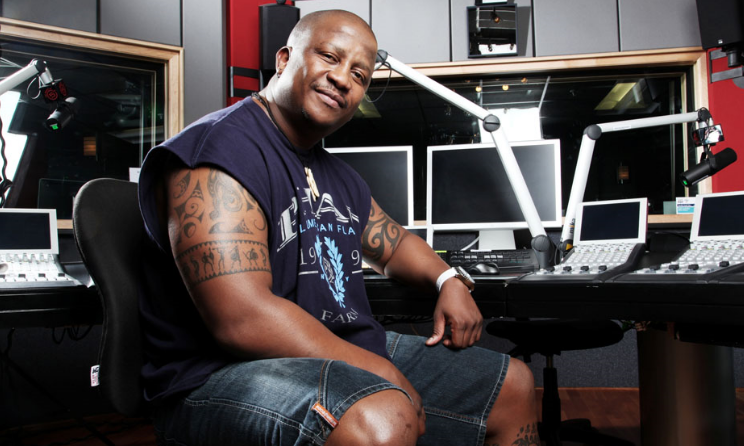
That being said, radio is still the most popular medium on the continent. Below we look at various African countries and the state of media in Africa as a whole.
Radio in Africa
The Gambia, for example, is a poor country without big media. The country did not boast a TV channel until 1997, but it is somewhat known for its radio, with its first radio station, Radio Syd, launched in 1969 by the Swede Britt Wadner. Today there are 15 radio stations in the Gambia, most of which play up to 20 hours of music a day and connect to Radio Gambia for news bulletins in English. However, local musicians in the country do not receive as much airplay as their Senegalese counterparts. To ameliorate the situation, the Gambia Association of Musical Journalists was established in Banjul in 2012 and its aim is to promote local artists as well as support their careers, not only within the country but also internationally.
In Congo-Brazzaville, a French-speaking country in Central Africa where dance and music is widespread, radio stations play a major role in the music industry. As the country ushered in a new phase of democracy and press freedom in 1991, Radio-Ocean, DRTV, Ponton FM, Radio Louvakou, Radio Liberté, Radio Brazza, DVS+ and Radio Mucodec were born. Stations such as Radio-Ocean, the first private channel in the country, launched in the late 1990s with a focus on music and entertainment. MUCODEC bank in Congo-Brazzaville contributes to the promotion of local music by buying albums and concert tickets to give away to listeners. Vibe Radio and RFM in Senegal also do the same.

In the north of Africa, Maghreb region countries such as Morocco and Algeria boast both local and international radio content. For instance, the Moroccan station Radio Medi 1 broadcasts throughout Africa. This is also the case for Gabonese station Africa Numéro 1, which operates from Paris, France.
The few examples above give an overview of the radio broadcast environment on the continent. In Africa, there is a great variety of radio stations because they are relatively inexpensive to operate and can play a major role in promoting local culture and policy.
The private TV boom
Television in Africa, like radio, experienced a boom after numerous national conferences establishing democratic processes in the media. In Côte d’Ivoire, for example, President Félix Houphouët-Boigny opted to end the stranglehold the state had on the media in the West African country and began supporting diversification in 1990.

In Rwanda, President Paul Kagame’s accession to power in 2000 saw the country take a significant economic turn. Many private TV stations such as Lemigo TV, Yego TV, TV 10 and Family TV were launched with the promotion of local music as part of their programming. In Congo-Brazzaville, too, private TV stations such as DRTV began promoting local artists.
Concurrently, the rise of pay-to-watch music channels on the continent contribute in the promotion of local music with programming such as talk shows and live TV performances prevaling.
South Africa is one of the most dynamic countries in terms of media development. DStv, Multichoice’s digital satellite TV offering, provides a wide range of paying bouquets, with a number of channels on the platform dedicated to African music.
This digitalisation of TV allows for the internationalisation and a 'pan-Africanisation' of content. In 2015, at the Africa launch of the public broadcaster’s SABC (South African Broadcasting Corporation) News channel on DStv, President Jacob Zuma said: "SABC News [channel] 404 must be a mirror on which we see ourselves as the African people. It must tell the story of our day-to-day lives, the story of our hardworking people who wake up every morning and try to make something of their lives, and the story of the work that goes into making our country a better place each day, done by millions of people each day. We also want to see the stories of success from the African continent so that we can learn from one another. There are successes in education in Zimbabwe, successes in information communication technologies in Rwanda, and indeed many other countries have a lot to share with us, and us with them.”
Internationalisation makes it possible to promote pan-African content. One such example is The Voice Afrique Francophone, the biggest talent show on the continent. The Voice Afrique is broadcast on Vox Africa, the first independent, pan-African and bilingual (French and English) TV channel available in Africa, as well as on major TV networks in Europe and the US.
This environment promotes the creation of TV channels such as Africabox TV, which is dedicated to music from the continent. The channel plays music videos of all genres, 24/7, and targets audiences from the African diaspora, especially Africans based in France. The trend of creating 24/7 music channels, although slowly making an appearance in Francophone Africa, is more apparent in Anglophone countries, especially in South Africa and Nigeria.
Nigeria, the most populous country in Africa, is an exemplar in the field of music media on the continent. With more than 250 different ethnic groups, Nigeria has shown, since the fall of its military regime in the 1990s, a huge potential in the creative spheres, particularly in music and TV. Nigerian pop is currently dominating the African music landscape through the rise of TV channels airing this highly entertaining and fashionable content.
New media
Telecommunications companies are the largest music distributors in Nigeria. According to a PricewaterhouseCoopers (PwC) report published at the end of 2016, the Nigerian music industry was worth $47m in 2015, with the figure expected to double by 2020.
In the last 10 years, some of Africa’s leading economies, namely Nigeria, Kenya and South Africa, have experienced a boom in cellular communications, a trend that has boosted the entertainment sector, especially music.
The South African music industry is more developed than most countries on the continent and can be compared to Western markets; online downloads and streaming in South Africa have seen an exponential growth of the local music industry, which is expected to maintain a positive trajectory in the foreseeable future.
With MTN leading the pack, telecom operators are seeing an enormous potential in markets such as Nigeria, a country of 190 million people, where music can be described as a religion. MTN presents itself as "the biggest music distributor" in Africa with more than 60 million subscribers in the West African nation. MTN offers ringtones through its download platform MTN Music Plus at $0.25. The industry leader is currently in direct competition with global online giants such as iTunes.
The development of the Internet is also benefiting Francophone Africa, although less significantly so compared to its Anglophone counterpart. Platforms that specialise in entertainment like abidjanshow.com and Guinea Hit Musique offer music videos to stream, with celebrity news becoming increasingly popular.
It is clear that the development of the media in Africa is closely linked to democracy and press freedom. The more freedom countries enjoy, the more diverse and stimulating will content be, while also playing a role in improving the music industry.
This article was published in partnership with the African Music Development Programme


Most popular

Top Naija songs of 2026
31 Mar 2026

Top Afrobeats songs of 2026
19 Mar 2026
Ghana: Mr Eazi and MOLIY’s ‘Comfort’ earns Urban Music Awards nomination
21 Oct 2026

Top amapiano songs of 2026
16 Feb 2026
Open call: CANEX Music Business Lab and Songwriting Camp
15 Oct 2026
Nigeria: CANEX WKND unveils 2026 programme
21 Oct 2026
Disclaimer: Music In Africa provides a platform for musicians and contributors to embed music and videos solely for promotional purposes. If any track or video embedded on this platform violates any copyrights please inform us immediately and we will take it down. Please read our Terms of Use for more.

Subscribe to our monthly Newsletter
Follow us on social media


Please log in to post a comment.