































































This text provides an overview of the various opportunities available to musicians in Malawi, specifically talent competitions, institutions, workshops and exchange opportunities.
Talent searches
There has been an increase in the number of talent search initiatives in Malawi, with music as one of those talents. These are aimed at uncovering and identifying upcoming talent. Relatively, few people make use of these initiatives, however, not taking them seriously or simply not taking interest in the opportunity.
Chibuku Road To Fame is an annual event targeting local bands in Malawi that has been around for nearly four years and is run by the Musicians Union of Malawi (MUM). This competition has two levels: regional and national. Bands are brought together in each of the three regions of Malawi (north, central and southern) and two winners are chosen from each region. These regional winners are then brought together for the national final. The first prize as MWK250 000 (about US$400) plus a recording deal. Second prize is MWK150 000 (US$250) and third is MWK100 000 (US$165). This competition encourages local musicians to form bands and learn how to play instruments, which benefits the local industry. Another plus is that it encourages original songs rather than cover versios.
One of Malawi’s leading cellular networks, Airtel Malawi, ran its first edition of the Airtel Trace Music Star competition in 2014/2015. In collaboration with other Airtel countries and sponsors, the completion was open to all Malawians, singers or not, with very simple steps to follow to enter the competition. Starting with phone auditions, five people were selected to compete against each other in a public voting system, and were then brought together for a final round where a winner was selected. In the history of music competitions in Malawi, Airtel Trace Music Star provided the biggest cash reward ever given, MWK14million (roughly US$23 270). The winner went through to the next round of competition again the winners of other countries, competing for an even bigger grand prize.
Hosted by one of Malawi’s top hotels Sunbird, the Search for a Star competition has the motto “unearthing talent”. The competition runs every year. Interested musicians undergo a series of auditions in all parts of Malawi, and several of the best participants are brought together to battle it out for the ultimate prize of K500 000 (US$830) plus a recording contract.
Hosted by local broadcaster Channel for All Nations (CAN), Shining Stars is another talent platform for young people waiting to be discovered. The competition has been running for two years now. The first edition was more about kid’s talent, and more recently they widened the target group to include young adults. The top three are selected, with the first winner getting MWK500 000 (US$830) plus a family lake trip, the second getting MWK200 000 (US$330) and the third MWK100 000 (US$165). CAN is a media company affiliated with the International Christian Assembly. Following a recent partnership with Music Crossroads Malawi, CAN has added for the main winner a music scholarship to study at the Music Crossroads Malawi academy in Lilongwe.
These are not the only competitions available in Malawi. There are others that are short-term or once-off, and musicians need to stay updated about such opportunities. Most of the rewards for the above competitions are short-lived (cash rewards, record deals), such that by the time the publicity surrounding that competition dies down, the name of the winner risks fading from people’s minds. A lot of Malawians are still learning to appreciate the value of music - especially their own local music. What makes it difficult for the public to take interest in or follow some events is a lack of creativity and originality. Except for the few musicians that have really made it in the music industry in Malawi because of their own hard work and creativity, most musicians are simply copying other nation’s music. The international scene is also flooded with a variety of competitions for different types of musicians.
Institutions
Some organizations or institutions exist solely to help develop musicians. These may be accessed for a certain fee, usually subsidized to extend access to many different musicians countrywide.
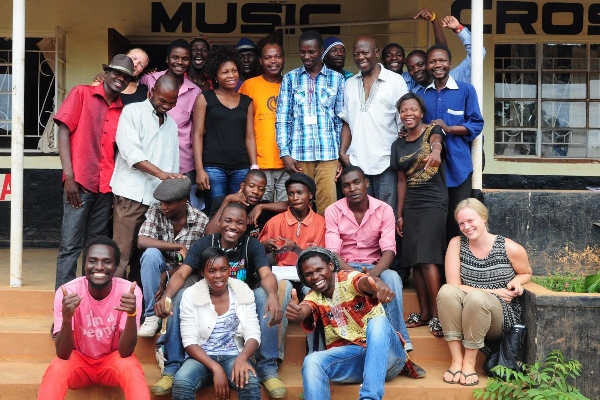
Malawi’s Music Crossroads Academy (MCA) was launched in 2013 with the aim of training professional musicians in Malawi. It offers a one-year programme, during which musicians get both practical and theoretical knowledge, using state-of-the-art equipment and a curriculum that is innovative and adaptable to the local music scene. Music Crossroads receives funding from the Norwegian Ministry of Foreign Affairs and offers similar programmes in Mozambique and Zimbabwe. The academy offers a unique opportunity for musicians to meet other musicians and to become qualified professionals. It provides training in various instruments (like drums, keyboard, guitars and vocals), promising a refined and complete musician at the end of the course. Musicians like Ernest Ikwanga (from the band Mafilika), Adrian Kwelepeta (winner of the 2014 Sunbird Search for a Star contest) and Samuel Mjura Mkandawire (Malawi’s Airtel Trace winner) have gone through the Music Crossroads academy.
At the University of Malawi’s Chancellor College[i], the challenge with learning music is that one is not accepted into the college to study music alone but must instead do so via other programmes. As a result, the competition is high, with only a few places open to lucky students. Once enrolled under the Humanities programme, they have a chance to study music as a course for four years before obtaining a Bachelor’s degree. The music section at Chancellor College is well equipped with a variety of musical instruments but is short-handed in terms of staff to teach the various instruments.
The Andiamo Music Centre in Balaka (in the southern region of Malawi) is one of the oldest centres offering music-related training in Malawi. The Catholic-run centre is home to many musicians, both young and old, some of who launched their careers there. Well-known artists who went through Andiamo include Mlaka Maliro and Lucius Banda. The institution welcomes many musicians, both local and international (especially from Italy), all hoping to have an enriching musical experience.
Located in Thyolo district, Music 4 Malawi is an institution providing musical training to orphaned and underprivileged young people. Through music education, a recording studio and organizing local concerts, the organisation works with music professionals from all over the world to promote Malawian music through their programmes.
Lusubilo Music Centre, located in the northern region of Malawi, is one of the few institutions in Malawi that offers proper music lessons. The Korean-owned institution is home to many young people, and their Lusubilo Band has won the Chibuku Road to Fame competition in the past, toured Korea and returned to Malawi for a national tour. The centre is famous for its well-polished brass players, a rarity in Malawi where many people opt for stringed instruments or percussion.
Workshops and exchanges
Workshops are a necessary element for growth for any musician because they offer a chance to learn from more experienced musicians. Generally in Malawi, workshops for musicians are arranged before a music concert or festival. For example, Lake of Stars and the Blantyre Arts Festival usually host workshops two or three days before the main festival starts. These are quick but effective ways of getting established artists to give back to young musicians.
The institutions outlined above are a major source of workshops. Sometimes embassies also work in collaboration with these organizations to invite musicians from their respective countries to conduct workshops with local Malawian artists.
One of the institutions that has an annual exchange programme is Music Crossroads Malawi, which offers musical and cultural exchange programs with Jeunesses Musicales Norway[ii], a network that provides musical opportunities to young people. The exchange programme is now called Musicians and Organizers Volunteer Exchange (MOVE). The Lusubilo Band’s female vocalist, Rebecca Mwalwenje, recently joined the Music Crossroads Academy in preparation for this exchange programme with Norway.
When it comes to all the various opportunities outlined above, musicians who have access to the internet will have a better chance of finding out about them and knowing how and when to register. In general, having a large network (of musicians both at home and abroad, as well as other music and arts industry professionals) exposes musicians to a wider variety of opportunities that they can take advantage of to ensure a successful career.


Most popular

Top Naija songs of 2026
31 Mar 2026

Top Afrobeats songs of 2026
19 Mar 2026

Ghana: Mr Eazi and MOLIY’s ‘Comfort’ earns Urban Music Awards nomination
21 Oct 2026

Top amapiano songs of 2026
16 Feb 2026

Open call: CANEX Music Business Lab and Songwriting Camp
15 Oct 2026

Nigeria: CANEX WKND unveils 2026 programme
21 Oct 2026
Disclaimer: Music In Africa provides a platform for musicians and contributors to embed music and videos solely for promotional purposes. If any track or video embedded on this platform violates any copyrights please inform us immediately and we will take it down. Please read our Terms of Use for more.

Subscribe to our monthly Newsletter
Follow us on social media


Please log in to post a comment.