





































NEFCISA
NEFCISA

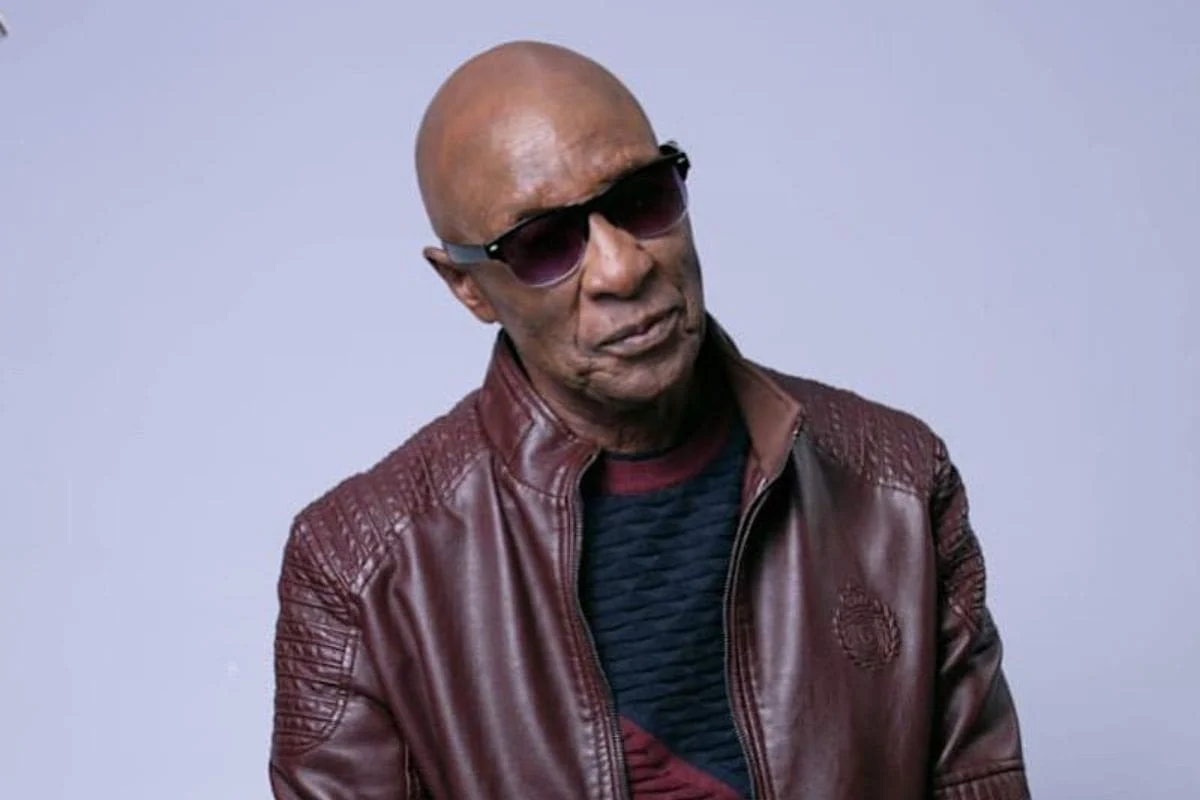
The Music In Africa Foundation (MIAF) is proud of its partnership with the Industrial Development Corporation (IDC) as a Strategic Implementing Partner (SIP) for its Social Employment Fund (SEF). Through this collaboration, MIAF is running a national programme that is creating jobs, addressing skills gaps, and strengthening South Africa's creative industries — in line with the SEF's overarching goal to generate work for the common good and build community value through employment, social contribution, and inclusive economic participation. Operating under the banner NEFCISA (National Employment Facility for Creative Industries in South Africa), the initiative is recruiting and training participants, matching them with host organisations, and has already placed 1 500 workers across the country — surpassing its original target of 1 000. NEFCISA is delivered through a network of 20 host organisations spanning five provinces, who are actively hosting participants and contributing to work for the common good across South Africa's creative and cultural industries. Key Objectives: Support employment and entrepreneurship in the creative industries. Offer skills development and training programmes. Foster partnerships between public and private creative sectors. Promote South African creativity at both provincial and national levels Foster community development through social contribution.

ACCES
ACCES

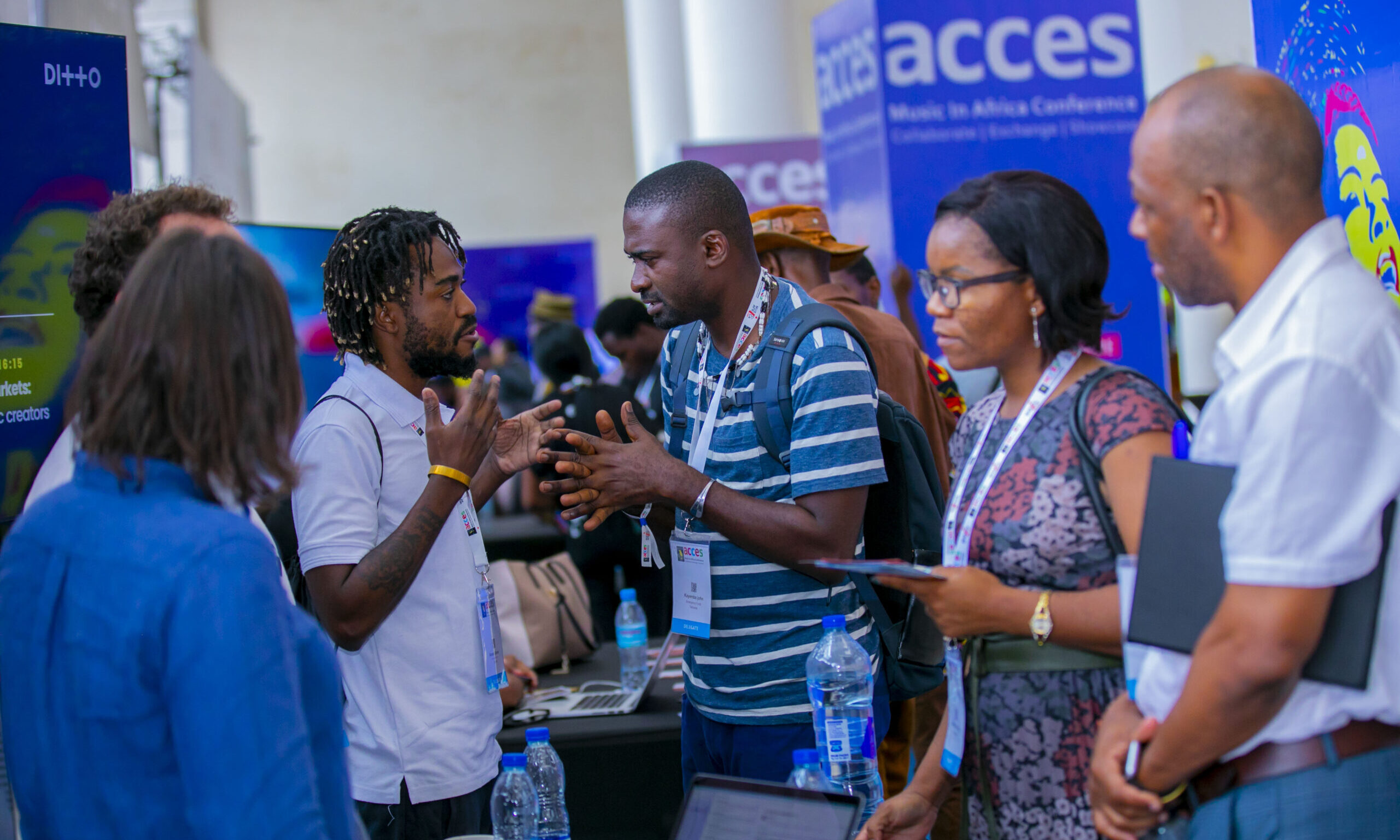
ACCES Conference and Showcase Festival is Africa's leading music industry gathering, bringing together the people shaping the future of the continent's music business. Artists, entrepreneurs, executives, investors, policymakers and cultural leaders from across Africa and around the world come to ACCES to build partnerships, exchange ideas, discover talent and create new business opportunities. Since its launch in 2017, ACCES has become the continent's premier platform for professional exchange and music market development. Combining a high-level conference with a curated showcase festival, networking, exhibitions and industry programmes, ACCES offers a unique space where creativity meets business and where African music connects with the global industry.

Gender@Work
Gender@Work

Music In Africa Gender @ Work is a three-year training programme aimed at upskilling and increasing the participation of female professionals in the African music sector. Launched by the Music In Africa Foundation (MIAF) in April 2019, the programme is connected to the MIAF’s ACCES music conference – a pan-African event held in a different African country every year. This connection enables the programme to reach new participants in a different African country every year. The programme marks the beginning of a more concerted effort by the Foundation to support the participation and inclusion of women in all facets of its programmes and the music sector in Africa as a whole. Over the three years, the programme will aim to address gender imbalances in the sector through training, lobbying, facilitating knowledge exchange and dialogues that foster the interest of women. The broader objectives of the programme are to: Provide industry training for women on critical music industry skills, focusing on: Stage management Electronic music production and recording Music business management Technical knowledge Provide an opportunity for both professional and aspiring women to benefit from the Music In Africa network and its broad range of activities in 2019, 2020 and 2021. Provide a solution-based platform in the form of a round table at ACCES with a view to identify challenges, discuss opportunities and lobby for the interests of female practitioners. Offer participants the opportunity to benefit from programmes offered by MIAF’s partners. Increase access to educational materials. Integrate participants in the broader ACCES programme to maximise experience and exposure to the industry. Record and present training materials on the www.musicinafrica.net, including but not limited to tutorials, templates and other best-practice materials. Communicate women-based themes that support the initiatives and messages of the programme. MAIN TRAINING ACTIVITIES Training in first country (Ghana): In the first year, participants will be trained on all aspects of stage management by a team of experienced stage managers from 10 to 17 November 2019. The programme will offer robust classroom training as well as practical, hands-on training in which participants will also be given the opportunity to manage various aspects of the ACCES performance programme. Training in second country: The second training iteration will take place at ACCES 2020 when the programme will diversify its course to include music production lessons and training on other music business topics. A round-table platform will also be introduced to coincide with the ACCES programme. Training in third country: The third training iteration will take place at ACCES 2021 in a different country, offering an advanced course. HOW DO YOU GET INVOLVED?  As a participant, facilitator or trainer: The programme enrolls up to 12 trainees every year. All opportunities are advertised publicly on this website, and will be added to this page. Please keep checking this page for new calls (below under UPDATES & CURRENT OPPORTUNITIES). As a partner Please contact Claire Metais at [email protected]. APPLY The call for applications for 2020 will be announced soon. The Music In Africa Gender @ Work programme is made possible with the support of the Prince Claus Fund, Siemens Stiftung and Goethe-Institut.

Sound Connects Fund
Sound Connects Fund

For cultural and creative practitioners and organisations operating in southern Africa, access to funding remains a major challenge. The COVID-19 pandemic has also had a massive impact on government policy, spending and the economy in general, and has seen spending on culture being moved further down the list of priorities. Further, the cultural and creative industries repeatedly cite four main areas where investment is needed for growth, which are increased visibility, mobility including access to new markets, finance and support structures.

Instrument Building And Repair Project

Experience the Vibrations African Instruments Exhibition online in 3D

News

Rwanda copyright law gets mixed reactions

31 Jul 2017 - 12:36

cc-img flag-img

The Rwandese government last week announced a move to enforce the 2009 Intellectual Property Law.
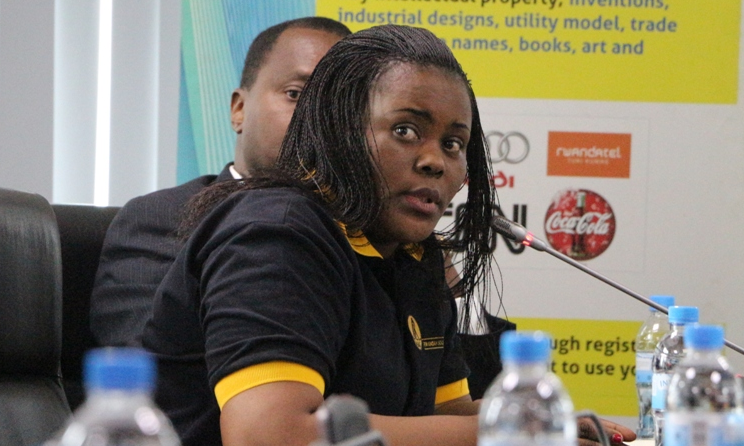
RSAU CEO Nadine Bwiza.

This is a historic moment for Rwandan artists because it means they will be paid royalties for the use of their works for the first time, aside from performance and sales revenue.

“We began the collection of royalties this month from business establishments, which we will in turn distribute to artists most probably twice every year,” Rwandan Society of Authors (RSAU) CEO said Nadine Bwiza said.

The Rwanda Development Board (RDB) announced in April that business establishments playing local music would be required to pay royalties to artists via the RSAU, which is a collective management organisation.

The RDB said business establishments that failed to pay artist royalties would face legal action. The infringement of copyright constitutes unauthorised reproduction, distribution and selling of copyright protected works.

The division manager in charge of intellectual property at RDB, Blaise Ruhima, said the board was in the process of addressing the concerns raised by artists and business owners. "This is implementation of a law, therefore we have to find ways of settling all misunderstandings,” he said. “In the enforcement, we have several stakeholders including the national police.”

Improvement process of the 2009 law

The RDB developed the royalty collection process which was to be implemented from July. Copyright Society of Botswana (COSOTA) CEO Thato Mokobi provided consultancy services and recommended that a collective management organisation, the RSAU, be formed and given the mandate to collect royalties. He said the model had been a success in his country and was adopted by other countries like Kenya.

The RSAU committee was formed and tasked with the collection and redistribution of royalties as well as the registration of artists as its members. “In partnership with the RDB we have set tariffs determining how much businesses will be required to pay,” Bwiza said in April. “The charges are the lowest in the region and will be easily accommodated by the business community. The charges are based on the type of business and the revenue generated.”

Hotels and restaurants with between zero and two stars will be required to pay USD 1 803 annually whereas those above two stars will be required to pay a higher annual fee. On the other hand, radio stations will be required to pay a percentage of their gross revenue, which will be determined after they have presented records of their playlists of local content to the RSAU.

Reactions by business owners and musicians

The development has not been received positively in Rwanda, with a major concern being that previous attempts to instate a copyright law had failed.

Musician and owner of Contact FM Albert Rudatsimburwa said the move to implement the directive was wrong since the stakeholders in the industry were not represented when discussions took place.

Speaking to local media, Rudatsimburwa said the RDB and RSAU should have involved key stakeholders since the two had little understanding of the industry. “They should not make such a decision without consulting all,” he said. “We are not against the association but rather against the royalty collection process. The decision was not practical since we do not directly make any revenue from playing local music. The law may force us to cease playing local music.”

Kina Music CEO Clement Ishimwe called for the fine-tuning of some aspects of the directive. He urged RSAU to acquire software that would establish how often artists’ content had been played on the airwaves in order to determine the amount they should get paid.

He said that without such software there would be unequal and unfair distribution of royalties, as it would not be possible to determine the exact amount owed to artists.

Since its inception, the RSAU has managed to register 460 musicians, which could point to proof that artists in Rwanda are still sceptical about the implementation of the new law. Many popular artists are hesitant to sign up with the society for fear of hurting their rapport with business owners in the industry.

However, renowned actress and performer Carole Karemera said resistance to the law was due to a lack of proper understanding of copyright principles. “As someone who has her creations registered in a number of countries across the world and receives revenue, local artists ought to view the initiative as an opportunity for growth. The government can deal with this through awareness campaigns,” she said.

The Minister for Trade and Industry, Francois Kanimba, has admitted that the initiative was facing some challenges, largely due to low levels of public awareness. "We are at crossroads in terms of developing the local creative industry,” he said. “We have seen things developing without a clear understanding or framework [legal and institutional]. Even public awareness campaigns have not taken place so far.”

Despite all the concerns, Kanimba said the law would deal with business owners who were attempting to frustrate the process by defaulting on payments.

Please log in to post a comment.

Most popular

Disclaimer: Music In Africa provides a platform for musicians and contributors to embed music and videos solely for promotional purposes. If any track or video embedded on this platform violates any copyrights please inform us immediately and we will take it down. Please read our Terms of Use for more.

newsletter banner

Subscribe to our monthly Newsletter

Follow us on social media